Monthly Archives: September 2024

SRPG Game 101 – Black/Matrix AD (Dreamcast)

Black/Matrix AD (ブラックマトリクス AD), released 9/30/1999, developed by Flight Plan, published by NEC Interchannel

I’ve known about Flight Plan for a long time because of their Summon Night series, which I really like. I had heard of Black/Matrix but never actually played any of the games until now. The series has essentially four games — Black/Matrix (with two ports), Black/Matrix 2 (for PS2), Black/Matrix Zero (for GBA) and the semi-remake Black/Matrix 00 (for PS1).

The original game first came out for Saturn in 1998, then had two ports: AD for the Dreamcast in 1999, and Cross for the Playstation in 2000. From what I read, it seems like AD is regarded as the best version with the exception of some criticism of the graphical changes, so I decided to play that one. I’m using the Flycast emulator which is working well (it runs more efficiently than the Saturn emulator).

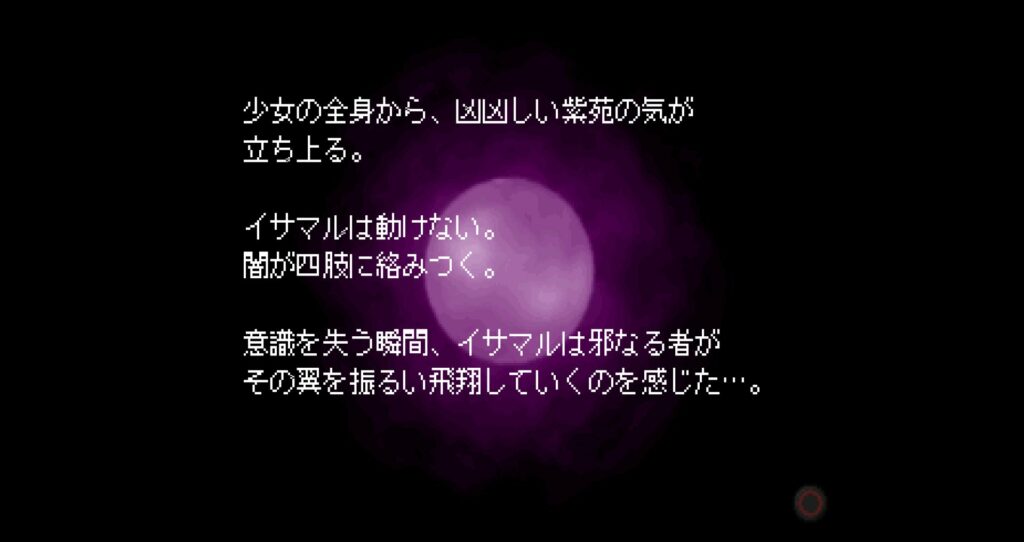
The setting is based on a mix of Christian and Jewish elements (including extra-Biblical things like Lilith as the first wife of Adam), although it takes place in essentially a fantasy world. The opening narration tells you that in the past, the world was ruled by the Evil God called “God”, but Mephistopheles defeated God in the name of the Good God “Satan”. The followers of God, who have white wings, were made eternal slaves of the followers of Satan, who have black wings. The world is run by the church devoted to Satan, who stamps out the Seven Deadly Sins: Love, Freedom, Justice, Righteousness, Weakness, and Equality.

The first thing you do is choose your main character’s “master”. There are five choices, although it’s kind of odd because the master only shows up in the first chapter and then at the end of the game. In the original Saturn version the other 4 didn’t appear at all, but in the Dreamcast version they added the ability to get the others in your party. I chose Domina (which the cursor starts out on).

Chapter 1 is different from the rest of the game. Domina has apparently nursed the main character Abel back to health, but in the meantime has fallen in love with him. The enslaved white winged people are generally not allowed to wear clothes or walk around without a neck collar/chain.

What you do in the beginning is walk around Domina’s house and do various tasks that increase Abel’s stats. You can make this go on for quite a while if you want. You have a certain number of AP each day and can do things like cook, read books, plow the field, and such. I’m not entirely sure what the purpose of this is, or how long it can go on, but you can end this part by going to town. There, people react badly to Abel having clothes and being without his master, and later, inquisitors come to take Domina away for being in love with Abel, and Abel gets taken to jail as well. The SRPG proper starts with chapter 2.

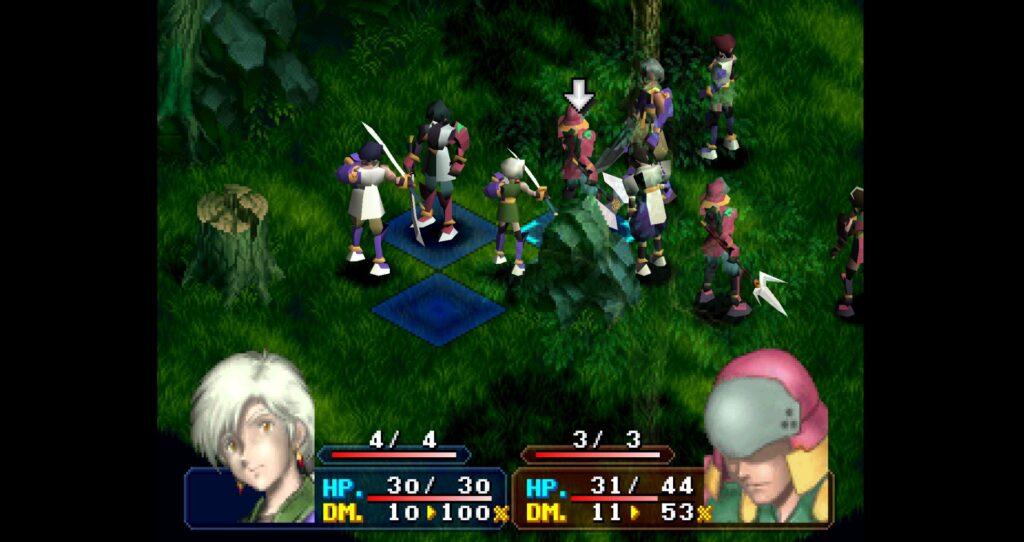
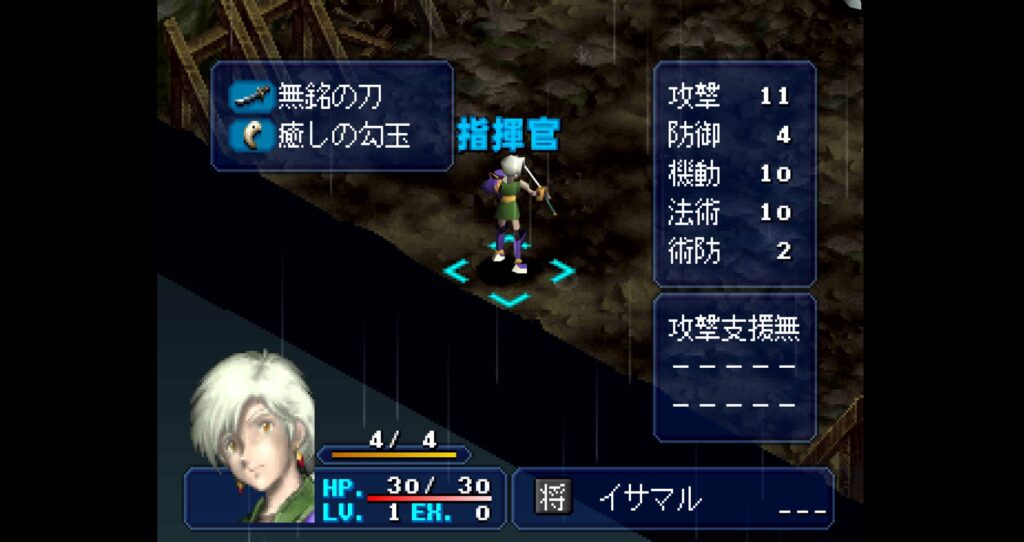
In the cell, you get to try out the battle system against Lebrobes. There are two features that I recognize from Summon Night — you can set each person’s reaction style (evade, counter, block) whenever you want on your turn. Also the levelling is all done after the battle; you get XP as a lump sum that you spend to level up characters. I vastly prefer this to the system where you have to spread your kills around to make sure everyone is levelling evenly.

Each turn you have two “action points”. Most actions take 1 AP and you can’t repeat the same action twice. Using an item takes 0 but can only be done once. The “blood refill” command takes 2 AP. You can take the actions any order you want, and you can move one character, then cast a spell with another, then do an attack with the first character, etc.

The magic system works off the “biorhythm” graph at the top right. Each action advances the counter one bar. A green bar is increased effectiveness and a blue bar is reduced. When you use a spell of a particular type it changes the gauge to that type; each type has its own progression. So when you use spells you want to wait until the biorhythm is favorable.

When an enemy is reduced to 0 hp, they are dead, but any heal spell or item will bring them back. An additional hit on a dead character will reduce them to bones, preventing this (if this happens to your guys, they are permanently dead unless they are a core story character).

The fact that the dead character comes back still able to move and act creates an annoying balance issue with enemy healers, especially later in the game. The main healing spell in the game has a very wide area. It can be pretty easy for the enemies to revive multiple units and get them all back to full HP on their turn, so often you need to make sure you are eradicating the enemies and not just killing them.

When you defeat enemies you get “blood points”, and sometimes you get more blood points for eradicating them (but not always). These blood points are used in two ways. First, you can give them to characters before the battle starts, and they are used to cast spells and use special abilities of weapons. Any remaining blood points are carried over so there’s typically no reason to not just max everyone’s BP out. During battle you can use “blood refill” as a 2 AP action to use blood points you’ve earned so far in that battle to supplement what you have.

The other use for blood points is to use “ritual” to awaken abilities of weapons. This is a cryptic part of the system (apparently the series as a whole is known for this kind of thing). You spend blood points to awaken three abilities on each item. But what the abilities actually do is obscure, and some of them are negative. But apparently if you do things right (in the right order?) you can unlock hidden abilities and such. I never figured out how to do this; there’s no explanation in the game or the instruction manual. From what I saw in videos you can get game-breakingly powerful weapons through this, but by the end of the game I hadn’t even found half of the available abilities.

There is also height and facing in the system. The clock below the biorhythm chart is a bit unclear to me as well; some items work better at certain times but I don’t know if there is more to the clock system than that.

Finally, as your characters get these “armor” items, you can start using the armor power — I never really figured out how to use this well. The abilities have odd areas of effect and require a large amount of power (they take the turns of multiple characters plus a huge amount of BP). I think that if you really have a good handle on the area of effect you could use them to do huge amounts of damage but I hardly used them at all because it wasn’t worth spending so much BP and AP just to hit a few people.

Overall the gameflow is straight through the 12 chapters. There are a few places where there are alternate battles within a chapter, and you can skip one or two battles, but there aren’t any huge story branches. The original Saturn version had only one ending, but the Dreamcast offered multiple endings (I’m not sure how many — there are two possible final battles as well as a bad “game over” ending but there are multiple ways to reach each of the final battles and I don’t know if that results in more than two endings.)

One change in the graphics is that the original Saturn version had the story scenes take place on the 3D maps, whereas the Dreamcast remake has the style you see in the screenshot above. The character designs were also completely redone by a different artist, which resulted in some disappointment. There are also a number of brief video clips.

The game starts out quite hard, as you have few characters, and no opportunity to shop or do any side levelling. Eventually I found out that you can always use a shop before a battle to at least buy basic healing items, even when it makes no sense in the story. As far as the side levelling, in towns you can find a hooded guy that will give you a free battle, but it’s not really worth it. You barely even get half the XP necessary to level one character, so you would have to spend a lot of time grinding to have even a minor effect.

The game becomes easier when you get more people and get into the game, but it gets much harder again near the end. The enemy forces have a lot more healers in them and come in larger bunches. Also in the last few battles you lose your primary healer and you get stuck with pre-set parties. I was close to quitting on the third to last battle, but I found out that I could beat the game by exploiting poor AI to pick the enemies off one by one.

The storyline tends to be pretty dark. Abel sets out to save Domina, but first they have to find out where she is. As he travels through the land, he goes to various towns that exemplify the “virtues” like gluttony and greed, while picking up various companions. The goal becomes for the characters to find suits of armor that are connected to the seven “evil” angels (Michael, Raphael, Gabriel, etc.) To put these armor suits on the people have to rip their wings off and then the armor will fuse with them, but this will eventually result in their deaths.

The storyline is a bit of a mess; a lot of the information is revealed in info dumps near the end and involves all kinds of Biblical and mythological characters: Lilith, Adam and Eve, Moses, Noah, Jepetah (Noah’s daughter), Metatron, and other people.

Eventually we find Domina crucified, and it turns out that somehow the main character is both the reincarnated of Mephisto and Metatron, and the Pope (who is actually Jepetah as well as other stuff too) tells the main character that the world will soon be destroyed. He has a few options for dealing with it — the main ones are that he can sacrifice everyone else, save Domina, and he and Domina can birth a new populace to people the world. Another is that he can give up Domina in order to save the world as it is now, which includes the slavery of the white winged people. I’m not sure which of these endings was the only one offered in the Saturn version, but I think it was the second one. (There’s also kind of a bad/joke ending that results if you say you want to give up Domina and go off by yourself to find a peaceful place to live).

I decided to go with the first option because it seemed like the final battle was easier. You have to fight your own companions but they only attack you one at a time so you can easily pick them off.

The ending is really abrupt; a flood destroys the world and then you see this scene and it tells you that Domina became the new Eve, but she doesn’t look like she’s completely in her right mind. Then the credits roll and that’s it.

One other aspect of the game are the battle ranks — in each stage you get a rank based on a number of things. The main ones are the number of turns and actions you took, but there are some other things like not using magic in bad biorhythm phases, and a few other things of that nature. The rank affects the item rewards you get after the battle. This reminds me a bit of the “brave clear” system they put in later Summon Night games. One thing I do wonder about this game is whether you could funnel all the XP into the main character and clear the game easily.

Overall the game is OK. I think the story is a bit too ambitious; it feels like a lot of times all the biblical stuff is kind of thrown in there without a lot of coherency, and the ending is way too abrupt. I checked out a video of the original Saturn ending. The entire closing sequence was rewritten for the Dreamcast version, but the Saturn ending has the world being entirely destroyed except for the main character (who reverts to an adolescent) and the main “master” you chose, and the suggestion is that they are going to be the new Adam and Eve to populate the world again. So that’s kind of similar to the Dreamcast ending I got.

The system is not the worst I’ve seen, but the lack of transparency in the weapon system is annoying, and some of the stages seem unfair. But the game is playable and has some good ideas in it. I’ll be interested to see how it develops for Black Matrix 2 (for the PS2).

Three Famicom games

I’m working on Black/Matrix, so this week I’ll post about three early Famicom games which I only played a bit of (one because it wasn’t very good, the other two because they really aren’t RPGs).

I have a list of all these early RPGs I’ve been playing here.

Saint Seiya: Golden Legend (聖闘士星矢 黄金伝説), released 8/10/1987, developed by Axis Art Amuse and published by Bandai.

Saint Seiya is a series I don’t really know anything about — I know it was a manga from 1985-1990 in Shonen Jump, and the anime version was really popular in Europe but never caught on in the US. This game came out during the run of the manga and anime so it only covers part of the story — a followup was released later that covers the rest of the story.

From what I have read, the story part of the game is well done for the time; it includes a lot of the characters from the original series and goes over the plot well, and has enough content to be satisfying to fans of the series.

It seems like the game itself is not well regarded; it got a 20/40 in Famitsu and I’ve seen that European players didn’t like the game either.

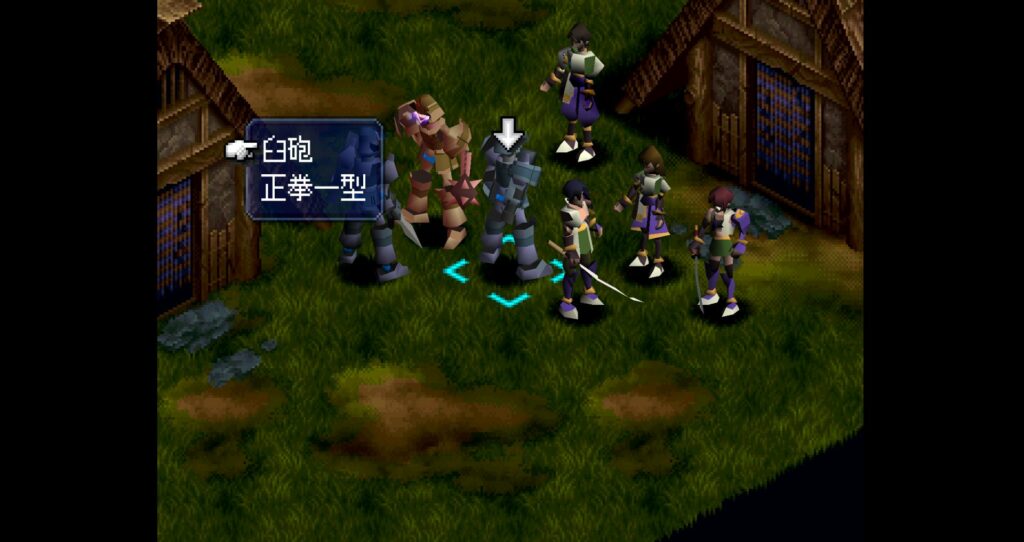
The system is one of those weird hybrids of action and RPG elements that shows up a lot in these early games. Most of the game is side-scrolling, where you explore maps, talk to people, and fight enemies. But the bosses are all done through a command-entry style RPG.

I found the system pretty difficult to get a handle on. You decide how much energy you want to put into APow, MPow, DPow, and HPow (the left side is apparently attack, the right side defense). All of this uses your “cosmo”, which cannot be easily recovered. You then choose punch or kick, and if you filled the gauges enough you can use some kind of special power.

I will admit that I never really understood how the system works; maybe if you do get a grasp on it the game is better, but I just found these fights frustrating. Eventually I reached one where I couldn’t even survive the first hit of the enemy.

You can build your levels by fighting things on the map, although I don’t think that there’s any actual “level”, just experience.

From what I can tell reading about the game in French and Japanese, it seems like most players at the time had my experience — they had no idea how anything worked and they gave up because it was so cryptic. The entry on the “kusoge” wiki also seemed to indicate that unless you turn to sources outside the game/instruction manual, you won’t understand the system well enough to be able to play it well, which is probably why it got such bad reviews.

Majou Densetsu 2 (魔城伝説2 大魔司教ガリウス), released 8/11/1987, developed and published by Konami

This is a Famicom port of a computer game that was well regarded. The Majou Densetsu series consisted of three games in different genres — 1 was a shooter, 2 was an adventure/RPG side scroller, and 3 was a top-down adventure style game. The only game in the series that was ported to consoles was 2. It was redesigned and half of the worlds were cut out (from 10 down to 5).

Here’s the story from the game itself:

The game is essentially a metroidvania type game (side-scrolling, non-linear). The RPG elements are extremely limited, though. You can level up your characters and there are a handful of equipment upgrades, but on the whole this is more adventure than RPG.

It does seem to be a good game for the time, though. I didn’t play a whole lot of it but from what I can see on walkthroughs, it doesn’t have a lot of those completely impossible secrets that other games of the era have, and there is some satisfying metroidvania style backtracking you can do when you get new items to open up some new areas.

You can also find a map. You switch between two characters, Popolon and Aphrodite. They each have their own strengths (for instance, Aphrodite doesn’t lose as much health in water, and Popolon can break walls more easily). As you beat enemies you increase EXP (individually) and when you fill the bar you get more VIT (hit points) and restore your HP.

The game consists of 5 worlds an a “main castle” area that you can access the worlds from. Each world has a boss, as well as items you need to find to reach the boss, and items that will make the boss fight easier.

Password

It seems like the original MSX version is considered better, but the Famicom game does seem worth playing if you like retro games.

Castlevania II (ドラキュラⅡ 呪いの封印), released 8/28/1987, developed and published by Konami

This game should be well enough known that I don’t feel like I have to cover it. It’s perhaps notable as a very early example of what would eventually become the “metroidvania” games starting with Symphony of the Night, but the RPG elements are barely there at all. You can move up 6 levels and upgrade your whip a few times by spending money, but that’s about it.

Rather than add yet another post to a game that’s been written about a lot, here’s a blog review that’s good. Interestingly, the author of that post says that Majo Densetsu 2 was an inspiration for this game (the original MSX version).

I don’t think it’s as bad as it’s been criticized for being, but it’s definitely not as good as the other Castlevania games (to me).

SRPG Game 100 – Wachenröder (SAT)

Wachenröder (バッケンローダー), released 8/6/1998, developed by TNS, published by Sega

Game 100! This is the second to last Saturn game I will be playing. It takes place in a steampunk like world, an island that has been cut off from the rest of the world by some kind of mist that keeps people in.

The game begins with a very dark backstory for the main character (Lucian); he’s born in a slum in one of the six districts of the island, where there is a heavy water treatment plant that fills the area with pollution and magnesium. His little sister is one of many who suffer from a wasting disease that prevents them from being able to go out into the light. Eventually he decides to enter some kind of tournament to earn money for her medicine, but while he’s out registering for it, she dies. He vows vengeance on Sword Master Duran, the leader of the area. The game then switches to 4 years later, when he is wandering around aimlessly.

Lucian soon meets Carol, a woman who is also looking for Duran — but Duran is soon overthrown and forced to flee for treason, which brings a bounty hunter into the party as well who is looking to get the money for Duran. The plot proceeds from here, involving the mysterious “forest dwellers” who seem to have unusual technology, the six “sword masters” who rule the areas, and the secret of a disaster that sunk a nearby island.

The story is fairly good, and has voiced dialogue for a good part of it. It’s a bit short and the ending is cursory but overall it’s entertaining. There are a lot of names in the game that are taken from real stuff, like Titus Groan (the hero of the Gormenghast books), Fatboy Slim, and Franky Zappa.

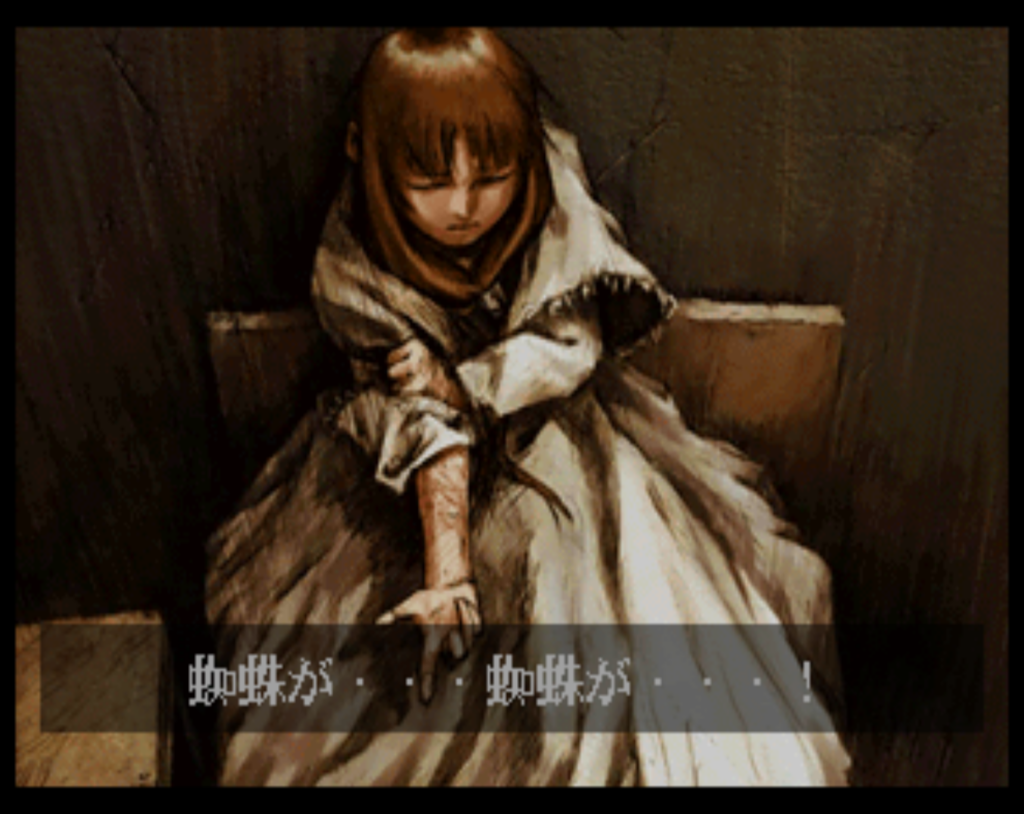
The story is partly narrated by Verbet, a blind woman who also appears as a character in the game, and partly just regular story sequences.

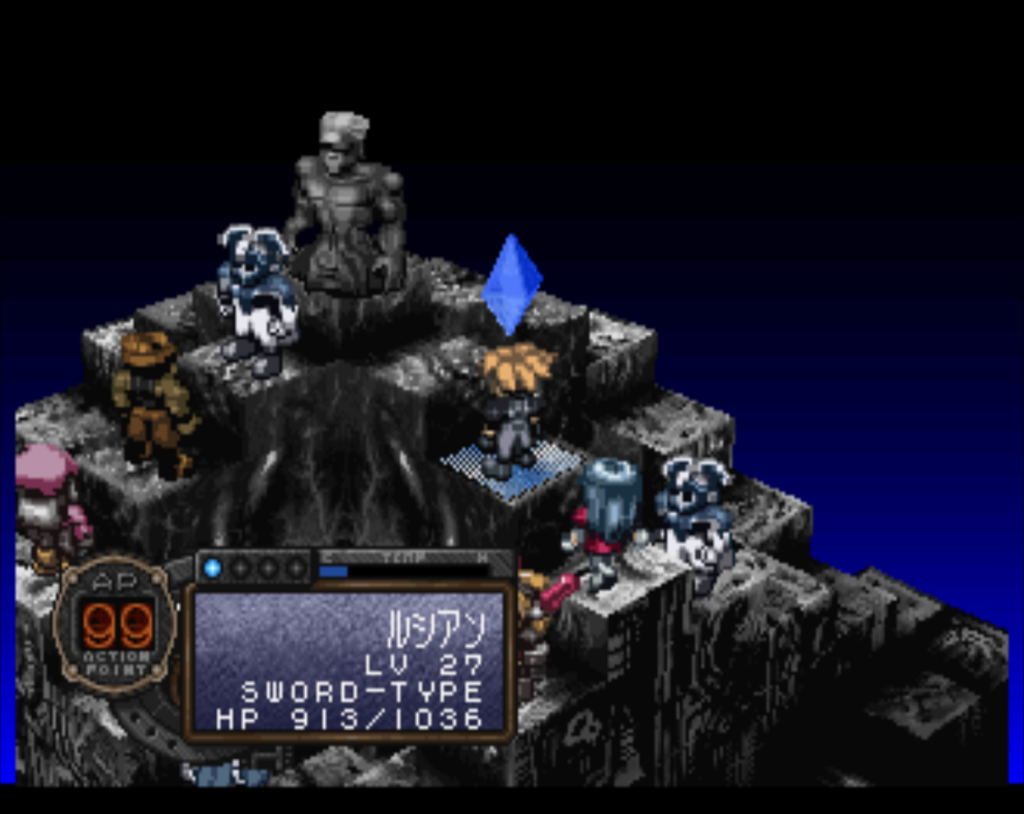
The game is the usual player/enemy turn. Each character begins with 99 action points, that can be used to move, attack, and use special moves. Any AP left over can be converted to “cool down”, which is important for the overall attack system.

It doesn’t look like I got a screenshot of it, but all the weapons are these chainsaw-style motor weapons. You can choose a power between 1-5 for each attack, or use a special attack, or a super-special attack. These all add heat to your weapon, which you have to cool down — weapons will cool down automatically between turns based on the temperature and weather, but you can also redirect leftover AP to cooling down. If your weapon gets too hot, you will overheat and will not be able to act for a few turns.

A lot of stages also have switches that you need to manipulate to raise and lower barriers, open gates, and such.

Some characters have guns or bows that can make ranged attacks, but most are just “sword” attacks.

The system is interesting and fun to play with, but the game is extremely easy — one of the easiest SRPGs I’ve played. You usually only have to take on a few enemies at a time, and you can defeat them with powerful attacks and then cool down before fighting the next ones. There are only a couple of stages that require any thought beyond just basic move-attack, including the final stage which is slightly tricky (but still not that hard.)

You never upgrade your weapons in any way but you can equip three items to each character. The item equip is a bit confusing because you have multiple slots (head/arm/foot/etc) but it’s not always clear why certain items can only go in certain slots. There are shops before some of the stages.

Overall I would say this game is OK. The world is interesting and the atmosphere of the game is appropriately grim and grey, while still offering some interesting things outside of the typical “ruined city” cyberpunk situation. The story is serviceable and has some nice parts, but it’s too short and the ending is rushed (I wonder if they had to accelerate the development because the Saturn was in its waning period). The system has some good ideas but the game is so easy that it feels like you don’t often have to get particularly in-depth — in particular, the potentially interesting question of having to trade off attack power vs. heat often makes no difference because you can use powerful attacks and then just have other characters fight while you cool down. About halfway through the game you start getting the Sword Masters in your party, and they are far more powerful than your other characters.

In a way this is similar to some other late-system games I’ve played (like Energy Breaker) that seem to have been a bit rushed because they wanted to get the game out before the system was no longer viable…although I don’t know if that was the case here.

SRPG 99 – Go-jin Senki (PS1)

Go-jin Senki (鋼仁戦記), released 8/6/1998, developed by Santa Entertainment, published by Tonkin House

After suffering through Light Fantasy I and II, I was not happy to see Tonkin House’s name pop up with this game. While this game is nowhere near as bad as those, it’s still not a particularly good game and I didn’t finish it in the end. However, there is a translation patch so you are free to try it for yourself.

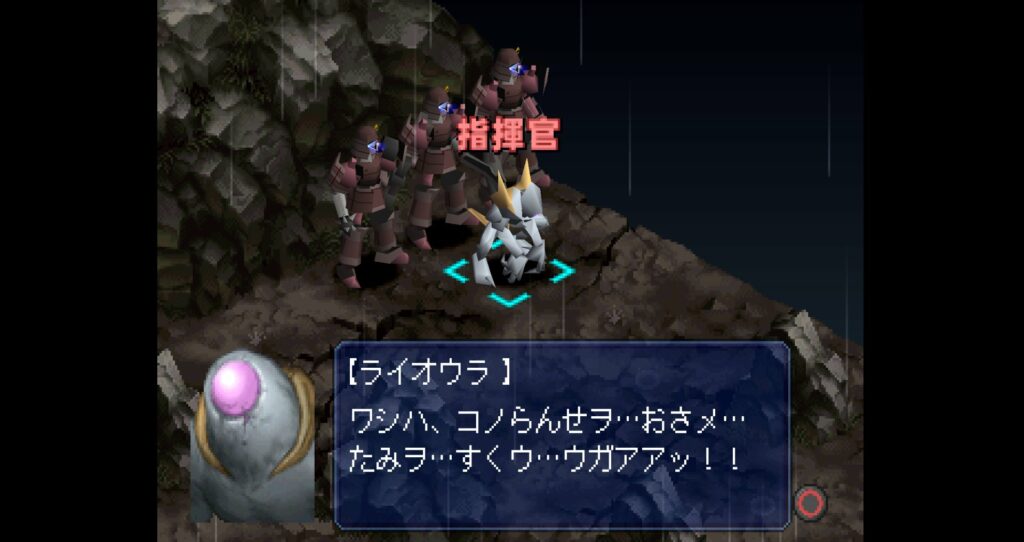
The setting is Kunagami, a world that is basically medieval Japan but with mechs called Goujin that are controlled by human spirits. The story begins with the king of Himuka, Raioura, attacking the Kuchina tribe’s village and slaughtering most of the inhabitants. One of them, Isamaru, is taken to a prison but is freed by Lakan, one of Raioura’s underlings who has defected to stop Raioura from his plan to take over the world. The story ends up involving not only Raioura, but evil demons and another member of the Kuchina tribe.

The story is told through a combination of VN-style narration and normal speech text boxes. The story is the best part of the game — while it’s not a masterpiece of RPG narrative, it’s interesting enough that I had some interest in how the plot would turn out in the end.

The game flow is a series of fixed battles with no alternate paths. You can retreat from most battles (keeping your XP and money), and you can do practice battles on any battlefield you’ve cleared so far, if you need to grind. The party limit is six, and you get a lot more characters than that. At first I was trying to use all of them but eventually I just focused on a small party.

The graphics in the battle are weird — they are polygon 3D figures on a normal 2D map. It doesn’t look that good and it slows everything down a lot.

Each character has a certain number of AP. Abilities take AP — in theory the attacks that take more AP are more powerful, but the system seemed poorly implemented because you can have a 16 AP attack that only does 10% more damage than a 4 AP attack (sometimes there are extra effects also, but the effects aren’t always good, like knocking a character back).

Characters recover AP between turns, but not very much — 1 at the start, but as you level you can recover a bit more.

A huge problem with the system is an inability to take back your movement after you do it. In general, the UI is plagued with issues — for instance, you often can’t check what abilities do, and you can’t see characters’ statuses in the screen where you are choosing who to send to battle.

Characters come in three types. “Generals” have two equip slots, one for a weapon and one for a magatama that gives a magic attack (or heal). Then there are fighters and spellcasters, that just have one slot. In general I found that the fighters were nearly worthless; I used all my generals and then spellcasters (one attack, one heal), and then filled the sixth slot with a fighter.

That leaves the Go-jin. You start with one, and get two more as you progress. A lot of effort was put into this part of the system — each mech has five equipment slots, and you can buy and equip a variety of weapons. Characters have specific skills that let them get extra effects out of the weapons (such as being able to attack everyone adjacent, or firing multiple shots). However, there are two aspects of the system that completely hamstring the gojin and make them essentially unusable in many stages.

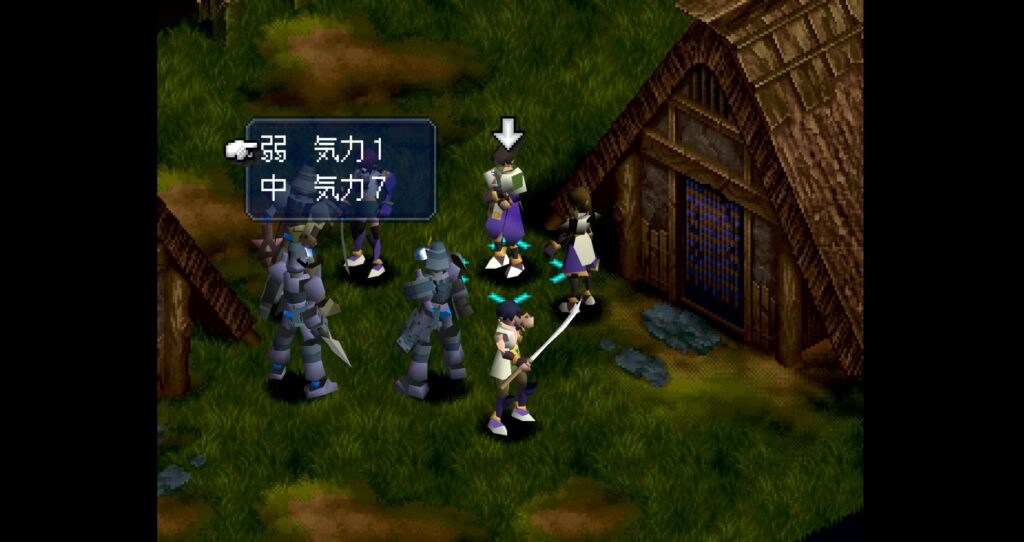
Choosing a weak vs. moderate heal

The first issue is that people in Gojin don’t gain experience. Instead, any experience gained by the gojin is distributed equally to other characters. This means you have to constantly be switching around your characters (and the weapons).

But the much bigger problem is the “berserk” issue. Each map has a certain “power density” that adds each turn to your gojin’s counter. When that counter reaches 100, the gojin goes berserk and can no longer be controlled. I saw the enemies use things that (slightly) lowered their gojin’s counter but I never saw this. The main issue here is that so many of the battles are very long, with tons of reinforcements, that any gojin you send out are guaranteed to go berserk. I just stopped using them because of this, and I noticed that someone who did a complete playthrough on youtube did the same thing.

Another big issue with the game is that you can’t save during battle, and it’s pretty easy for the enemies to overwhelm you (they take a lot of hits to bring down and nobody can tank). I used save states, but even then I found the game tedious.

Eventually I got to a point about 70% of the way through the game where I was saddled with an NPC operating on bugged AI (she would only move next to the enemies and not take any actions), which took up a slot and left me with only 5 guys. I hit yet another stage with waves upon waves of reinforcements, and I finally decided that I was no longer interested in struggling through the slow battles and flawed system to see how things turned out. I probably should have given up a lot earlier but I tried to stick it out.

Next up is game #100! It’s Wachenroder, the second-to-last Saturn game for me to play.

Atelier A2 – Atelier Elie (Bad endings)

I need more time on Go-Jin Senki, so I decided to spend a day getting the five(!) bad endings in Elie.

The main triggers for these endings involve the “extensions” you can get if you fail to make high-level items by the end of year 4. There is something with the contests as well, as I mentioned in the last post — the ending conditions seem to be based on a combination of items you made and your school ranking.

To get the 1 year extension, make a level 3 item but don’t 4 item, or have a class rank between 200-249.

To get the 5 year extension, you have to not make a level 3 item, or have a class rank lower than 250. Getting either extension locks you out of any of endings above 8.

  • Ending 12: Get the 5 year extension, and then do not make a level 4 item by the end of the 5 year extension.
  • Ending 11: Refuse the offer of an extension (leave school)
  • Ending 10: Get the 5 year extension, and then make a level 4 item.
  • Ending 9: Get the 1 year extension, and then make a level 4 item.
  • Ending 8: Fulfill the Ending 9 or 10 requirements, and have a popularity of -50 or below, and a reputation of 700 or above.
The worst ending

If you want to get all of these on a file that you’ll actually use for other things, the best thing to do is play normally until you are ready to make a level 4 item — you should be able to do this early enough that you can still lower your class rank by skipping all the tests.

So I started a new file, and played as well as I could for the first year. I wanted this file to be usable later for some of the other endings, so I made sure to do the Marie points correctly, and also I used save states to make sure than any level up Elie gets, she gets at least a point in either STR or DEF.

His expression shows you might lose popularity if you turn in that item

One thing I was able to do more efficiently in this game is the alchemy level and requests. I didn’t understand the way the “rich people” requests worked at the beginning. They get you a lot of money, and some of them can be completed with fairly easy to acquire ingredients — you can look at the guy’s facial expression to see if you are turning in good items or not. If you turn in basic items you will still get the money, but it may lower your popularity. I am not entirely sure what level of popularity you need to try for — there don’t seem to be any endings that require a specific high level of popularity, but it’s possible that if it gets too low you will miss out on important events. In any case, I don’t find that doing some “bad” requests will affect things too much.

In the first academy contest, I did as well as I could (I got 7th place, which is fine). By the first month of the second year I had learned the recipe for Megacraft, a level 4 item that is pretty easy to make (you just need 4 crafts, the ingredients can be found in the nearby forest).

At this point it is easy to get endings 12 through 9:

  • 12: Rest until year 4 8/30. Take the 1 year extension. Rest a year, take the additional 4 years, and rest all 4 of them.
  • 11: Rest until year 4 8/30, and quit school.
  • 10: Rest until year 4 8/30. Take the 1 year extension. Rest a year, take the additional 4 years, make a megacraft, and then rest the remaining 4 years.
  • 9: Rest until year 4 8/30. Take the 1 year extension. Make a megacraft, then rest the remaining year.

Ending 8 takes a bit more effort. It’s easy enough to get your popularity down below -50, just by repeatedly taking jobs and either cancelling them or letting the time limit run out. However, to maintain your 700 reputation, you can’t just rest for years because your reputation will drop. You have to rest for a few months, then take some more jobs (even if you cancel or fail them, your reputation will still go up), and repeat. It’s not particularly hard but it requires some attention. Also make a megacraft. In this ending, Ingrid is very cold to Elie, telling her that she graduated but to immediately leave her office because she’s busy. Elie goes back to her home town, realizing that she’s too unpopular to keep going in Salburg.

Finally, I wanted to see if I could get the cheesecake ending since it’s the last ending I had that didn’t have a movie associated with it. It seemed easy enough, you just have to use Blend Alchemy to make a high ranking cheesecake. I could never get it to work with the recipes I found online, but I finally saw that your alchemy level needs to be high as well. So I reloaded one of my late saves from before, and was able to successfully make the cheesecake. I rested, refused the Maister Rank extension, and Elie opened a cheesecake shop (they should have at least had a picture for this ending.)

I’ve now gotten 8 of the 13 endings. The remaining 5 all have movies and are good endings. I don’t know if I will get all of them, but I’m at least going to get ending 0 (what might be considered the “best” ending). We’ll be back to this at the end of 1998.