Monthly Archives: February 2026

JRPG 41 – Ginga no Sannin (FC)

Ginga no Sannin (銀河の三人), 12/15/1987, developed by Pax Softnica, published by Nintendo

This is a Famicom port of a 1985 computer game called Earth Fighter Rayieza. From what I have read (and can see on video playthroughs), the Famicom version is more or less a complete remake rather than just a straight port.

The setting is the year 2300, where an invading race known as the Garm have destroyed all the space colonies and taken over all human habitations except for Earth — Earth is protected by a barrier but it’s only a matter of time before the Garm breach it. The main character and his companion Blue are entrusted with the Rayieza space mechs in order to defeat the Garm.

First you have to respond to a distress call on the moon.

This is the main space map. You choose a place to visit and then move towards it. You can move a number of “steps” equal to the number of boosters you’ve picked up, although moving more than 2 will cause HP damage. So if a place is 34 distance, and you have one booster, you’ll have to do 17 two-step jumps to get there, and each one can have a random encounter. This becomes rather tedious as the game goes on because it doesn’t have the exploration feeling of a normal overworld map, you’re just pressing A over and over again and doing fights.

On the moon we do the first dungeon:

Here you move around through a maze. There are no encounters in this one but there are in other dungeons. We find a girl in a capsule and bring her back to Earth to recover, then go out into space again. The main goal of this first section is to destroy the three Garm ships (the green things on the map above) and then the Garm base. But you have to prepare for that by building up money and levels and buying better equipment.

Levelling up only increases your max HP, and when Remi (the girl) joins you early in the game, she will also increase her EP and learn new support moves. The only other way to increase your power is to buy items. There are two types of weapons. The first is the basic beam attack which attacks all monsters and can be used infinitely. The second are your missiles, which are limited. You can shoot as many missiles as you have. (You also get promoted in rank after a certain number of battles but I don’t believe this has any effect).

There are hidden level limits based on how far you are in the game, and 40 is the highest possible.

Basically you want to get the best stuff you can from the first space map area (the Mega Ion and S-Missiles) for both the main character and Blue, and that should be enough to take out the three Garm ships.

Fights are like this — you can see the enemies and their HP. Your beam attacks hit all enemies but the more enemies there are, the less damage it does. The missiles work the same way but do more damage.

When you fight the ships, you first have to close into their range before you can shoot them with missiles and such, so you need a fair amount of HP and healing items.

You can visit the various planets as well but there’s really no point at the moment. Once the three Garm ships are destroyed, you find out that an escape capsule went to Uranus, and we still can’t damage the main Garm base.

I got a game over in the Uranus dungeon (which sends you back to your last password place with half your money taken but everything else intact), and this is where I stopped.

I think that the game has some interesting ideas, but the travel and battling feels like a slog because it’s so repetitive. I’ve also read the the game suffers from increasingly severe balance issues; you can only hold 9 heal items and level 40 is the maximum. It seems like later in the game you just have to run from nearly every fight in the dungeons to avoid getting a game over, and levelling up gives you only a slight advantage.

The story has some interesting twists at the end, but there are long periods of no story development at all, just going to different dungeons for fetch quest items.

In the end while this has some interesting aspects to the gameplay and might be worth a try, it’s probably not worth playing to the end.

SRPG 123 – Shin Masou Kishin Panzer Warfare (PS)

Shin Masou Kishin (真・魔装機神 PANZER WARFARE), released 11/25/1999, developed and released by Banpresto

Masou Kishin was originally developed for the Super Robot Wars franchise, starting back in 1992 with SRW 2. That game introduced Masaki in the Cybuster and Shuu in the Granzon, and the instruction manual had the embryo of the setting — Masaki’s Cybuster was created in the underground kingdom Langran from a mix of magic and technology, and Shuu’s Granzon was created using technology from the alien race of “Guest.” This setting continued to be developed through the succeeding games, with EX taking place in Langran, Guest themselves appearing in 4/F, and finally a standalone game in 1996.

Apparently this game was intended to be the sequel to the 1996 Masou Kishin game. But the relationship between Winkysoft (who had developed most of the SRW games) and Banpresto broke apart for some reason, and so this game was made instead. It completely changes the setting and characters, keeping only the names and designs of the 4 main mechs. Winkysoft released their own Masou Kishin-ish game in 2000 called Rayblade, while Banpresto used Masaki and crew in SRW Alpha and Alpha Gaiden. After that the franchise was silent until 2010, when Winkysoft again teamed up with Banpresto to do a remake of the 1996 Masou Kishin game. They then released three more Masou Kishin games in three years, finishing the original storyline.

Panzer Warfare moves the setting to a new alternate world. At least in the part of the game I played, there is no longer any connection to Earth. The Masouki (lesser mechs) and Masou Kishin (the main 4 strong mechs) are created out of technology derived from the “Arm of God” that suddenly appeared in the world. I didn’t finish the game so I don’t know what the ultimate reveal is for where this Arm of God came from.

Strangely when you turn on the game, you get the OP and an ad for the TV anime that Banpresto made as well, but that has nothing to do with this game (it’s yet another alternate setting for the Masou Kishin).

Anyway, the review. The graphics are serviceable; you can see the in-battle animation above (which fortunately you can turn off).

The sequences have decent looking pictures, and there are a fair number of scenery pictures as well to illustrate the scenes.

The maps are overall OK. Sometimes it’s difficult to tell exactly which hex the enemies are on but it’s not to too bad.

The music was unmemorable; the sound is underwhelming. There is only a tiny amount of voiced dialogue, similar to what the SRW games were doing at the time.

The story relied on familiar elements but seemed good. The main character, Keigo, is a Masouki pilot in training, and his training is interrupted by both monsters attacking, and the assassination of the king of the neighboring kingdom. This starts a war between the two kingdoms although it’s being controlled from behind the scenes by someone with a more sinister motive.

The system relies on a hex map. The overall system is broadly similar to the SRW games with a few key differences. The first one is that switching your facing takes movement points, and which attacks you can use depend on the facing. You can also fly, which gives you more movement and also lets you use your melee attacks against flying enemies. The downside is that you can only move forward in about a 30 degree angle.

This system makes certain attacks much more useful than others. In particular, the attacks that cannot be used post movement, and also can only be used to front-facing enemies, means that the enemies can just move behind you repeatedly, taking away that attack.

Rather than energy, attacks depend on Prana. The more powerful an attack is, the more prana it uses. Having a low or high prana also affects the damage of general attacks. Spending a turn without attacking will restore some prana depending on your stats.

When you level up, you can put points into various stats. I put a lot of points into the prana stat that raises your SP to cast seishin (and gives you better prana recovery). I also did Luck which helps the activation of your sword cut/block skills, and then dodge/evade. I seemed to be doing decent damage so I didn’t put many points into attack….this was a big mistake and resulted in me getting stuck about 2/3 of the way through the game.

Another aspect of the system is that the enemies can cast seishin as well. This often means that you can’t leave any units alive on the EP or they will just get healed (often to full HP).

There are no items or equipment.

The map design is OK. Most of the maps are just enemies that come towards you and you have to beat them, without any particular complication. Some of the maps take place on an alternate world (where the monsters are coming from) but that doesn’t make a big difference.

The balance is not great. At the beginning, your masouki are fairly weak, especially the side characters. But then about stage 10 or 11 you get the Masou Kishin which are much stronger. Despite what some sites said, I didn’t find that it was laughably easy at this point — it certainly wasn’t hard, but you do have to deal with the healing enemies.

But, the game is a stage-by-stage flow with no alternate or repeatable stages, nor can you use the game over trick that is common in SRW to get more XP. So this means the designers should be careful not to make stages that can be unbeatable if you didn’t develop your forces in the right way…and they weren’t careful.

This stage gives you a very limited time to kill these 4 enemies before the bomb goes off. You only have Cybuster (plus an NPC, but she doesn’t really help). All 4 enemies have heal seishin, and there is an additional healer at the top of the map that can Friendship everyone to full health. Every walkthrough and video I watched said the same thing — you just use a hot blood Cyflash to kill them all. Which probably works if you were a normal person and put more points into the attack stats than I did. But given that I didn’t do that, I see no way past the stage — if I do the hot blood cyflash, they’re all back at full HP the next round, and the time is so limited that I can’t take them out individually or exhaust their seishin points. Even if I take out the friendship user at the top, the individual units still have their own Trust healing seishin.

Do I deserve some blame for being weird with my character building? I guess so but I think it’s more the designers’ fault for making this kind of stage.

The interface is fine for the era. There are no extras as far as I know.

Overall this was a mid-tier game even before I got stuck. The system has some interesting ideas but they often create more frustration than fun.

JRPG 40 – Outlanders (FC)

Outlanders (アウトランダーズ), released 12/4/1987, developed by Micronics, released by Victor

I just passed the 9th anniversary of this blog. I wonder how much longer it will go?

Anyway, what better way to celebrate than with a crappy Famicom game based on a manga. As of a month ago the only walkthrough on GameFAQs was an incomplete one beginning with this: “I will be honest with you. If not for the sake of the NES Completion Project going on, I would not have touched this game let alone make an FAQ for it. This game is totally a piece of crap. The controls are all whack and the fighting system is garbage. In order to even, win a battle you must move around until your enemies are in a straight line and then hold down the B button to slash at the enemy continually.”

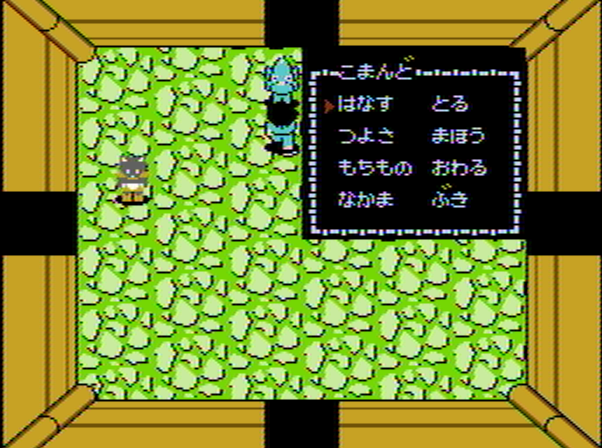
Since then, someone has made a full walkthrough, but the game is still as bad as the other writer said. The whole game is divided between single-room style exploration and wider areas, kind of like Deadly Towers.

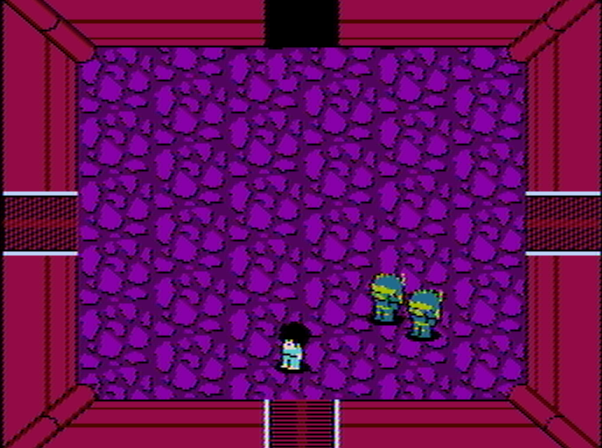
This is what the battles look like — they are symbol encounters. As the FAQ writer said, it’s very hard to effectively fight because your sword has low range, and the hit boxes are weird. The most certain way to win is to run around until they line up and then you can fight them head on. There might be other ways to do it, but you will get killed very quickly. You also can’t see your HP during battle or how much damage the enemies are doing.

The battles give you money and XP, but to level up you need not only XP but “smile pins” that you find in various places. You can buy weapon upgrades and items.

The game itself is not especially long or big, but it’s so annoying to play that there’s no reason to really bother.

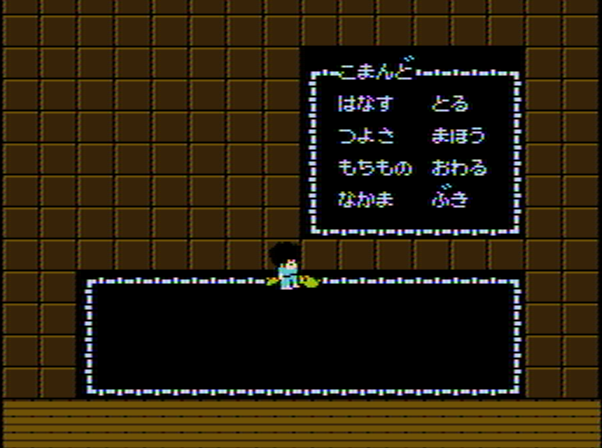
As is predictable, the interface also sucks. The graphics glitch a lot, with boxes appearing over items, things in the wrong place, etc.

This is one of the worst games I’ve seen of these early RPG and RPG-like games. It’s still probably better than Hoshi wo Miru Hito and Mirai Senshi Jarvas, but not by much.

SRPG 122 – Growlanser (Review)

Finally finished Growlanser. Overall it was a good game; probably the game I’ve enjoyed the most in the 1999 set. It’s not the most typical SRPG, though. Probably 2/3 of the game is dialogue (if you listen to all the voiced lines), and the battles themselves are fairly short because of the real-time nature of the system.

For the review I’m going to back to categories that I made a while back, although I won’t assign a point value to them. At the end of the post I’ll go over the final battle.

Overall the graphics are good. The designers thankfully did not try to go with the 3D models that so many companies were trying, and both the character visuals and the world graphics are fine. You could say they don’t exploit the full potential of the PS1 I guess, but I think the sprites I think are big enough that they are distinctive but small enough that the visible area of the map is decent.

The music was not very memorable to me (good or bad). The sound gets high marks for the large amount of voiced dialogue, even in side scenes.

The story is expansive and interesting. There are a lot of twists and turns, and alternate elements of the story that all get wrapped up in the end. Apparently Growlanser II takes place in the same time, and III is 1000 years before, so the whole thing gets fleshed out more in these games.

The system, which I described in the previous posts, works really well for the most part. I said before that I did not like most of these real-time “issue orders” SRPGs that have come up so far, but Growlanser dealt with the problems of those games. I never felt like the characters weren’t doing what I wanted them to do, or that I was having to mash buttons to get the menus to come up. There’s a good mix between magic and fighting, with both being useful in their own ways. Perhaps the only issue is that the magic using characters are not as clearly distinguished as they could be, with most being able to learn more or less the same stock of spells.

The map design is good as well. Of the 70 or so story/event battles, not very may of them are just “beat the enemies.” Usually there’s some kind of separate task you have to do (often protecting NPCs). One potential drawback is that many of the maps do not have much in the way of strategic chokepoints or other such obstacles. This is probably a good thing because the pathfinding rarely becomes an issue, but it does mean that sometimes the battles are just “send your guys towards the enemies” without any real obstacles blocking you.

The balance is OK. I think I tipped the scale by using a walkthrough to get a good starting player build for the MC — I didn’t quite realize that this was setting stat growths rather than just initial stats, which meant that the MC was significantly better than every other character. I think the balance also depends a lot on which skills you learn for your characters, as some are better than others. But, you can almost always find a place to grind some extra levels and money. (The exception here is the final battle, which is an unwelcome huge difficulty spike, but I’ll cover this at the end of the post)

No real complaints about the interface. I hope at some point we will reach the time when a good interface is taken for granted and doesn’t have to be specified. But I do want to reiterate the two things that I really liked about the battle interface — it automatically brings up the command window for people who have completed their move or spell, and you can press the menu button during an attack animation to automatically bring up the orders window after the animation ends. I found that this was not always foolproof, but it worked most of the time.

The main extras are one optional dungeon, some optional coliseum battles, and different ending sequences depending on what character you have the highest friendship with at the end.

And now the final battle, which annoyed me.

First off, you have to go through an event battle plus several grunt enemy battles and a bunch of story sequences to reach this final battle — fortunately on an emulator you can just save state at the beginning of the battle so that’s not an issue, but given that the battle took me around 15 tries to win that would have been quite frustrating on a real console.

The problem with this battle is that as you can see, you start with all your guys clustered in a bunch with 11 enemies. They all attack, and the main one you have to destroy has a very high damage magic attack. You only have to beat the main head to win, but it starts with very high defense that goes down as you destroy the parts. I often had a hard time just getting my characters to survive to take more than one turn, especially the spellcasters. I tried using buff spells but I found I could not get those off and then also do healing. Apparently you can get monsters in the final dungeon to drop items that heal everyone to full HP, if you have some of those it would be easier.

What finally worked for me was to start off by switching accessories — MC equipped a Pegasus thing that increased his casting time, and Ariost and Ruise both equipped the ones that reduce magic damage. They then focused entirely on using Healing (and Fine to fix stone/paralysis if necessary) while MC casts Tornado. The tornado hits 10 of the 11 enemies, but the one out of his range absorbs tornado damage anyway. The other two characters attack the surrounding enemies.

With this strategy and some luck, I was able to get enough of the enemies defeated that I felt i could switch MC to using Soul Force on the head, and from here he went down pretty quickly.

There’s also a time limit for not just this battle but the grunt enemies beforehand — I wasn’t even close to hitting the limit, though, so I’m not sure that matters all that much.

I don’t much like these sudden difficulty spikes on final battles. Usually when I reach the final battle I’m ready to finish that game and move on to another one. It’s probably not good to have a battle you just mash buttons and win no matter what, but it’s probably clear from the number of games I’ve dropped at the final battle that I’m not in the mood for trying a final battle a ton of times or doing a bunch of grinding. But that might just be my own weird feeling.

Anyway, Growlanser took me a month but I am finally done. 7 more games for 1999.