Monthly Archives: May 2026

JRPG 47 and 48 – Kamen Rider Club and Dragon Quest III (FC)

This post will cover two games briefly — one because it sucks, and the other because I already played the remake of it (and played the original enough times that I don’t need to do it again).

Kamen Rider Club (仮面ライダー倶楽部 激突ショッカーランド), released 2/3/1988, developed by Tose, published by Bandai
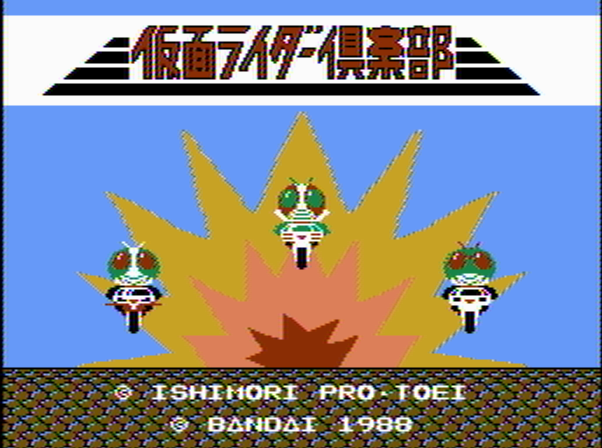
This is a game based on the long running, popular Kamen Rider series masked heroes on motorcycles. By the time this game came out, there had been seven different KR series from 1971-1980. Then after a break, an eighth series started in 1987 and was still running when this game came out — I haven’t seen any indication of this, but it would make sense if this was released as part of the “revival” of the series. The series remains popular; I think there have been 36 series now plus all kinds of associated things, and a new series will begin this year.

Unfortunately, this game is garbage. It’s barely playable to the point where it’s hard to see it being released at all if it didn’t have the Kamen Rider name to support it.
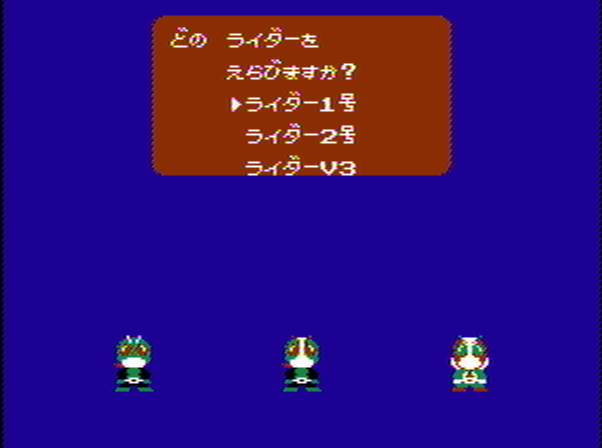
You get to play as the first three riders and can pick up three more throughout the game. I don’t believe that the newest rider was included. You play through each of the rider’s levels in any order, then several more levels with all of them.

The first big problem, perhaps the most important one, is that there is no way at all to suspend the game — no save or passwords. Because of the bad design of the game it will take 30 hours (give or take depending on how efficient you are), so if you are not on an emulator that’s going to be tough. Also you have limited lives and a game over sends you back to zero, although there is a secret way to continue. It’s hard for me to understand how this happened. The developer, Tose, was not new to video games. They had already made games like Kid Icarus and Saint Seiya that had password/continue systems. It seems impossible that this was a deliberate decision by the designers with full understanding of what was going on, so it probably points to a rushed development or a lack of playtesting.

Even if you play it on emulator so that you can save your progress, the game is still garbage. The gameplay is mixed action/battle. The action stages are standard side scrolling:
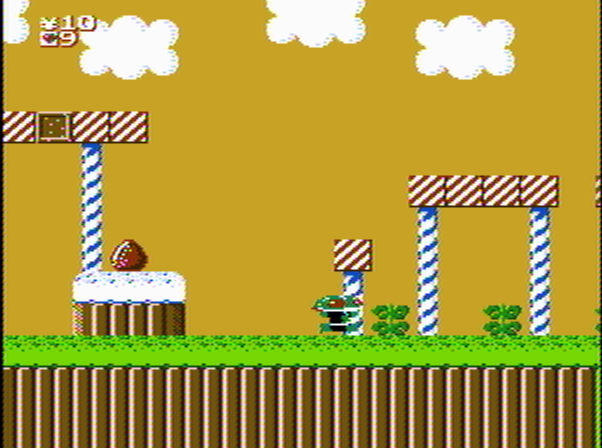
The Kamen Rider can only do this weak downward punch that doesn’t accomplish much, and jump. After you jump you can mash the button to slowly descend, which is necessary to reach higher platforms. You earn money and XP by defeating enemies, running into them to go into a separate fight screen (although sometimes you get damaged instead of going to the fight screen)

There are also shops you can buy stuff from but there’s a lot of randomness in what you will get.
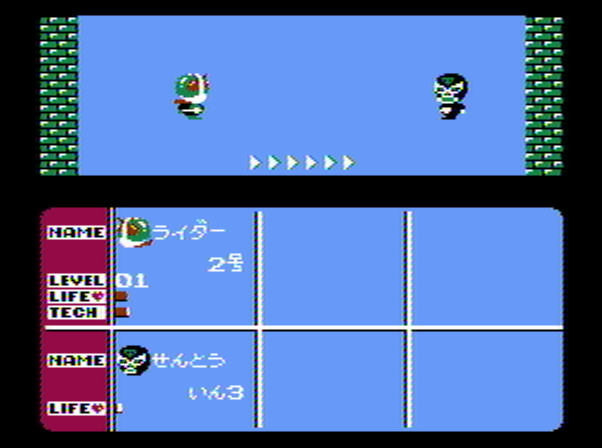
In the fight you just mash buttons to make the arrows fill up and then you’ll knock the enemy back; eventually you will win gold and XP. (There is way to much button mashing in this game for my taste)

But not very much gold. And you need a ton of money — passing every stage requires you to spend money to open gates, so that the main thing you do for the whole game is just grind money out of the enemies (or from gambling games). This is why the game takes 30 hours or more.

If the game had some kind of suspend feature it might at least minimally playable if you like the battle system, but as it is, there’s no point. Later in 1988 there is an Ultraman Club game but it’s by a different developer and seems to be a much better game.

Dragon Quest III (ドラゴンクエストIII そして伝説へ…), released 2/10/1988, developed by Chunsoft, released by Enix
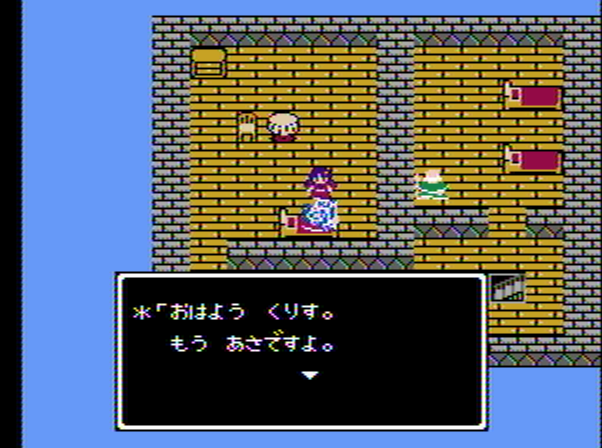
I have already played the Super Famicom version of this and discussed my experience as a kid with this game, so I’ll just briefly cover some details relevant to the Famicom version.

The major innovations in this game were the addition of battery-backed save instead of passwords, and the ability to create 3 characters in addition to your Hero, with several possible classes. Later in the game you can change your classes at the Tower of Dharma, which becomes a series mainstay. Aside from those big changes, this game is really just a refined, expanded version of Dragon Quest II.

It was hugely popular in Japan; DQ2 had already done great sales but DQ3 did even better, and I think this may be where other companies really started copying the DQ style in their own games. It’s interesting that even up to this point, 2.5 years after DQ1’s release, there still have been very few games that were actually trying to do the same thing as DQ. The majority of these RPG-“sphere” games still incorporated action into the game rather than purely command based. By the time we reach the Super Famicom I know from my play of those games that the action-RPG hybrids are in the minority compared to the tons of DQ-style command games, and I wonder if this will start being evident going from here.
SRPG 129 – Summon Night (PS)

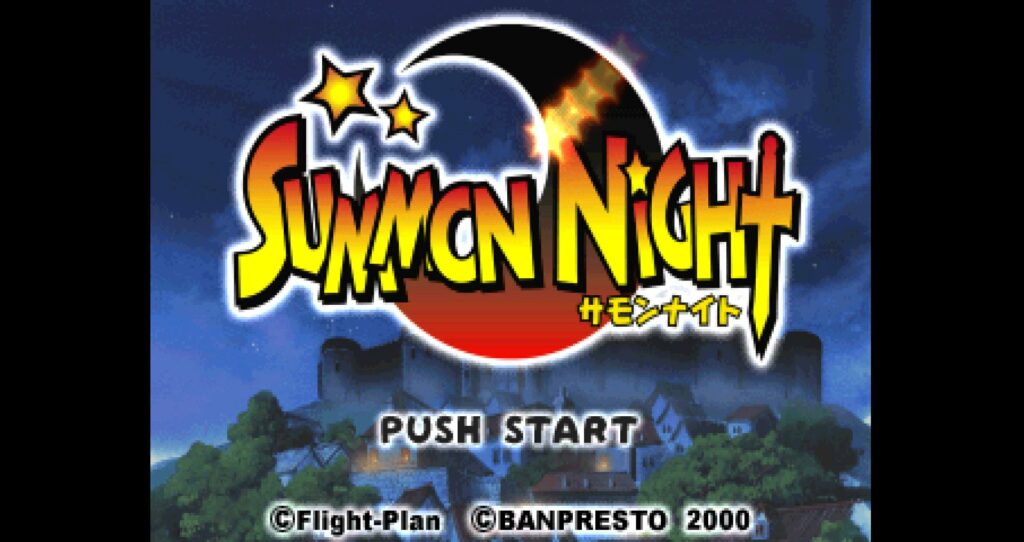
Summon Night (サモンナイト), released 1/6/2000, developed by Flight Plan, published by Banpresto

This is Flight Plan’s other major SRPG series after Black/Matrix. It basically consists of 6 core games plus a bunch of spinoff titles. Summon Night 3 was the game that really made me an SRPG fan rather than just a Final Fantasy Tactics fan. Before that I had tried Fire Emblems, Tactics Ogre (plus gaiden), and FFT Advance, but I was never able to get into any of them. Then when I lived in Japan I randomly picked up Summon Night 3 from the local game store; I had never heard of the series and could barely find any information about it online but the cover looked interesting. We’ll get to SN3 later, for now, let’s look at the first game in the series.

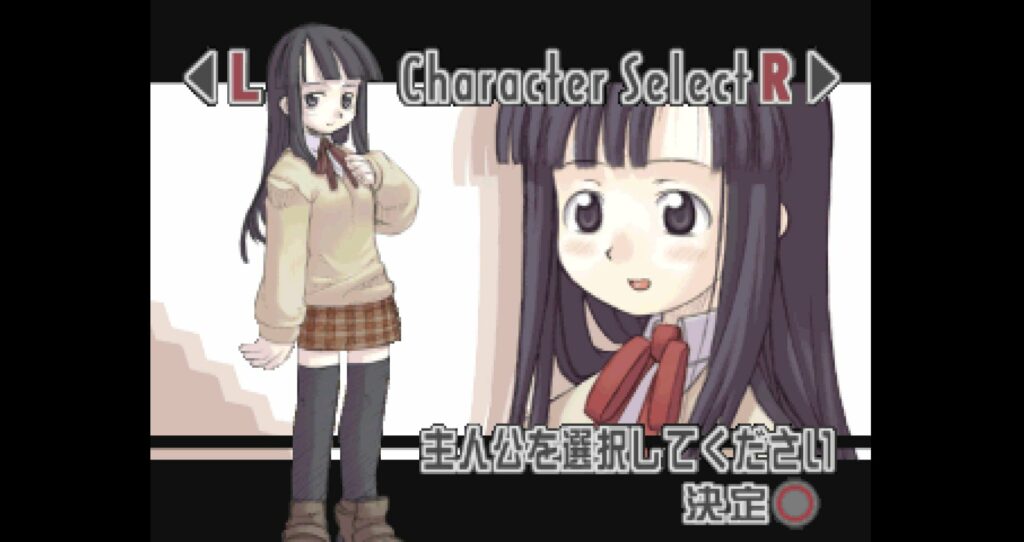
In contrast to the dark, complex world of Black/Matrix, the tone of Summon Night is a bit more “cute” and friendly, although the storylines themselves usually have a fair amount of seriousness and dark stuff in them. As usual for the series you begin by choosing your main character, with a choice of 2 men and 2 women. The first game’s main character is a Japanese high school student who is accidentally summoned into Linbaum, the world of the game. As far as I know this is the only game in the series that uses this trope.

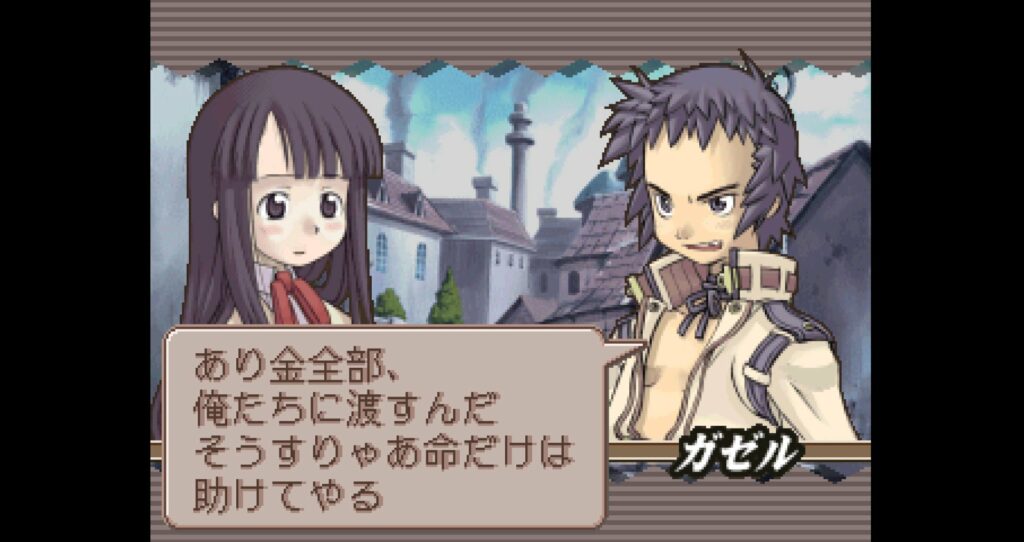
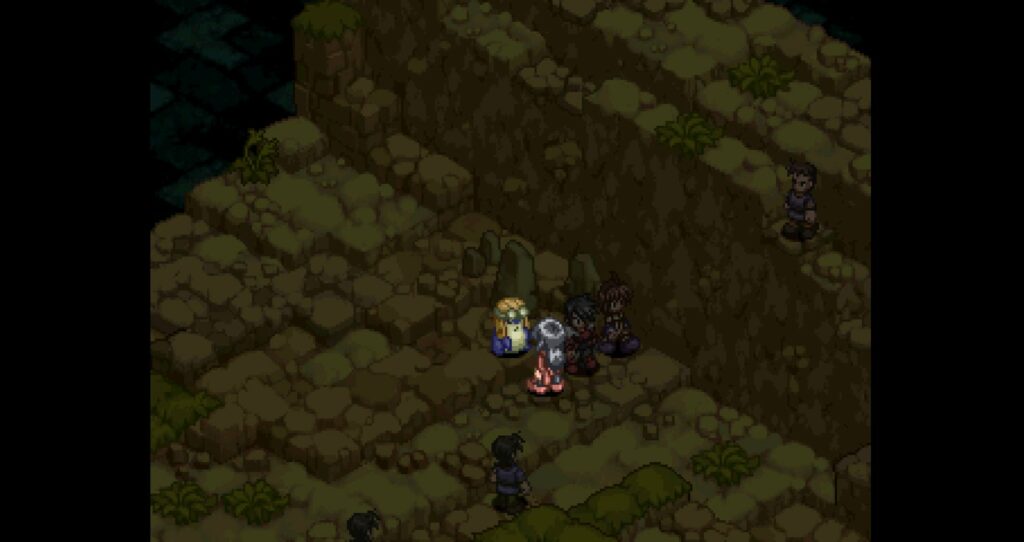
The element of the game that drew in the most fans was the detailed and distinctive character designs, along with the fully voiced dialogue. After arriving in Linbaum, the MC is accosted by this kid Gazel who tries to steal her money, but eventually joins their house, where a bunch of kids live. We learn that the city is controlled by some rich people and there is a huge income inequality in the city.

It turns out that the MC was summoned to the world by some kind of botched summoning attempt. The first part of the game involves her trying to figure out why she was summoned there and hopefully find a way home, and then of course she gets swept into a larger plot that eventually involves the fate of the world.

The “summoners” in the world are people that can use a “rite of contract” to use Summonite Stones of five different colors on certain objects. This gives either an item, a “miss”, or a summon creature. The creature will then be bound to an item which can be equipped by anyone to use the spell. These summoners are associated with various factions (such as the “blue” or “colorless” faction). For this game, only the MC can do the rite, as a product of whatever botched ritual brought her to the world.

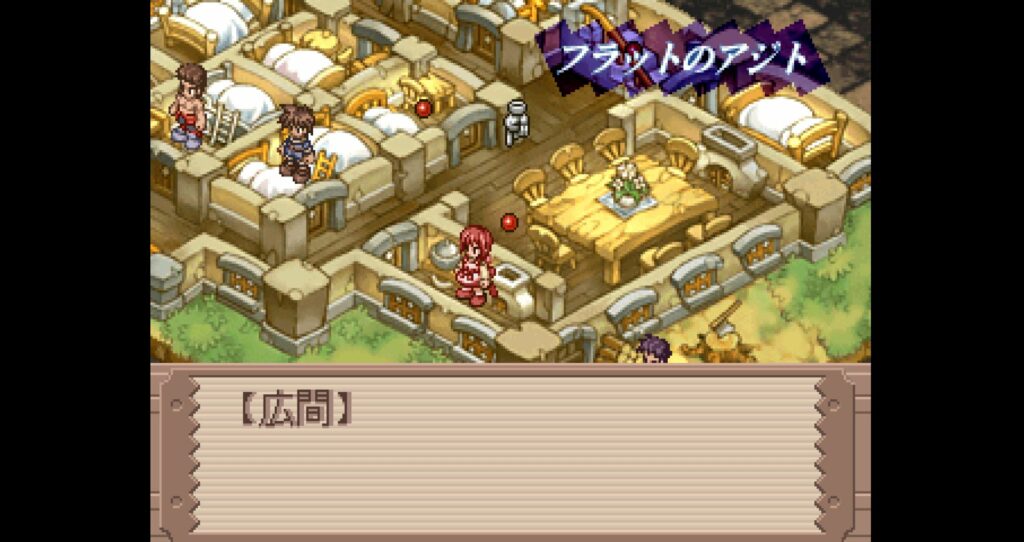
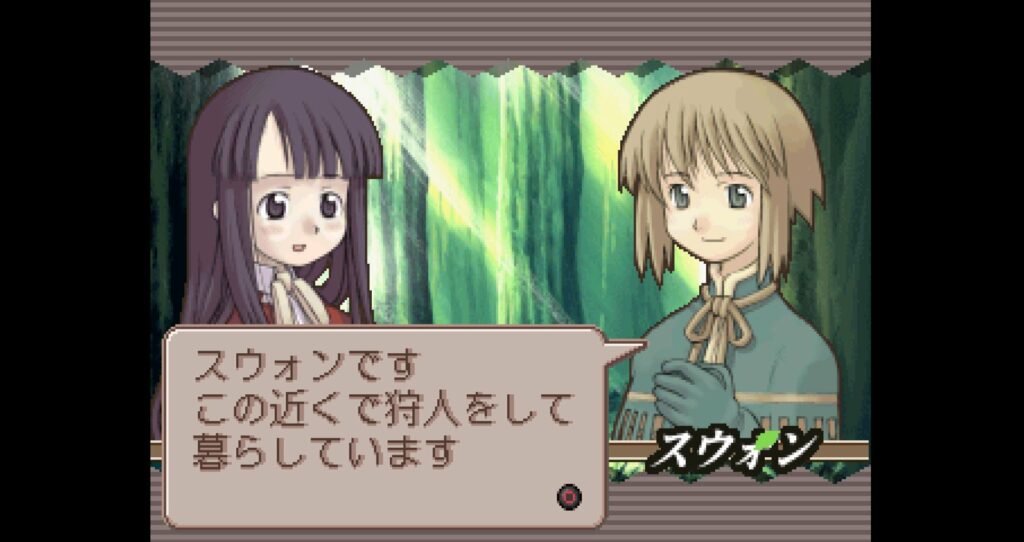
During the “adventure part”, you can move to various locations. If there is a character there, you will have a conversation. The ones that move the plot along are marked EVENT. From time to time there will be a space that has no character but has some kind of secret event; most of these involve optional characters and such.

On the whole, this is the strongest part of the game — the characters are memorable and interesting, and there’s a good mix of lighthearted character development and more serious plot stuff.

You can experience some boredom because all of the story is done through these sequences like in the image above, with any “action” being done just by sound effects or description. It’s a visual novel style that isn’t to everyone’s taste. But I like it fine. Also the text is done in a nice, readable font.

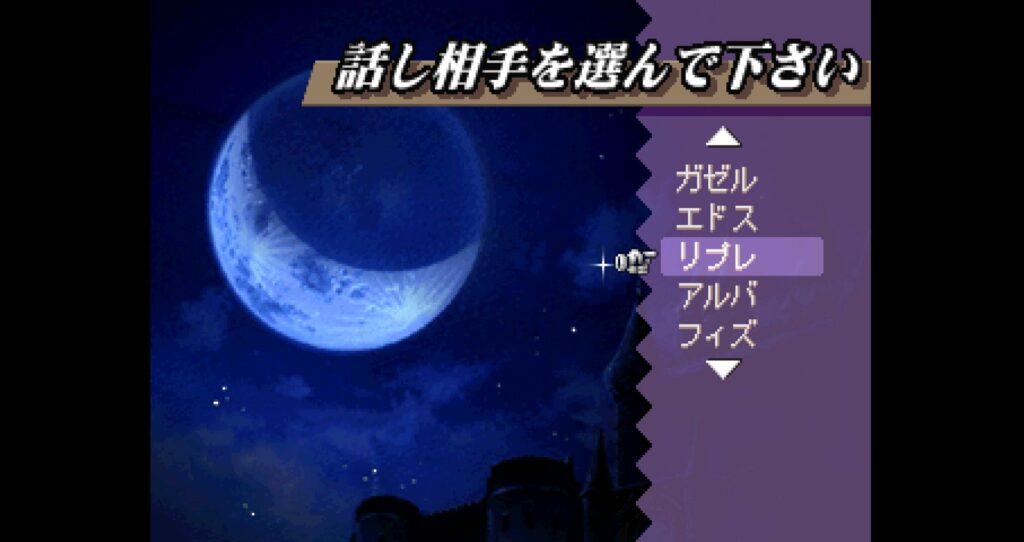
Most of the chapters end with a “night conversation” where you can talk to someone and increase their friendship level. There are a few different endings that are at least partly based on the level, although it seems to be less restrictive than the later titles.

Now for the battle gameplay. The first game is basically the same as 2-4 in terms of overall play.

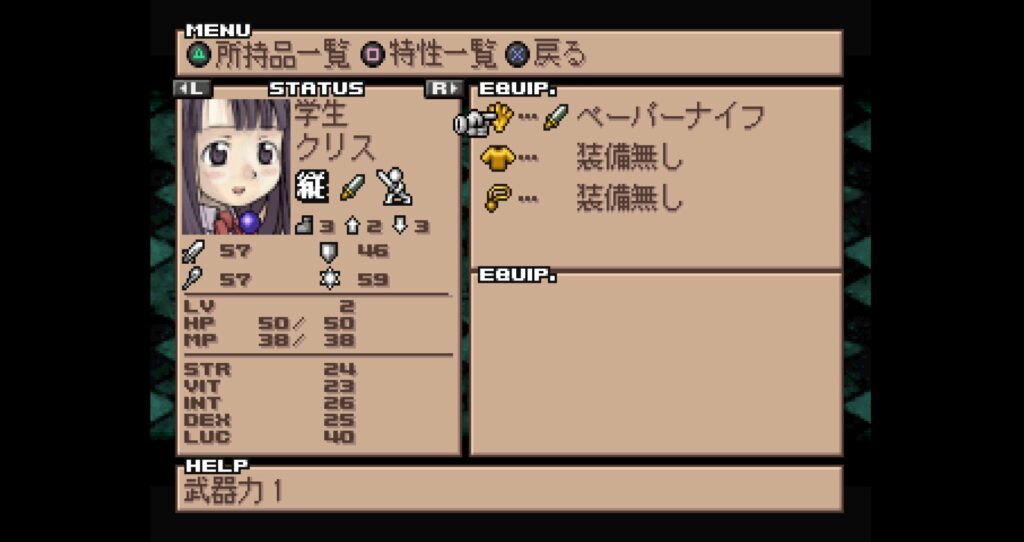
Each character has a class, and several upgrades they get when they reach a certain level. The class determines what weapon you can equip, and what kind of summon stones you can equip (out of the 5 colors). There are three equipment slots.

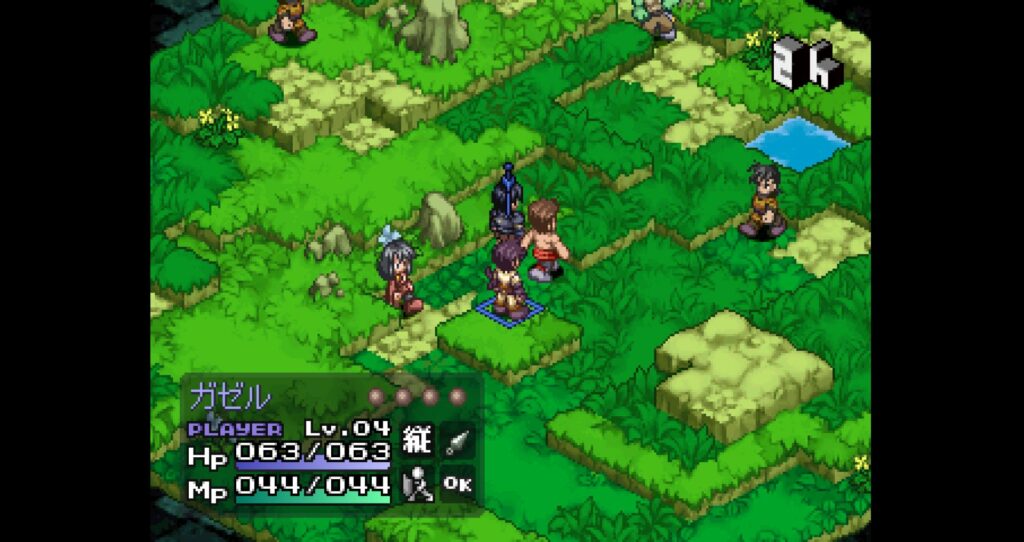
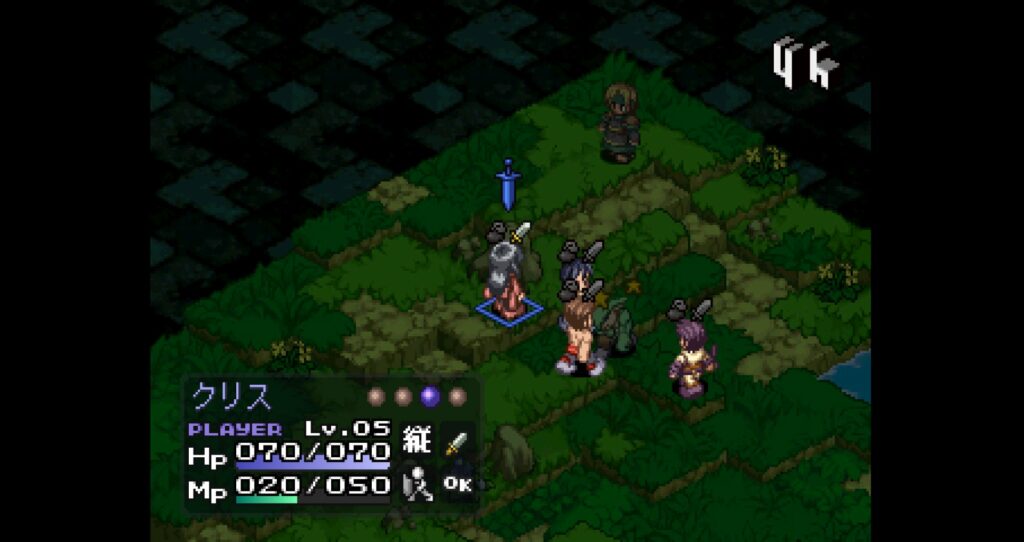
The battles are done with height and facing, on a player turn-enemy turn basis. For counterattacks, you can freely switch between “block” or “counter” at any time on your turn (for any character). Later games add additional reactions, but this game only has the two.

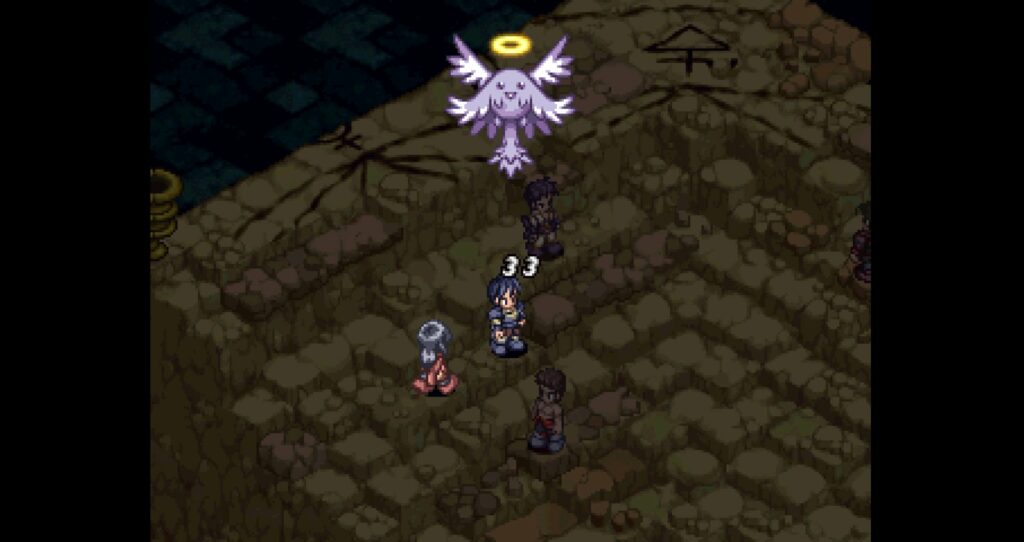
If a character reaches 0 hp they are removed from the battle. There is no immediate penalty, but like the other games, there is a hidden value that increases when you make bad choices or when people die in battle. If it gets high enough, you get a bad ending. From what I saw in a walkthrough, the bad ending value is high enough that you are unlikely to get this ending if you aren’t losing your whole party in each battle.

One of my favorite things about this series is that the XP is not awarded individually to characters. Instead, at the end of the battle you get a lump sum which is then spent to level up members.

There are free battles you can do in addition to the event battles. This allows you to build up money and XP but also to use your Summonites to get new summon gems. There are also additional rewards for clearing free battles (like equipment or accessories you can’t get any other way).

The battle system has good points and it’s fundamentally the same system as the other games, but there is a big problem in the balance, which they didn’t fix until the third game.

This game has very sharp stat or level scaling in its combat formula, so that just 2 or 3 levels of difference can make it hard for a character to be effective. This means on the one hand that if you put all your experience into 2-3 characters, you can clear the whole game with very little trouble. The game gives you a lot of characters, though, and if you want to play with a full party of 8 (plus using the new characters that come in), the game does not give you enough XP through the story battles to make this viable. And the free battles give you so little XP that you will have to do a ton of grinding to make this effective.

Summonite stones are also pretty hard to get, making it difficult to experiment with the items to find the various spells you can learn.

This is a problem in Summon Night 2 also, but they addressed it in 3 by making it easier to earn XP and money through the free battles, and also putting in a system in the game that rewards you for not overlevelling. This system was put into the DS remakes of 1 and 2.

There is a button combo you can press that lets you put in various names for your MC to change things, and one of them (おっさん) gives you x2 xp. This is probably the best thing to do if you actually want to try to preserve any challenge or skill in the game, but as it is, unless you’re willing to spend a ton of time grinding free battles, it’s better to just enjoy the story and make a super main character.

There are some optional characters, a few side events, and some minigames, but a lot of the replayability that the series is known for didn’t come in until the later titles.

So while this is a decent start to the series, it’s unfortunate that the first two games are more fun as visual novels than actual games.

JRPG 46 – Fire Bam (FCD)

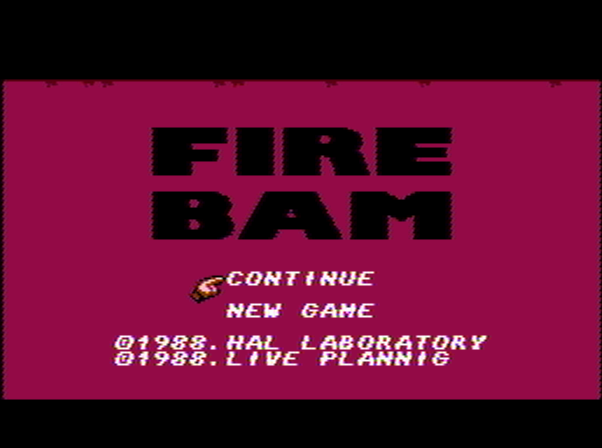
Fire Bam (ファイヤーバム), released 2/1/1988, developed by Live Planning, released by HAL Labs

I guess it’s Live “Plannig”

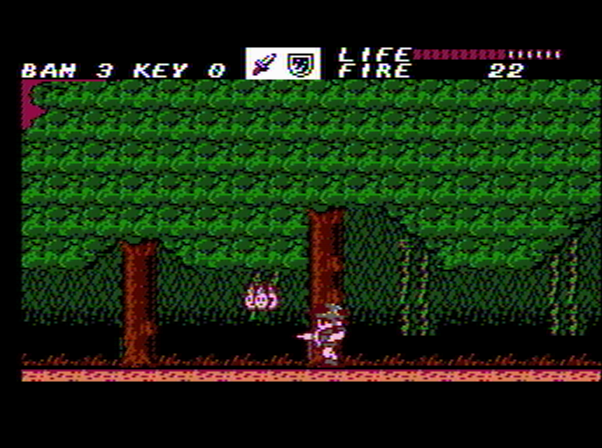
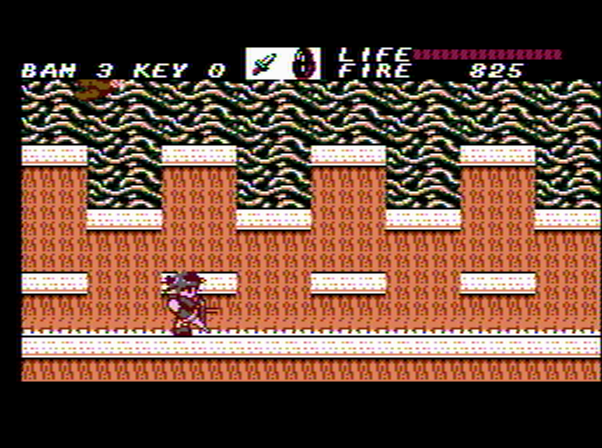
This is a “side scrolling action/adventure” type game. The main distinguishing feature is how fast the game is — you move quickly and can often run even faster in some of the areas. The backstory is that the main character (Bam) is about to come of age in the fire clan, but Domez, who fears the Fire Clan’s power, seals away most of the people in other dimensions and turns Bam’s parents into monsters.

The basic idea of the game is that you defeat bosses, which frees townspeople from other dimensions and also increases the available areas you can go in. You can return to the town to buy items from the newly freed people, and to save your game and heal at your parent’s house.

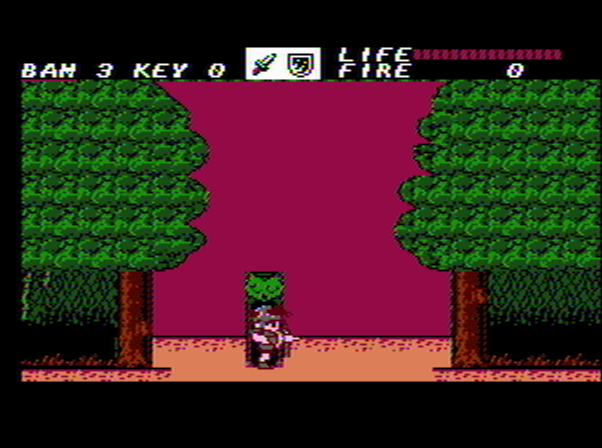
You start with a very basic sword and shield and nothing else, so it’s time to go into the overworld. As I said before, you run very fast. You can swing your sword and jump, but you can also hurt enemies just by running into them in some cases.

If you lose all your lives, you simply return to your parent’s house with no other penalty.

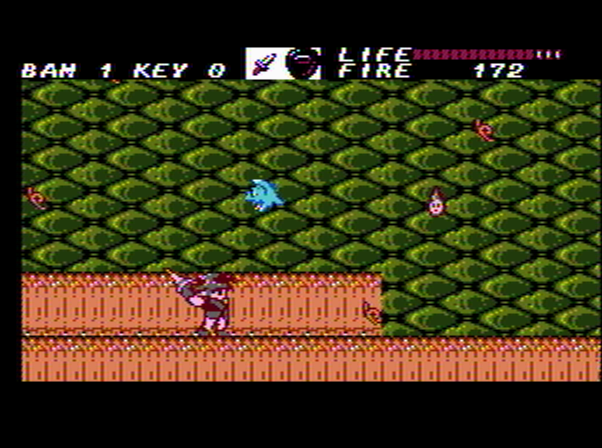
As you beat enemies you get various items, including the “fire” that works as currency to buy things. There are various doors you can enter — some are shops where the people tell you the inventory is sold out, but the instruction manual indicates that you need a special item to have these people sell you things. Other doors take you into separate areas of two types.

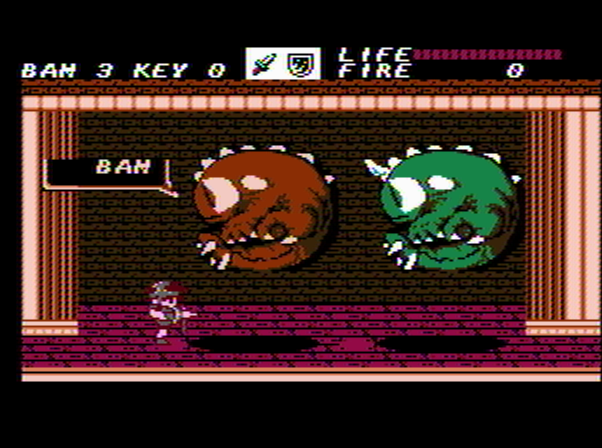
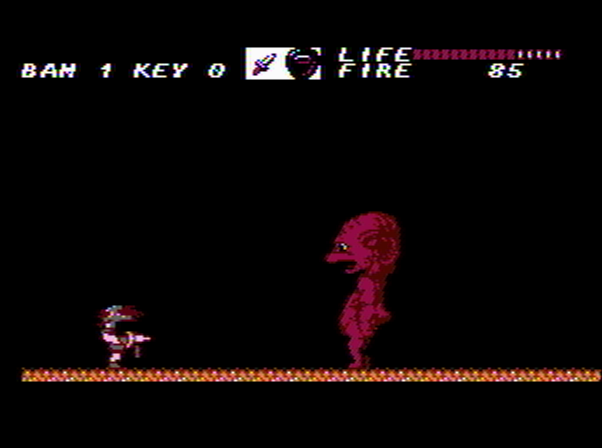
One type is a side scrolling area with blowing wind that makes you move even faster than on the overworld. You have to dodge and beat monsters for a while until you come to a boss. The bosses are weird looking; they remind me of that old Godzilla creepypasta.

You can go back in the same door more than once to fight a stronger boss. At some point I assume the door is permanently locked or something like that.

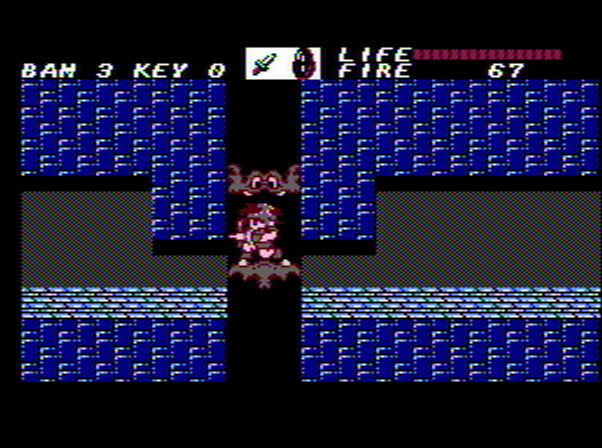
The other thing you can encounter in these doors is one of eight dungeons, which have an obvious inspiration:

These work just like the Zelda II dungeons, and when you beat the boss additional places will open up just like for the windy doors.

The items you can get include swords, shields, boots, and special items. These aren’t just simple stat upgrades, but actually have different effects. Some boots let you jump higher, others make you heavier so you don’t slip. The different weapons have different attack types. One very helpful shield you get early on lets you shoot out projectiles, which was a big help.

Overall this is not a bad game. I think my biggest issue with it is that it’s hard to keep track of where you’ve been and where you still need to go, because the overworld is kind of repetitive and when it increases in size it’s hard to tell which areas are the new ones that have appeared. I had a hard time fighting the bosses but I’ve gotten a lot worse at action games since I was a kid so that’s not surprising.

SRPG 1999 review, 2000 preview

I am now done with the very long 1999. As usual it’s time to pick a game of the year, which always seems like more trouble than it’s worth.

Looking through the list, Growlanser is definitely the game I enjoyed the most, and it was significant as the first of these real-time “action” SRPGs that I actually liked. In terms of significance, Fire Emblem 5 would be a worthy nomination as the last Kaga FE, the last significant Super Famicom game, and also a game that is well known among FE fans. Super Robot Taisen 64 has one of my favorite SRW stories.

I feel like it has to be Growlanser. So the full list now is:

1990: Fire Emblem 1991: Langrisser 1992: Just Breed 1993: Super Robot Taisen 3  1994: Langrisser II 1995: Riglord Saga 1996: Energy Breaker 1997: Final Fantasy Tactics 1998: Houshin Engi 1999: Growlanser

Now on to 2000. Fewer games than 1999 by quite a bit. There are also six systems represented, including the first PS2 game. The Playstation remains the main SRPG console but I think this is the last year that’s true of.

  1. Summon Night (PS) – I’m a huge fan of this series, but the first two are not great.
  2. Aura Battler Dunbine (PS) – I’m familiar with this series from SRW.
  3. Langrisser Millenium WS (WS) – Unlike the Dreamcast game, this is an actual traditional Langrisser style game.
  4. Rayblade (PS/DC) – This is Winkysoft’s attempt to make a SRPG amidst (or after?) their feud with Banpresto. I’m not sure which version I will play. From what I have read the DC version has some marginal improvements, but the PS emulation is much better.
  5. Super Robot Taisen Compact 2-1 (WS) – As usual, I won’t be playing this again. Same with the other SRWs, although I will make posts on them.
  6. Brave Saga 2 (PS) – Sequel to Brave Saga from last year.
  7. Super Robot Taisen Alpha (PS)
  8. Ogre Battle Prince of Zenobia (NGPC) – This is in the style of the original OB and is the second (and last) SRPG for this system.
  9. SDGGG Gather Beat (WS) – This is the first SDGundam G Generation game that has a full crossover storyline.
  10. Ningyou no Rakuin (PS) – Apparently a horror/Lovecraft game.
  11. Dungeon Savior (GBC)
  12. Velvet File+ (PS2) – This is the first PS2 game I’m playing. Since the start of this blog in 2017 I have been using the same Acer laptop to play almost all the games, and it’s handled everything up to now fine. Last year I tried to play Suikoden III and the laptop could not handle some parts of the game, so it may be that I’ve reached the limit of what it can handle. But we’ll see, maybe this isn’t as resource intensive.
  13. SRT Compact 2-2 (WS)
  14. Ring of Red (PS2) – This one seems borderline but I will try it.
  15. Brave Sword (PS)
  16. Gungho Bridage (PS)
  17. ZOIDS Empire vs Republic (PS)
  18. Juntai Taisen (GBC)

Some I will not be playing:

  • Digimon Cathode Tamer (no character advancement)
  • Seikai no Monsho (no character advancement)
  • Kakurenbo Monster Tactics (I guess)
  • Favorite Dear (not SRPG-style battles?)
  • Atelier Elie/Marie (GB) – I will wait until 2001 to cover along with the WSC and DC remakes.

SRPG 128 – Faselei! (NGPC)

Faselei! (ファーゼライ!), released 12/22/1999, developed by Sacnoth, published by SNK

A new console for this project, and another attempt by a company to make a handheld system. As with pretty much all the other handhelds created before this, it was never able to successfully compete with the Game Boy, or even the moderately successful Wonderswan. From what I can see there were only 93 games ever relased for the system, which includes some re-releases and stuff like “portable reversi [othello]”. It was first released in 1998, but the Color version was released about six months later, and it was discontinued in 2001 when SNK went bankrupt.

There are two SRPGs for the system — this one (which is borderline), and Ogre Battle Prince of Zenobia. This game was actually released in English, although only in the UK — the planned US version was scrapped when the American SNK offices were shut down, although apparently the release copies were already produced and some escaped into the wild. Even the Japanese version sells for over $100 on ebay.

I played the game on the Ares emulator (a project started by the late Near/Byuu, but continued now by other developers).

I used a “dot” filter post-processor on the emulator that made it look better but this isn’t reflected in the screenshots

Overall I would say the game is not bad, but it feels very limited — it has a lot of good ideas, but it’s almost like a proof-of-concept demo for a larger game that’s going to be developed later. (I don’t have many screenshots because I forgot which button I mapped screenshot to, and I kept pressing a different button)

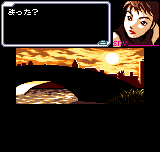
The graphics are of course limited by the system, but I do like that the story sequences have backgrounds, and there are a number of cut-in pictures.

The music and sound are also limited by the system; it’s not bad, but nothing special.

The story is a rather familiar setup — the “Faselei” of the title is a mercenary group that is fighting for rebels against a stronger kingdom. We have the usual rival of the main character, as well as an eventual outcome with much larger stakes than the civil war. But all of this is done in only 13 stages, so there’s not a whole lot of development with any of it. They do the best they can, I think, but it can’t help but feel too short.

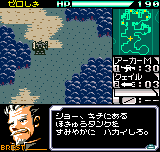
The system is pretty interesting, and I would like to see it be used again. Your characters are in mechs called “Toy soldiers”. You can buy parts, including weapons, backpacks (for items), computers, etc. Unfortunately you only control one character and so can only mess with their mech. Your ability to buy new parts and mechs is determined by your experience level. I think this is the only effect of experience, which you only get from story battles. On the other hand, you can do free battles for money (and once you reach level 5 you can also get items from the free battles that unlock the strongest mechs).

The equippable weapons depend on the mech, but include different types of melee weapons, missiles, and rifles. They have limited durability/shots, but the items you can store in the backpack can refuel those, and also recover health.

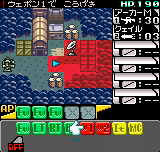
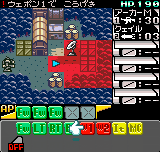
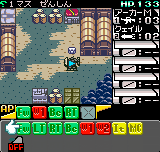
The computer is where you assign “chips” which determine that actions you can take. The number of chips you can assign to a mech is determined by the computer, while the number of actions you can take is determined by the mech itself. The chips include movement (green), attack (red), defense (blue), and miscellaneous (yellow).

Each turn, you are able to take as many actions as you have AP. You can use the actions from the chips you have set, and each action can be used as many times as you want (subject to ammo limitations and such). All the actions are then carried out simultaneously with the enemy. So you have to try to anticipate what the opponent will do, so that you can avoid their attacks or get within their range. You start out limited in your actions (for instance, to move left you have to first do a Left Turn and then Forward), but later you get more AP and better types of action.

If you run into another unit, whoever has the better FGT rating pushes the other back, dealing damage. The damage can be pretty severe in the case of tanks and other large units like that.

The enemies drop items, but you have to land on the items to get them. In the top picture here I’m moving forward 1 space to get the item, then using my rifle (weapon 1) to beat the structure up there, then going backwards, turning right, and going forwards.

The interface to control all of this is pretty good. As you put in the commands, it shows you what the effect of them will be (so you can make sure you are moving in the right place, ranges of weapons, and it will show you if you’re trying to move into a solid object you can’t pass) The customization menu is also better than some games I have played.

The map design is fine, the maps have different win requirements as well as different maneuverability. Often there are reinforcements so you have to decide when to use your limited resources and what items to bring. The balance is OK too although the “heat” command (x3 damage for your next attack) is mandatory near the end. I was able to beat the final bosses just at the limit of what I could handle, which I suppose is fine for not doing any free battles. If you get the hidden mechs I think you would be even better equipped to handle those stages.

So as I said in the opening, this is not a bad game (although only barely SRPG) and it’s worth a play, although don’t expect too much out of it, particularly the length of the game.

1999 is finished! On to 2000, although next week will be the retrospective post.