Category Archives: Atelier

Atelier Marie/Elie Game Boy

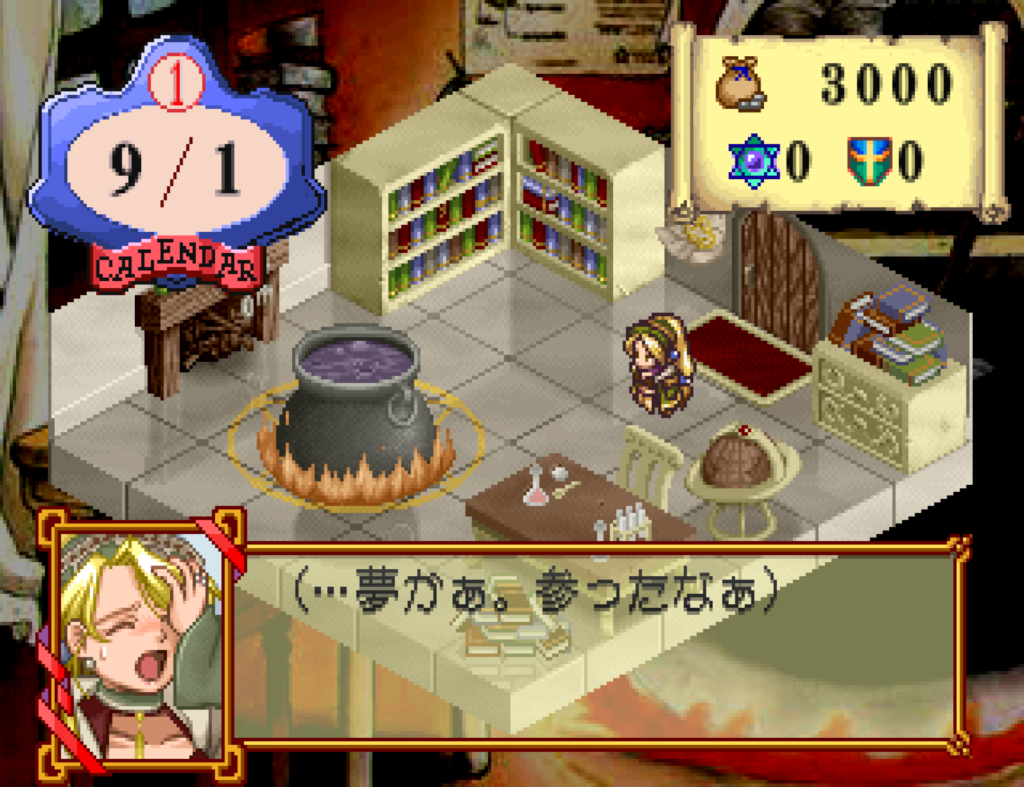
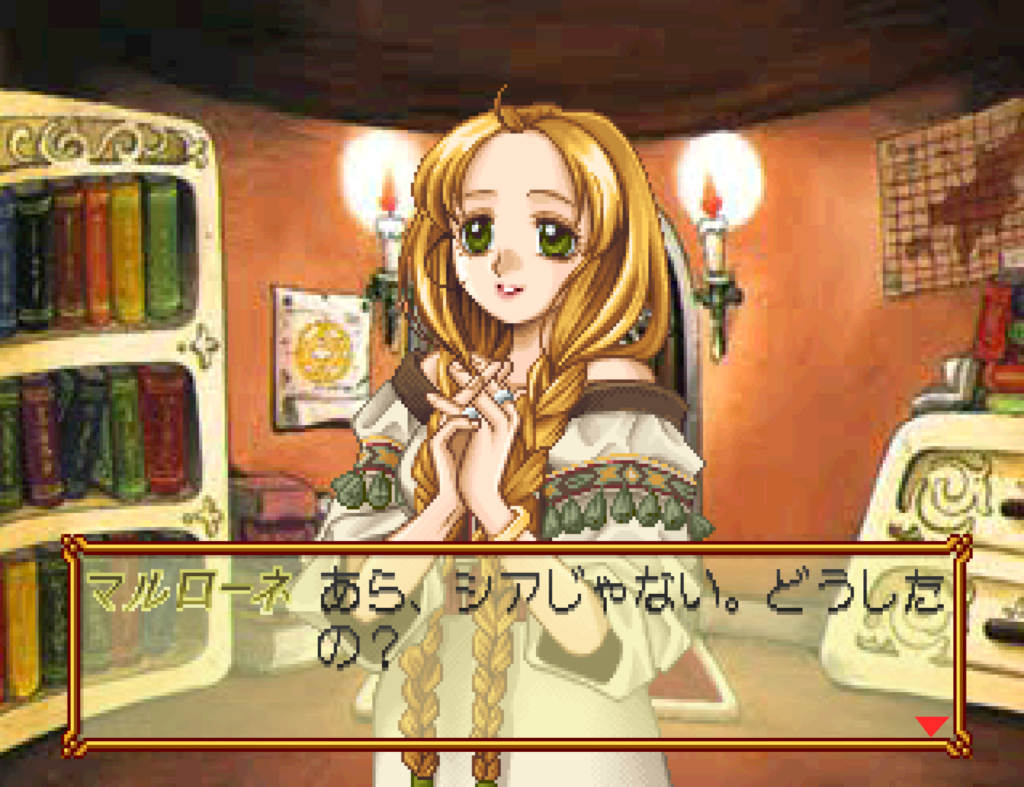
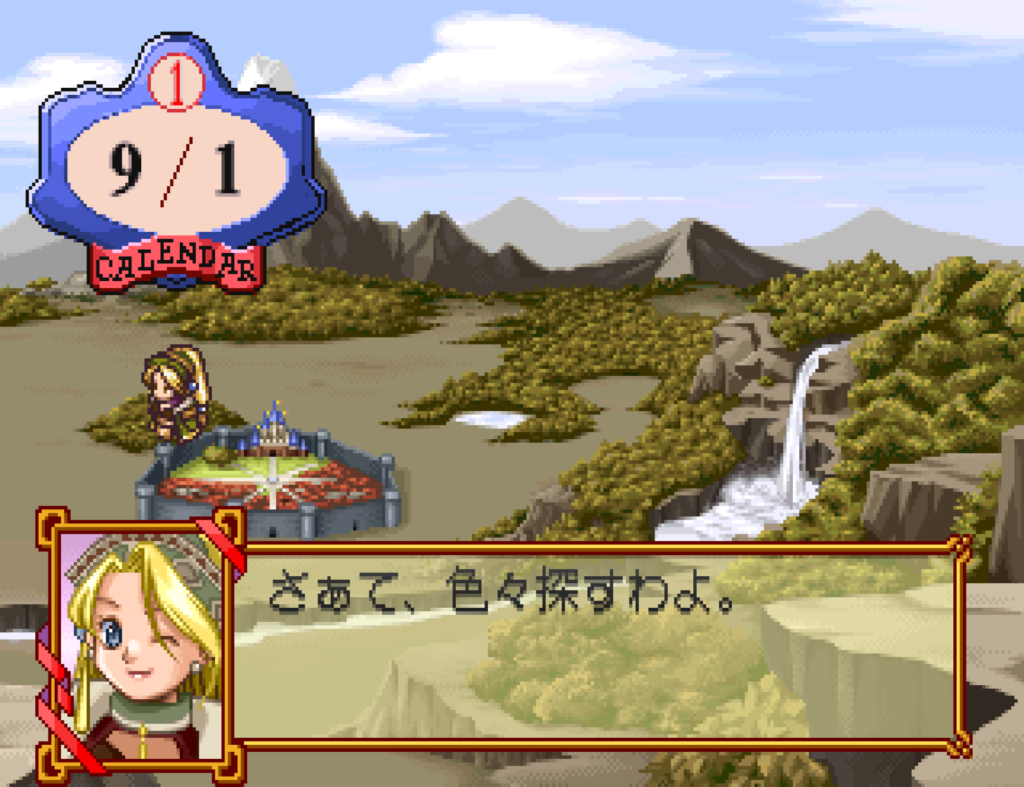
Atelier Marie/Elie GB (マリーのアトリエGB), released 1/8/2000, developed by Tose, published by Imagineer

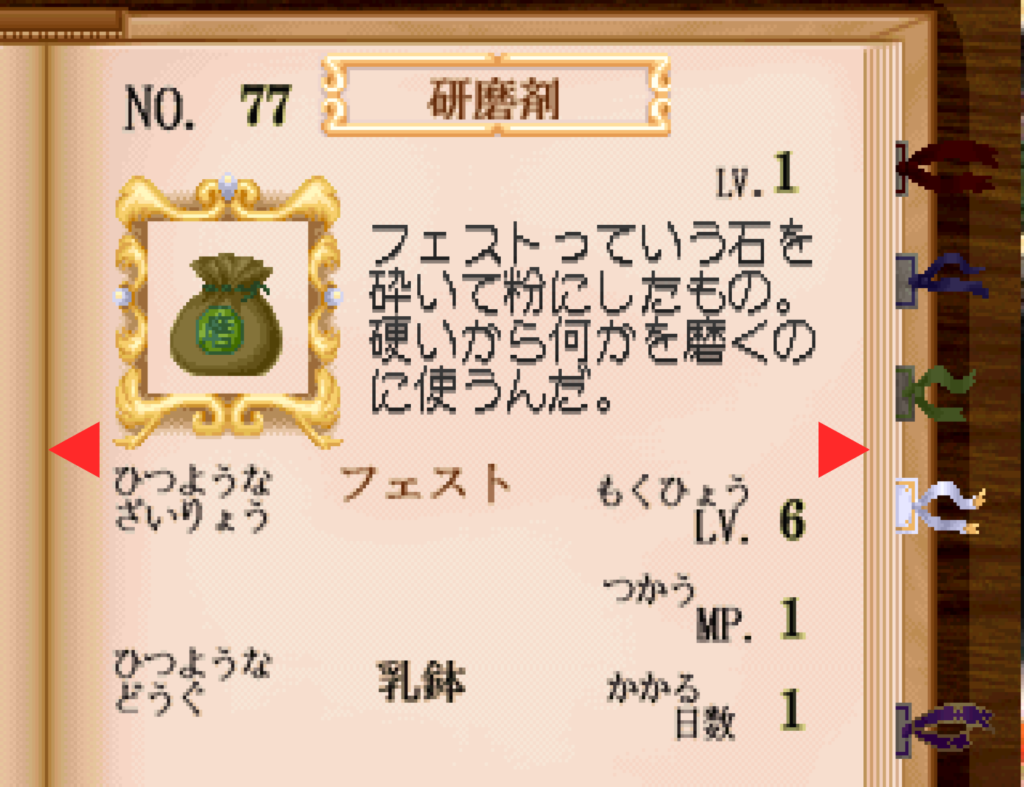
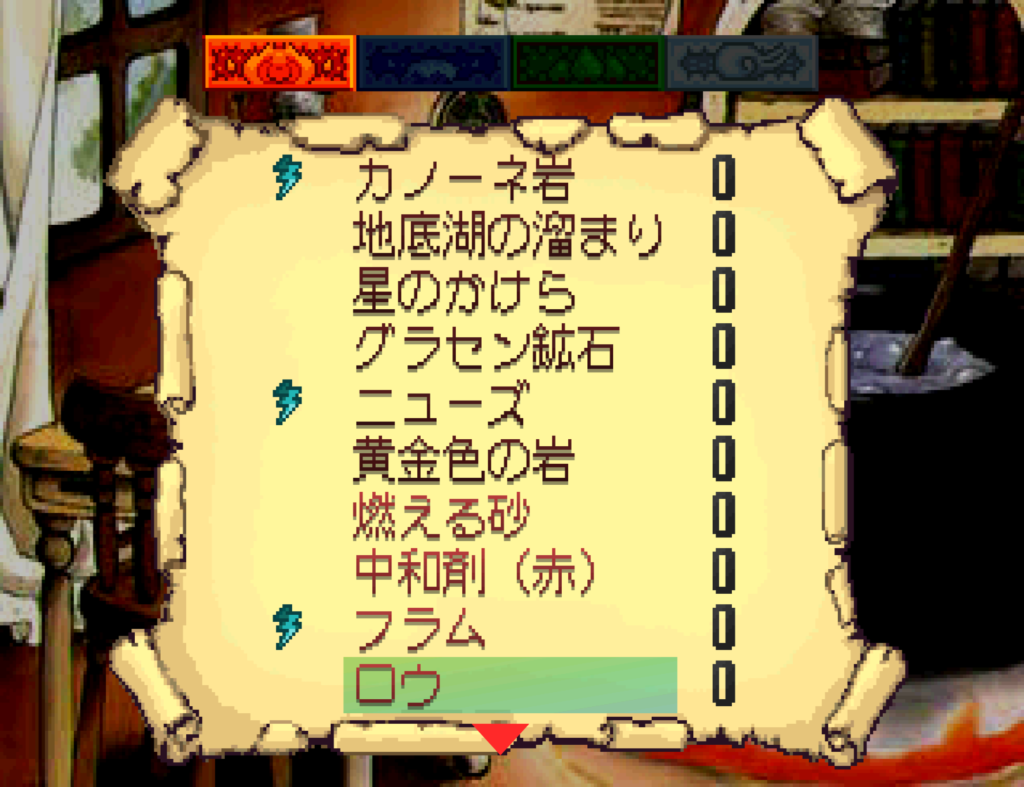
Initially I was not going to play this game because I was under the impression it was just a port of the original PS game. But it actually is a new game that takes place after the original. Both the Elie and Marie versions were released at one time; they are separate games but the gameplay and even some of the events and endings are identical. So I won’t be playing them both; this review basically covers Elie as well. In fact, it’s clear that this dual release was yet another product influenced by the success of Pokemon — you can trade items between the games and you can’t complete the item book in either game without doing this (or putting in passwords in lieu of transferring).

The story here is the elder of the forest fairies brings a fairy (who you can name) to Marie, so that she can teach him to be an alchemist. This sets up basically the same situation as the original game, where you have 4 years to craft a level 4 item for the normal ending and there are several good endings depending on other factors.

First off I have to say that I’m impressed by how readable the font is given that this is a Game Boy Color game. I’ve seen worse fonts on much better consoles than this.

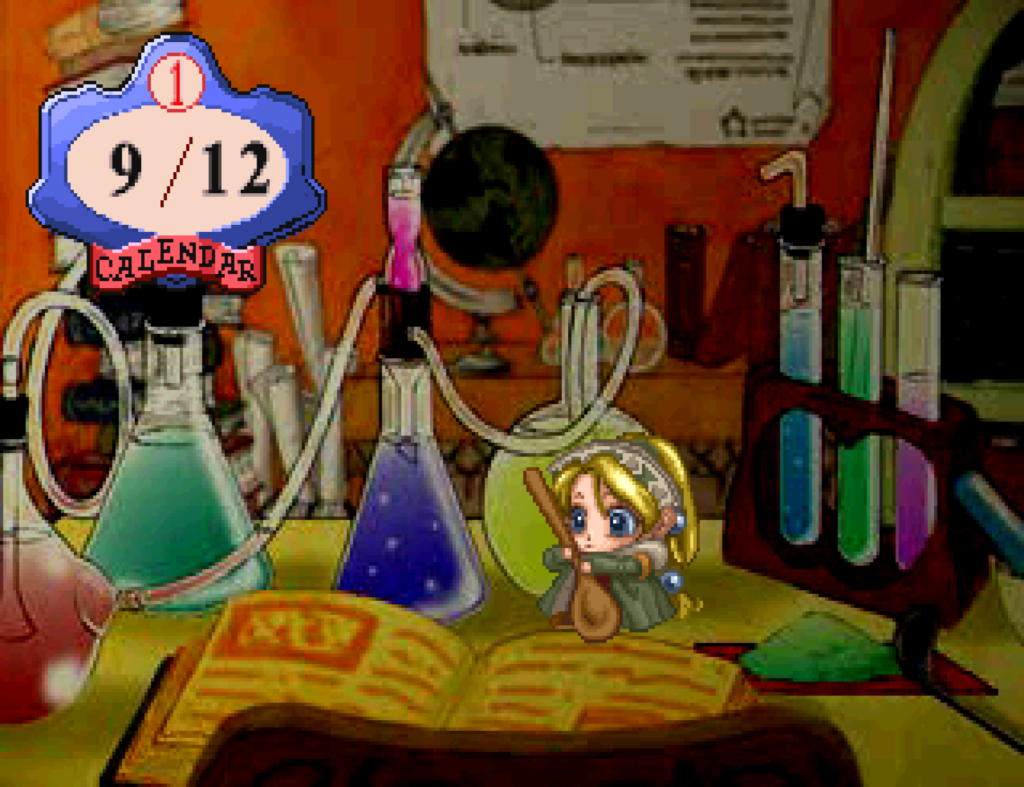
The gameplay is very similar to the Marie series. You take jobs at the bar, go out to gather resources, level up your Adventurer and Alchemy level, make items, buy books to learn new stuff, and activate events based on various factors. You can also hire most of the same people from Marie. As far as the “story” goes, there are some new characters, and the characters from Marie have different events. There are also events related to the fairies. So it’s not just a complete repeat of the Playstation game.

There is one new feature called the “aging system” where you can put an item in a special barrel and then wait for it to age. I didn’t use this system much because I only got it before I stopped playing, but it sounds like the precursor of the natural aging system from the Gramnad games, where items will go bad over time (or in some cases like wine and cheese, can get better).

Each area now has 4 subscreens that you can walk around in and talk to people. In addition to all the places from the original game, there is a bell tower, a place with a big tree, a pond, an inn, and more.

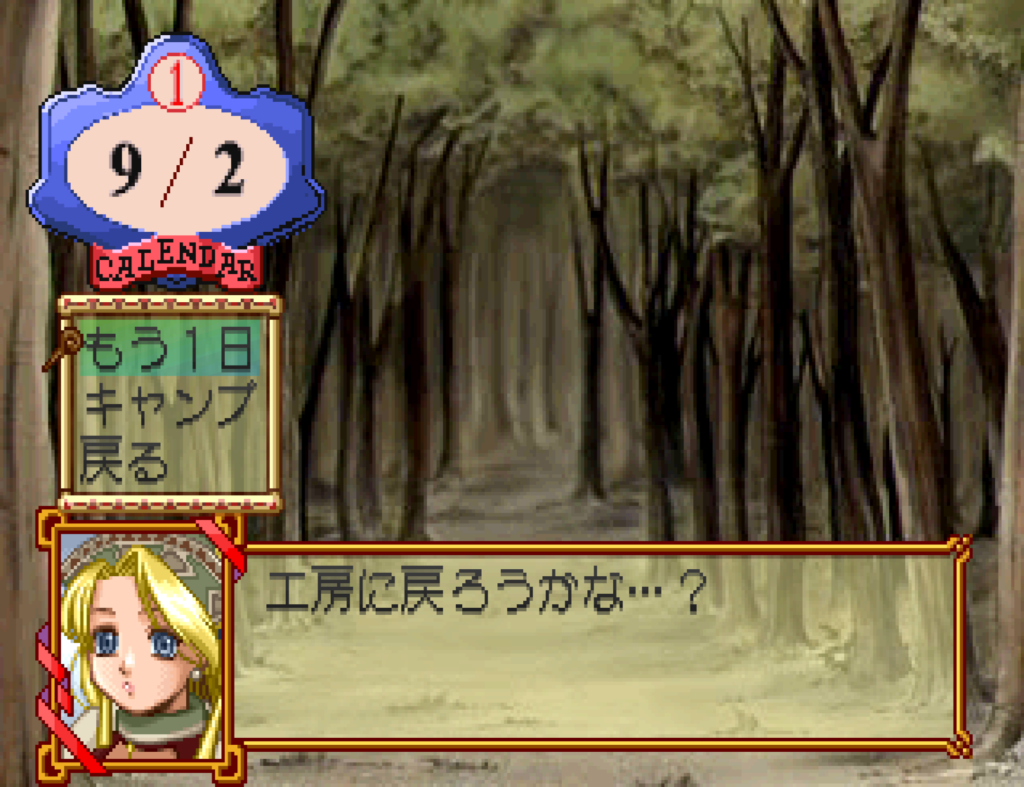
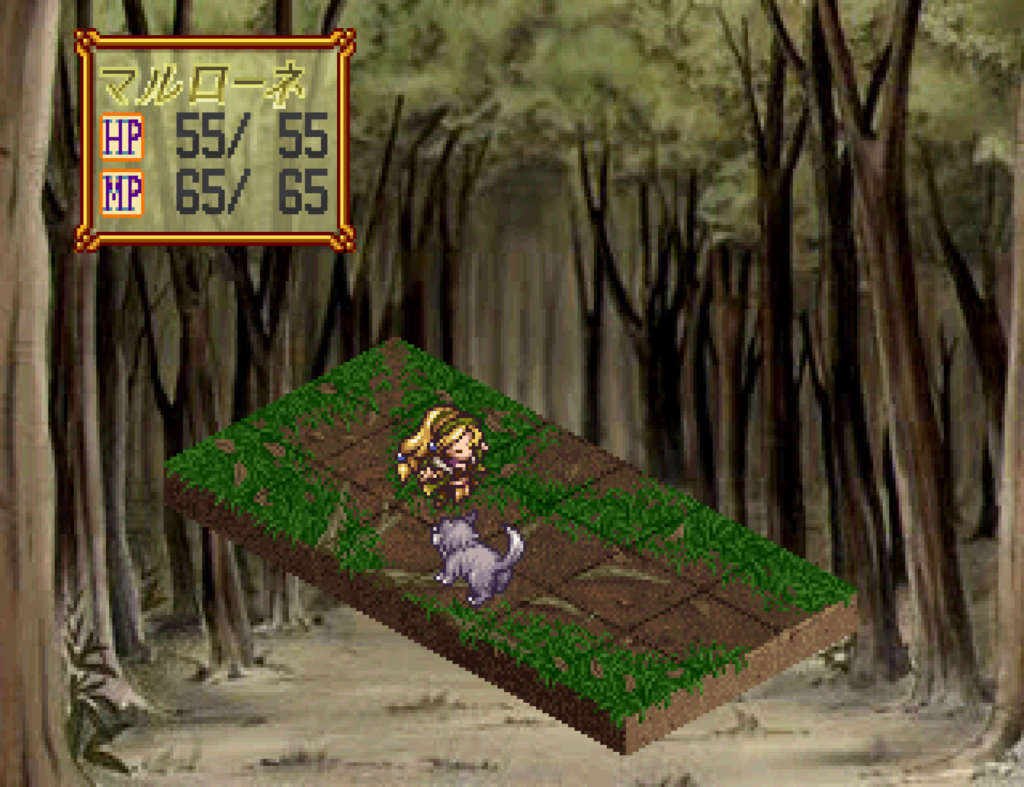
One large change is that there is no actual battle system. Instead, Marie stays back in town while the fairy goes out (with any companions you hired). You choose how you want the excursion to go — you can pick between three levels of aggressiveness in fighting enemies, and whether you want to stay until you fill your basket or come back earlier. You then get a report of how things went, showing you how many battles you won and how much XP was gained — or sometimes you will be defeated in battle and come back crying.

This, to me, was an unfortunate change. The original game is already so simplistic that it gets a bit dull after a while because you’re just going through the same loop — by removing the battle system it makes the loop even simpler and duller. They also removed the alternate “rich people” quests in the tavern, meaning that it takes a lot longer to find jobs you can actually do. Going around to see what events might be available also involves more work than the original game because you have to walk around to all the different screens and buildings.

Eventually I was able to make enough money to get all the alchemy books and I got the fairy’s alchemy level up enough to make a level 4 item, earning me the Normal ending. I considered playing more to see if I could get one of the good endings, but I decided not to for two reasons. First, I was getting bored with the gameplay, as I said above. Second, although I could find a list of endings online, I could not find any details on how to get the necessary events to trigger (although the names of the events had some clues). If the game had been more fun I might have tried to play more just to see what ending I could get, but I think this game is kind of a relic of its time. Like a lot of Game Boy games from this era, when you take away the advantage of being able to play the game on the go, there’s just not much reason to play it in preference to the original game unless you really like Marie and Elie’s gameplay.

I do think that the designers put more effort into the game than they might have, though. They put in some inset graphic scenes (which are saved in an “omake” library along with the endings). There are a few little voice clips (including the iconic “taru!” (barrel) quote). They did add some new locations and characters, as well as the aging system. So while it’s not the most fun Atelier game you can get, at least it’s not a totally lazy slop port.

Atelier Elie (Best ending)

Before I moved on from Atelier Elie, I wanted to get what might be called the “best” ending, where she and Marlone become “true” alchemists. In my first post on the game I outlined the way to get this ending.

These “marie point” events are not easy to activate. Even on my replay, knowing what the events were, I was stuck at 7 points for a while because I couldn’t get the necessary things to happen.

What I eventually figured out is that the event with Mirukasse requires your friendship to be above a certain point. Normally when you pray at the church nothing happens, but if you go on a day ending in 5 she will ask for a donation and that increases the friendship. I did this a few times and the event finally happened where she asked me what my goal/dream was. This is confusing because I was pretty sure this event happened on my first playthrough but because my alchemy level wasn’t high enough, I didn’t have the option to respond in the correct way. But given what happened in this playthrough it seems unlikely my friendship with her was high enough to activate that event so early in the game — perhaps I was misremembering some other question that she asked.

In any case, once you have the necessary points you just have to get Marlone’s friendship up to 70 — I’m not exactly sure how the friendship works, but if you just keep going out to gather items you will eventually get there. I think you can just go to the nearby forest and immediately leave, and just repeat until it’s 70.

Finally, you need to raise Alchemy level to 40, go do an event in the far away city where you first get Marlone, and then raise Alchemy level to 45.

I am not certain exactly what the most efficient way to get alchemy levels is; I don’t know if you get more experience for more complicated items, or what. I did eventually hit on a method that raised the level pretty quickly.

Basically I spent a month or so crafting new items (or working towards that goal). I had 5 fairies that were all collecting items from the far away places. After that, I would go to the tavern.

You get experience from doing requests, so I would do as many of the “rich” requests as I could — even if I had to do them with cheaper items that lowered my popularity, I was always able to recover that through doing the regular requests or having at least 1 or 2 of the rich requests go well.

After that I would often take one of the bar requests, fulfill that, and then craft more items until the month was over. With this method I was able to reach level 45 fairly quickly.

The ending is fairly short; Ingrid is satisfied that both Marlone and Elie have discovered the true meaning of alchemy, and they each go on their separate ways to continue to perfect their craft.

At this point I felt like I had gotten enough out of this game. It’s fun, but the system is still primitive enough that it starts to feel tedious and limited after a while. I could have gotten the other 5 or so endings, or tried to fill out my item book (it’s at 183 out of 200 items), or tried to go for some of the “love” related events. But in the end the game is just a bit too formulaic to play it that much.

The next Atelier games are ports of Marie and Elie to the Game Boy in 2000; from what I understand these are not just ports/remakes but semi new games. I probably won’t play them much but I will see what they’re like. The actual third Atelier game is Lilie, which came out for the PS2 in 2001.

Atelier A2 – Atelier Elie (Bad endings)

I need more time on Go-Jin Senki, so I decided to spend a day getting the five(!) bad endings in Elie.

The main triggers for these endings involve the “extensions” you can get if you fail to make high-level items by the end of year 4. There is something with the contests as well, as I mentioned in the last post — the ending conditions seem to be based on a combination of items you made and your school ranking.

To get the 1 year extension, make a level 3 item but don’t 4 item, or have a class rank between 200-249.

To get the 5 year extension, you have to not make a level 3 item, or have a class rank lower than 250. Getting either extension locks you out of any of endings above 8.

  • Ending 12: Get the 5 year extension, and then do not make a level 4 item by the end of the 5 year extension.
  • Ending 11: Refuse the offer of an extension (leave school)
  • Ending 10: Get the 5 year extension, and then make a level 4 item.
  • Ending 9: Get the 1 year extension, and then make a level 4 item.
  • Ending 8: Fulfill the Ending 9 or 10 requirements, and have a popularity of -50 or below, and a reputation of 700 or above.
The worst ending

If you want to get all of these on a file that you’ll actually use for other things, the best thing to do is play normally until you are ready to make a level 4 item — you should be able to do this early enough that you can still lower your class rank by skipping all the tests.

So I started a new file, and played as well as I could for the first year. I wanted this file to be usable later for some of the other endings, so I made sure to do the Marie points correctly, and also I used save states to make sure than any level up Elie gets, she gets at least a point in either STR or DEF.

His expression shows you might lose popularity if you turn in that item

One thing I was able to do more efficiently in this game is the alchemy level and requests. I didn’t understand the way the “rich people” requests worked at the beginning. They get you a lot of money, and some of them can be completed with fairly easy to acquire ingredients — you can look at the guy’s facial expression to see if you are turning in good items or not. If you turn in basic items you will still get the money, but it may lower your popularity. I am not entirely sure what level of popularity you need to try for — there don’t seem to be any endings that require a specific high level of popularity, but it’s possible that if it gets too low you will miss out on important events. In any case, I don’t find that doing some “bad” requests will affect things too much.

In the first academy contest, I did as well as I could (I got 7th place, which is fine). By the first month of the second year I had learned the recipe for Megacraft, a level 4 item that is pretty easy to make (you just need 4 crafts, the ingredients can be found in the nearby forest).

At this point it is easy to get endings 12 through 9:

  • 12: Rest until year 4 8/30. Take the 1 year extension. Rest a year, take the additional 4 years, and rest all 4 of them.
  • 11: Rest until year 4 8/30, and quit school.
  • 10: Rest until year 4 8/30. Take the 1 year extension. Rest a year, take the additional 4 years, make a megacraft, and then rest the remaining 4 years.
  • 9: Rest until year 4 8/30. Take the 1 year extension. Make a megacraft, then rest the remaining year.

Ending 8 takes a bit more effort. It’s easy enough to get your popularity down below -50, just by repeatedly taking jobs and either cancelling them or letting the time limit run out. However, to maintain your 700 reputation, you can’t just rest for years because your reputation will drop. You have to rest for a few months, then take some more jobs (even if you cancel or fail them, your reputation will still go up), and repeat. It’s not particularly hard but it requires some attention. Also make a megacraft. In this ending, Ingrid is very cold to Elie, telling her that she graduated but to immediately leave her office because she’s busy. Elie goes back to her home town, realizing that she’s too unpopular to keep going in Salburg.

Finally, I wanted to see if I could get the cheesecake ending since it’s the last ending I had that didn’t have a movie associated with it. It seemed easy enough, you just have to use Blend Alchemy to make a high ranking cheesecake. I could never get it to work with the recipes I found online, but I finally saw that your alchemy level needs to be high as well. So I reloaded one of my late saves from before, and was able to successfully make the cheesecake. I rested, refused the Maister Rank extension, and Elie opened a cheesecake shop (they should have at least had a picture for this ending.)

I’ve now gotten 8 of the 13 endings. The remaining 5 all have movies and are good endings. I don’t know if I will get all of them, but I’m at least going to get ending 0 (what might be considered the “best” ending). We’ll be back to this at the end of 1998.

Atelier A2 – Atelier Elie (PS1) (Round 1)

Atelier Elie (エリーのアトリエ〜ザールブルグの錬金術士2〜), released 12/17/1998, developed and published by Gust

This is actually at the end of 1998, but I decided to do a first run-through of the game now, and then I will return to it later. After the unexpected success of Atelier Marie, Gust seems to have immediately started developing a sequel. It came out about a year and a half after Marie, so it’s no surprise that the game is very similar. It takes place in the same town as Marie, with many of the same places and characters. The main character Elie, like Marie, is a struggling student hoping to graduate the alchemy academy.

The new gameplay elements are minor. This is the first game to allow you to affect the quality of an item (this time by changing the formula), although the quality has relatively little effect on the game in comparison to later entries. You can also do “original” crafts where you can choose any items you want to combine, although you have to get reasonably close to pre-set formulas to be able to get items. Elie’s levels are now split into an Alchemy level and an Adventurer level.

What is different is the scope of the game, which is larger than Marie. Marie’s seven endings can be gotten in one playthrough fairly easily (maybe with a bit of backtracking to old saves). Elie has 12 endings, and they are different enough that it would be hard to do them in one playthrough. There are more items, and more events. On the whole it is still fairly simple compared to the later entries but it’s more robust than the first game.

The main character Elfill (Elie) is from a rural village. She had her life saved by an alchemist (Marlone/Marie) and now her goal is to become an alchemist herself and reunite with Marie. The basic gameplay is the same as Marie — go out and gather ingredients, make items, and get money by fulfilling requests in the bar. As you level your alchemy you get access to the academy library and you can make more items, and by hearing rumors in the bar you can access more gathering locations. There are a number of events that either activate at certain dates or seasons, or when you get someone’s friendship level up high enough.

Every year on 8/1 there is a contest at the academy, where you have to craft an item, answer quiz questions, and then try to break a barrel without damaging the contents within. After the contest you can check the next day to see how well you did. To get the best endings you have to do pretty well in the contests. Beyond that I am not entirely certain what the effect is — in my experience it seems like if you skip a contest entirely you get a bad ending regardless of your other conditions, and that doing poorly in the contests does not affect the game unless you are going for one of the top endings. But I am not certain about either of these things.

One of the early events I saw was Shia’s wedding (she is Marie’s friend from the first game; the “best” ending of that game has you crafting a medicine to cure her illness).

One of the rivals of Elie in the academy school is Aizel, who I recognize from Atelier Viorate (one of the top Viorate endings involves her). Here she’s just a student, though, under the tutelage of Helmina, who I gather also shows up in some other Atelier games.

I played without a walkthrough for a while; the “regular” ending is as easy to get as in Marie. All you have to do is make a level 4 item, which I had already done by about halfway through the second year. After that you can just rest until each year’s 8/1, do the contest, and then Elie will graduate and set up her alchemy shop where Marie’s was.

At this point I looked at a guide to see what endings there were. I was hoping I could get what seems to be the “best” ending, but I had already messed up some flags that would make it very hard — in the end I was not able to activate an event and I couldn’t get the best ending.

The battle system is nearly the same as Marie — there’s some kind of weather effect but it rarely seemed to do anything.

To find Marie, you have to raise the friendship of one of the companions (a dancer, who I didn’t get any screenshot of apparently). If you have activated a few of the Marie-related flags, she will eventually tell you about a coastal town you can go to, although it takes a month to travel there.

Once you get here, it opens up a bunch of new gathering locations, and you can pay 100 money to have the items sent back to your home town. You can’t do any crafting here, though. It seems that Marie has left here to go across the sea to a different town, but no ships are going right now because of a sea monster.

By seeing some events related to a woman in this town, she will eventually agree to let you use her ship if you can beat the monster.

The monster is powerful but if you use a sleep medicine on it, it won’t wake up at all and you can defeat it with a few shots of the ship cannon.

Elie then reunites with Marie in the town there, and you can hire her for your party. However, to actually get the ending associated with this, you need 8 out of the 11 possible “marie points” from various things throughout the game. I had already messed up 3 of the points, so theoretically I could still do it, but there is an event that can give you a point that I was never able to get to activate correctly.

So I went ahead and stopped with the “Maister Rank” ending, which you can get by fulfilling some not-so-difficult conditions. This gives you an extension of two more years and allows for the three “top” endings, of which one is just getting the Maister Rank and doing none of the other conditions. Elie graduates the academy with this top honor and decides to go back to her hometown to start a new life there.

I managed to get three of the 12 endings (a bad ending, the “normal” ending, and the Maister Rank ending). I don’t know if I am going to play this game to get all twelve of the endings, but I would at least like to retry to get the Marie-related ending that I didn’t successfully do this time. Along the way I will see if there are other endings I can pick up, although as I said, it’s not as easy as it was in Marie to do this.

One other thing that’s in the game are love events that can set Elie up with some of the characters; I didn’t really do this at all. This is partially because a lot of the love-related flags conflict with the Marie flags.

I’m planning on making another post to just list the endings and conditions, partially for my own benefit (although I suppose since there is a translation patch for the PS2 version this could help someone). I will probably then return to the game once I actually reach December 1998 in the SRPGs and give it another try. Other goals i might try are crafting all 200 items, and getting all the event pictures.

(Actually I may not need the post with the endings…)

Atelier A1 – Atelier Marie

When I made my full SRPG game list I included Atelier games, which caused some comment — they are not Strategy RPGs, certainly, but I would consider at least the earlier ones to be Simulation RPGs. Plus I like the series so I put it on there so I could play more of the games.

The long running series began in 1997 and currently has 23 main titles and around 15 side games, plus a number of remakes. The first five games are primarily simulation games where you control a young alchemist trying to achieve some mild goal (like pass an exam or bring prosperity to your village). There is usually a basic “good” ending that’s quite easy to get, and then a number of other endings that are more difficult. As the series progressed, they put more and more RPG elements in — by A5 (Viorate) you had explorable dungeons, a complicated weapon and armor crafting system, and five different bosses. However, the game could still be completed without doing much of this, and the focus was on running a store and crafting items.

A6 (Iris) was a straight RPG (with a crafting system), and the next 4 games after that continued that trend. I first played the series when Iris had just come out, and there was a lot of uncertainty whether the series would ever return to the simulation roots.

But A11 (Rorona) did go back to the earlier style, although the RPG elements seemed more prominent. I haven’t played anything past A13 (Meruru) but from what I hear the RPG elements have become more and more dominant as the series has progressed.

The side games include some games that aren’t RPGs or simulation games, but also a few games for Nintendo portable systems that look like they may be the more traditional games.

I am at least going to post about A1-A5 when I get to them, but after that it will depend on how I feel and what kind of game they are. I’ve already played Marie and gotten all the endings, so I won’t be replaying it here, but I’ll write a bit about it.

Atelier Marie (マリーのアトリエ~ザールブルグの錬金術士~), released 1997/5/23, developed by Gust

The first game in many ways is a tentative beginning for the series — if you’ve played any of the later games almost everything is in a very simple form, which perhaps makes it a good starting game? Apparently the game was originally planned as an SRPG but the director thought that there were too many big name RPGs already out there, and so decided on a new type of game. The game was regarded as a side project for the company but it was so popular that it quickly became Gust’s main product.

The main character is Marlone (nickname Marie), a not-so-great student of the alchemy school in Zalberg. Apparently a normal girl was chosen as the main character because the developers felt that women were starting to play games more — the female main character became a mainstay of the series. Marie’s on her last chance at the school, and she has five years to make a good item so that she can pass the exam and graduate.

This imposes a 5 year time limit on the game. One of the core elements of the early games is the time limit; everything you do takes time, and part of the game is learning to use your time wisely. (I’ve heard that recent games have gotten rid of the time limit; I’m sure this is more popular among casual players but it’s a bit disappointing.)

The dialogue is fully voiced, and the graphics are quite nice. The music is also exceptional; I place Gust second only to Falcom for consistent high quality music in almost every game they release.

The game has no real story. There are some characters like Schia (above), Kreis (a good student at the academy), Ruven (an adventurer), and others. Many of them can join your party for a price to help you out when you adventure outside of the town. They also have some events and small story events, but nothing much.

Basically everything in the game is optional. There are several endings — the basic ending is to craft a level 4 item to pass the exam. This is quite easy and can be done even if you barely know what you are doing. But the fun of the game is that you can replay to try to get some of the other endings — there’s one for levelling Marie to 50, one for beating an optional boss, one for crafting all items, etc.

The core of the game is the item crafting. Marie can learn recipes for items, and then if she has the right ingredients, she can craft them. The difficulty and time it takes depends on Marie’s level — unlike later games there is no separate alchemy and adventurer level; you gain XP for crafting items and for killing monsters. Marie can also buy tools that will either be necessary for the crafting, or make it less likely she will fail.

Later games introduce more complexity to the crafting system, but in Marie you just combine the ingredients into the final item.

How does Marie get the items? Two ways — she can either buy them, or she can go out to the field and collect the items. Buying items of course requires money; the main way to get money is to take jobs at the pub. By turning in certain items Marie will receive money. However, it’s also necessary to get some items by leaving town.

At the start of the game Marie can only access a few locations close to the town, but as the game progresses you gain access to more areas with rarer items. When you reach a location, you simply press the circle button to search for items, which costs a day.

You may also encounter monsters.

The battle system is very basic; characters can attack, use a special move, and Schia and Marie can use attack or healing items. Marie by herself will die (at least at the beginning) so you need to hire some adventurers (which costs money).

So the game is essentially a loop of taking jobs for money, getting the items to craft, buying new books to learn how to make items, and activating events — some events open up when you pass a certain time, and others are only available for a certain time each year.

As I said above, even if you have no real idea what you’re doing, you can easily get the basic ending — as long as you can read the game’s text you would have to try to fail, I think. The extra endings are more difficult but not to a great degree. I was able to get all the endings in one playthrough with just a list of the endings and some information on a few events that activated at certain times. But there was something fun about the simplicity of the game.

The game was later released for Saturn as “Atelier Marie 1.3” with one additional ending and some new events, and some minor things based on the Saturn’s internal clock (like if you play the game on Christmas she’ll wish you Merry Christmas). This version was then ported to the PSX as Atelier Marie Plus, which is the version I played. There’s a later release for Game boy, and then a combination release for PS2 of Marie and Elie. You would think that’s the definitive version of the game, but the designers made the bizarre decision to get rid of the 図鑑, a place in the main menu that shows you all of the items you’ve crafted, monsters you’ve found, and endings you’ve gotten.

The next game for the series is Atelier Elie which came out in 1998, which I have not played.

As I mentioned last week I’m in a busy part of the fall. Next week will most likely be a quick post on Final Fantasy Tactics, and then hopefully I will have finished Seiken Densetsu 3 by the following weekend.