Category Archives: Early RPGs

JRPG 58 and 60 – Ys 1 (FC/SMS)

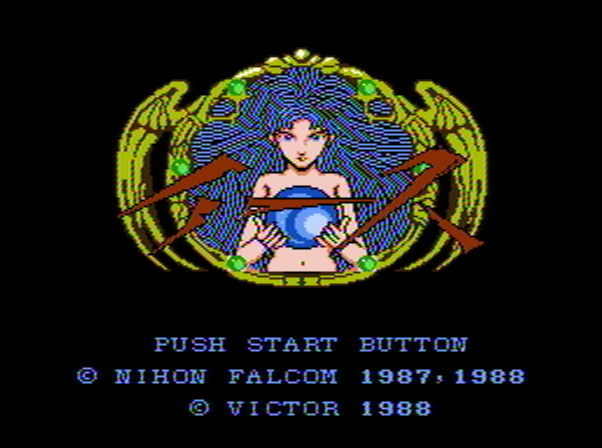
Ys I, released 8/26/1988 for Famicom and 10/15/1988 for Sega Mark III, originally developed by Falcom, ports by Victor (FC) and Sega (SMS)

This is the first game in Falcom’s long running and influential Ys series. I’ve already played Ys I&II more than once — several times for the PC Engine, and also I played the PSP and PS2 remakes. So I won’t be playing them through again, but I wanted to see which of the two ports released in late 1988 was better. This is only the first game. I’m pretty sure that the PC Engine release of I&II is better than both of these, but you would have to wait a year for those.

Apparently the Famicom version had a number of changes from the original computer versions — the maps were redone and the final battle is somewhat different.

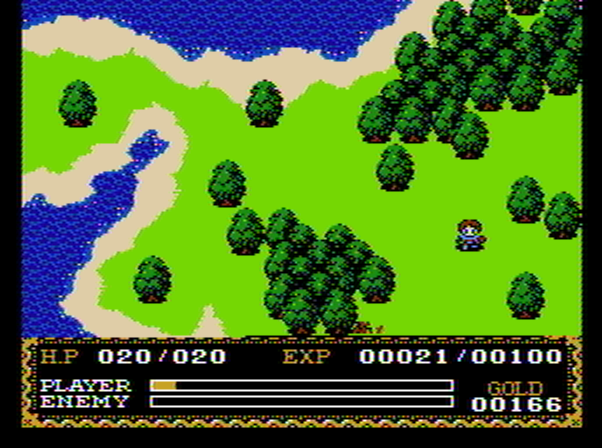
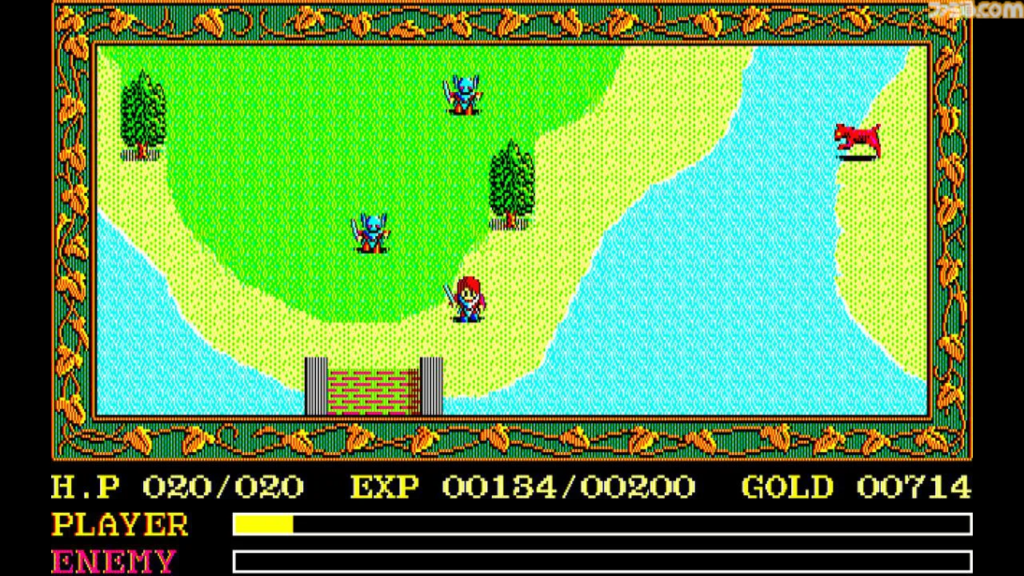
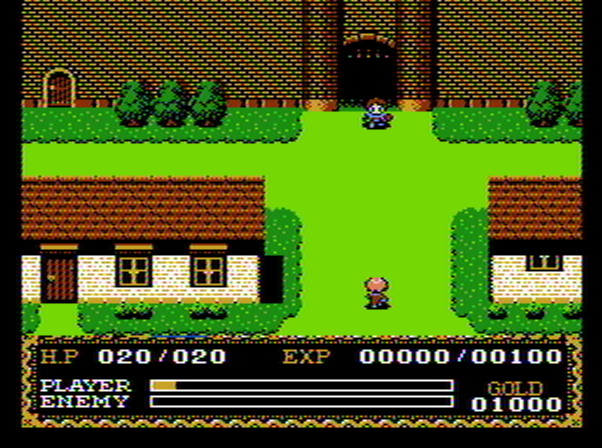
Overall I think this version is fairly well done. The bottom HUD is easy to see without taking up too much of the screen, although there is a problem of the screen not scrolling soon enough so you are up against the edge.

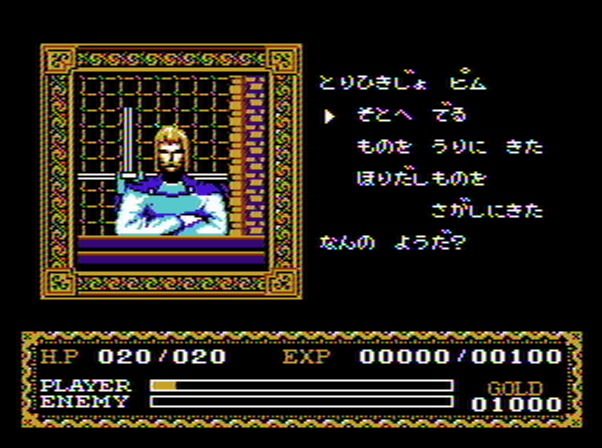
The shop screens are a bit underwhelming though.

For the Sega version:

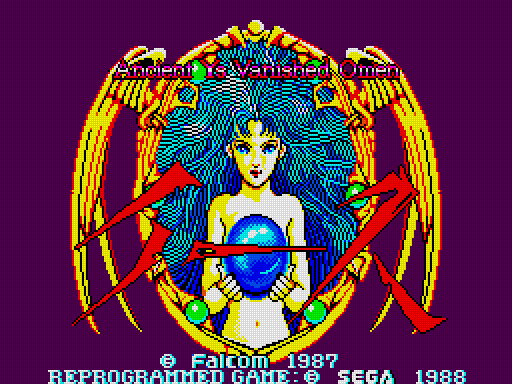
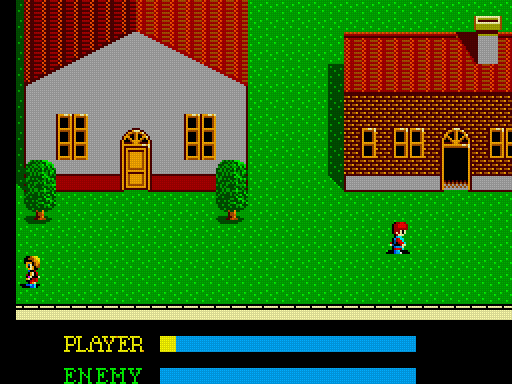
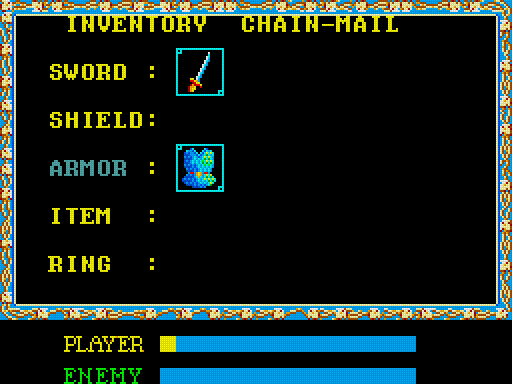
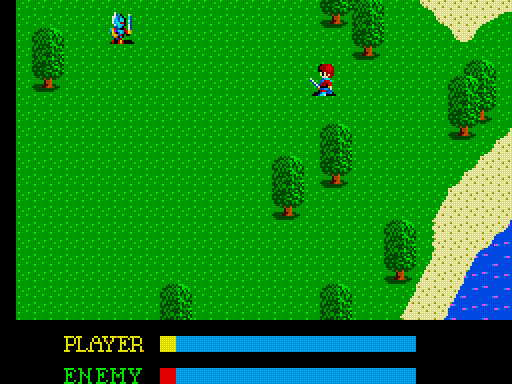
I should have turned that pixel filter off in Mesen2 for this, I use that for the handheld systems. In any case, this version is basically a straight port of the computer one.

The HUD is disappointing; it doesn’t give you as much information. I found this image which is apparently the PC88 version (from Famitsu):

So the Famicom version has the more helpful HUD.

So far this is mostly graphical differences, but I found this version much more annoying to play because of the balance.

In comparison to the Famicom version, the starting enemies are much more difficult and the enemies give you less XP. Now I did forget that there are some little mini-events and quests you can do in the first town to get more money and level up at least to 2 (maybe 3?) without fighting the starting enemies. So if you do that it will be more playable.

I think out of these two I would rather play the Famicom version, although this whole comparison is basically irrelevant because the PC Engine version blows both of them out of the water. Even if you want a retro version of Ys I&II there is no reason to play either of these.

JRPG 57 – Dragon Ball: Daimaou Fukkatsu (FC)

Dragon Ball: Daimaou Fukkatsu (ドラゴンボール 大魔王復活), released 8/12/1998, developed by Tose, released by Bandai

Nearly 10 years ago, I played a Super Famicom Dragon Ball game, although I did not finish it. The card battle system of that game originated here in this Famicom game, which is a hybrid between an RPG, an adventure game, and a board game. As I said in that post, my experience with Dragon Ball is pretty limited. I’ve never seen the anime and I read only a few volumes of the manga a long time ago.

In a bizarre turn, CRPG Addict somehow covered this game a while back, and he played the whole thing although he didn’t cover it in as much depth as he usually does for his reviews. But he goes over the story of the game there; I don’t know how much it borrows from the original story.

The adventure parts are pretty annoying. The interface is clumsy and the “puzzles” mostly consist just of trying every option until you succeed. It’s hard to keep track of the locations, and some of what you have to do to progress isn’t very fair — in one place you have to talk to someone 3 times (with the same response) and the the 4th time something will happen to progress the story. It’s possible that if you are more familiar with the source material it’s not so opaque.

Once you figure out how to move on from the adventure part, you get the board game.

You choose a card which determines the number of spaces you move. At the point a random thing happens. The possibilities are:

  • Fight an enemy
  • Get help from the dragon
  • Nothing
  • Old woman, who either has you train with the master (for some XP if you succeed) or a mini game like the card memory game

Fights are based on the cards. The top of each card is the attack and the bottom is defense. The middle is punch, kick, special attack, run, and maybe other options.

You can choose the number of cards you attack with but I’m not sure how much difference that makes because it’s just 1-to-1 card fight with the opponent. You get XP for winning the fight. Raising your level increases your max HP, and I believe also gives you better card draws in general.

One issue with the game is the lack of reliable healing. The dragon can heal you, but the towns you visit do not have any kind of bed or inn you can use to sleep. This seems to introduce an element of luck into whether you will be able to successfully advance, but maybe it’s not as bad as I think (although this is mentioned as a bad point of the game on the “kusoge wiki” site).

I only played to the second town. This isn’t a bad game, and it certainly has better variety and interest than some of the more basic games of the time. The graphics are a bit monotone with all the yellow. If they just did something better with the “adventure” parts and had some good way to heal, the game would be much better.

JRPG 56 – Sylviana: Ai Ippai no Little Angel (FCD)

Sylviana (シルヴィアーナ -愛いっぱいの冒
(リトル)険者
(エンジェル)
-), released 8/10/1988, developed and published by Pack In Video

I missed this game when I initially made my list but I noticed a week or two ago that I had skipped it. The subtitle of the game translates to “Adventurer Filled with Love” but there are furigana above “adventurer” reading “little angel”.

This is a top-down action-RPG where you run into enemies to attack them (in Ys style). However, there does not seem to be any way to hit the enemies from a right or wrong angle. It seems like when you run into an enemy, how much damage you and the enemy take is simply determined by statistics. There may be more to it than that, but I was never able to actually reduce the damage I took from enemies by how I hit them (and I saw some other comments about the game that agreed).

The story is pretty simple. Sylviana’s mother is sick, and Dr. Doppler demands that you recover 8 treasures that got stolen from him before he will give the medicine. This is pretty much the whole story; there’s one or two further developments but the entire story script of the game would probably be one page.

This is another early game featuring a woman protagonist. So far in these early RPGs I’ve played, the only games that featured a woman protagonist are Legend of Valkyrie and Phantasy Star. A few other games either have women as part of the party, or allow you to create women characters.

The game has no XP or leveling system. The only way you can improve your survivability is to buy or find weapons and armor, and to increase your maximum HP by finding “hearts”. A big part of the game is just finding good places to grind money. You can recover HP either by going back to your house (seeing your sick mother restores your HP to full) or staying at an inn.

The enemies leave behind bags that can have money, items (like curing items and such), or sometimes traps that poison you. If that happens you need cure items or to get back to a town.

If you die you go back to your previous save. This is a Famicom Disk game, but fortunately it has a “memory save” option so you don’t have to deal with the disk save every time.

I started out by farming enemies near the first town to upgrade my weapon, then went into Dr. Doppler’s cave to hear about the main quest. From there I bought healing items and went to the closest cave to recover the first treasure. You can open chests in the dungeons. Doors need keys, and you can also find items that warp you back to your mom’s house (but you can only hold one at a time).

The bosses are all pretty similar from what I gather, they just go back and forth and shoot things. What you need to do is wait until they get left or right and just push them back into the wall where you can kill them.

That’s where I stopped. This game is OK for its time. It is playable and has no serious problems — no secrets or hidden things that you have no chance of solving, and you don’t start out with enemies that will destroy you until you figure out how to play. It’s a bit basic and probably involves too much grinding money, but there are definitely worse games out there than this one.

JRPG 55 – Super Black Onyx (FC)

Super Black Onyx (スーパーブラックオニキス), released 7/14/1988, developed and published by BPS

The Black Onyx was one of the earliest RPGs developed in Japan (although it was actually made by a foreigner living there). CRPG Addict played it a while back. The Famicom version came out four years later, and I wouldn’t even call this a remake, it’s basically an entirely new game. It’s a “blobber” first-person maze exploration game with a strange battle system and other things that just feel off.

The first thing you do is make your main character (the entire game is in English despite this never getting a foreign release). In the original game there was only one class, but this version adds two spellcasting classes (mage and monk). The way spellcasting works is pretty interesting. There are a number of different items that the mage and monk can equip. Each has two effects: one in battle, one out of battle. The number of available items is pretty small but these kind of old computer RPGs are notorious for having a ton of spells, most of which are worthless, so a small set is not that important.

The other stats are pretty self-evident except for Karma, which is like Wizardry’s alignment. You need a high karma (and I think even a monk) to win the game and get some of the better items.

Once you enter the dungeon, you start having encounters with other adventurers. The goal here is to assemble your party by talking to them. Fighting them gives you no XP. I went with 3 heroes, a mage, and a monk…or at least that was my intention. Unfortunately once you have gotten a character you can’t get rid of them except by killing them off, so I ended up with two mages instead.

The interface is difficult to figure out. I could not figure out how to do combat after reading the Japanese rulebook. I read a GameFAQs walkthrough and I still couldn’t figure it out. Finally I watched a video and figured it out. When you attack, the thing they are holding in their hand (spell or weapon) goes flying towards the enemy. If you press A again before it comes back, you successfully attack. If you have a turbo controller you can just hold down the A button and it works. There is evidently some way to switch targets but it’s not easy. On the whole the interface is horrible. It operates entirely on icons and it can be quite confusing to figure out what you are doing. Sometimes A is confirm, sometimes B is confirm.

The maps are not very easy to map or navigate either. There are something like 64 floors but none of them follow any clear pattern (because they are actually coded as 8 maps with 8 floors squashed into each one, see this example map for what I mean.)

The town area has a bunch of shops with weapon and armor upgrades as well as hair color change and other stuff like that.

As is typical for first-person maze games of this era, the vast majority of the game is simply mapping everything and gaining enough levels, gold, and items to survive the fights. There’s very little you have to do to win, and no plot development during the game.

I will admit that I did not play the game very far; the interface was really annoying and it just didn’t seem like it would be a rewarding experience.

JRPG 54 – Sanada Juuyuushi (FC)

Sanada Juuyuushi (真田十勇士), released 6/27/1998, developed and published by Kotobuki System

This is a somewhat odd game — it appears as a top-down RPG but in a way it’s more like an adventure game. The title translates to “The Ten Sanada Braves,” a reference to a group of fictional ninja that served the (historical) warlord Sanada Yukimura in the sengoku period. They have appeared in a lot of fictional media since the late Edo period; the best known of them is probably Sarutobi Sasuke.

The story is relatively basic; Yukimura’s father Masayuki tells him to gather the 10 braves and defeat Tokugawa. That’s the entire game; the final boss is Tokugawa.

Getting the ten braves requires talking to specific people, finding items, and sometimes defeating enemies. Often you need to recruit one Brave to open the path to the next area as well. For instance, the first Brave you recruit is Sasuke; you just have to talk to him, then go back to the first town to get a letter from his master, and deliver it to him. He then joins you to get revenge on Tokugawa.

When you get people on your team, you need to supply them with soldiers, who are basically the HP of the game. You get these soldiers by recruiting them from the random battles on the world map — you offer them Rations, and then you should add them to the appropriate person (for instance, recruited Ninja should go to Sasuke and recruited Samurai should go to Yukimura, otherwise you will have to also pay them in “weapons”).

You also have to pay attention to the loyalty stats of each Brave, which goes down based on various things. You especially need to bother with this if you are assigning the “wrong” soldiers to a warlord. You can increase the loyalty by giving Rations to the unit. If the loyalty ever hits 0 you have to fight a battle against the revolting soldiers, and the Brave then has 0 soldiers (same as if they were defeated in battle).

There is no equipment; the entire battle system is based on a compatibility chart between the attacker and defender, and of course the number of soldiers each side has.

If you choose not to try to recruit the enemies, all you can do is attack, and the effectiveness of the attack is entirely dependent (I think) on the compatibility. For instance, Samurai are very effective against Ninja. So in the beginning area Yukimura can cut through all the enemies. All you get from victory is money, there is no XP in the game.

It’s kind of an interesting system I suppose, but it doesn’t feel much like an RPG because there is little feeling of character development. Battles are more like a puzzle than normal RPG battles and most of the rest of the game is just figuring out how to recruit each Brave. So it might be interesting if you are looking for an early NES game with unusual gameplay but it scores very low on the “RPG qualities” meter.

JRPG 53 – Saint Seiya Ougon Densetsu Kanketsuhen

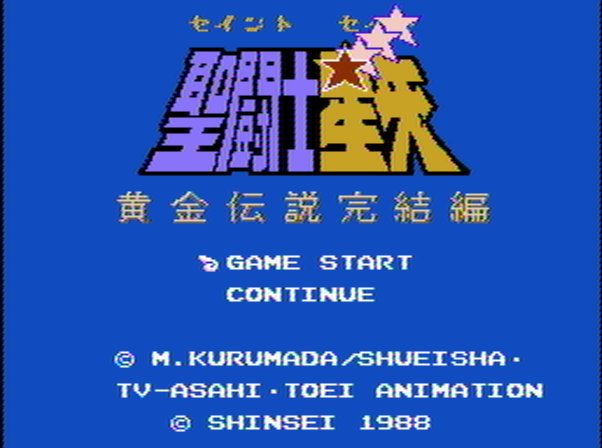
Saint Seiya Ougon Densetsu Kanketsuhen (聖闘士星矢 黄金伝説 完結編), released 5/30/1988, developed by Shinsei, published by Bandai

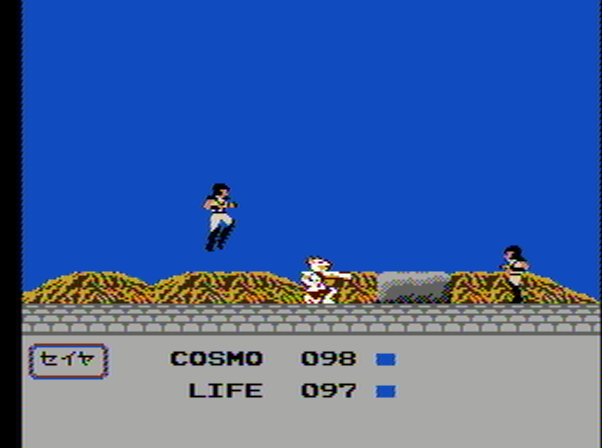
This is a followup to the first Saint Seiya game. Initially I thought it would just be the same system, but it isn’t quite — it resembles the first game but probably due to the part of the story they were covering, there are a lot of differences. These games only cover the first major storyline of the manga, with this game covering the second part, where the heroes have to battle through twelve temples and defeat the Gold Saints before finally facing the Pope. Because of this, there is no exploration of the kind there was in the first game. It plays out essentially as successive stages.

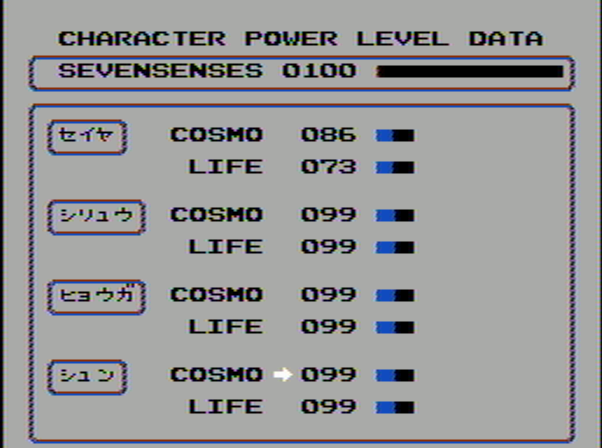
The game still has the action sequences from the first part. Each of the four heroes has two stats, Cosmo (attack power) and Life (HP). When you defeat enemies you earn Seventh Sense points, which then later can be spent to increase the cosmo and life (to limits that increase as you go through the stages). The game penalizes you for grinding too much because if you stay in one place too long, boulders will start coming down. Each stage will generally end in an RPG-like battle.

The battles are basic RPG attack battles, although you can also talk to the person and sometimes dodge their attacks with the arrow keys (supposedly, this never worked for me). You can switch out characters but the character you switch out won’t be able to participate until the next stage. Depending on the boss you might be taken to another action stage before you can fight them, and you might have to do other things before you can hurt them.

The problem with this is that basically what you have to do is follow the original storyline, so that if one of the four characters fought a particular boss you want to be using that character. But there are no hints in the game itself for this.

I didn’t find this game much more fun than the first one; maybe if you are a big Saint Seiya fan you would like this but otherwise it’s barely an RPG and I don’t think worth playing.

JRPG 52 – Deep Dungeon III (FC)

Deep Dungeon III (ディープダンジョンIII 勇士への旅), released 5/13/1998, developed by HummingBirdSoft, published by Square

This is the third of four games in the “Deep Dungeon” series of first-person maze RPGs (also called “blobbers”). The first two games came out early in the Famicom’s lifecycle when there were very few RPGs for the system, and no blobber-type games. By the time the third game came out, there were a lot more RPGs available, including several blobbers (Wizardry and Megami Tensei in particular).

This may account for the reception of this game — from my perspective, none of the Deep Dungeon games are particularly good, and I would probably rather play this one than the earlier ones. But apparently Japanese players felt this was a downgrade from the first two and a worse game; there are some significant problems with this game, but I wonder whether the increased competition affected their view of the game as well.

There is a fairly detailed storyline in the instruction manual — basically, the main character dreams of being a famous hero. He is heading for a big town and stops in a small one nearby. There are heavy storms at night and then walls appear, trapping everyone inside. There is an underground passage but monsters have appeared. The hero decides to go adventuring to find out what happened.

The instruction manual gives you maps of the towns but leaves the dungeon mapping up to you. You can get three companions with various classes — the magic using classes need to be a certain level and then they can buy spells from the town. You equip them with stuff, and then go in the dungeon and begin. From there it’s a typical party-based game similar to Wizardry, but it’s not as good, for a few reasons.

The first one is that if the main character dies, it’s game over (back to your previous save) even if everyone else is still alive (or has a raise spell!) This is especially frustrating combined with the damage formula, which makes it hard to know how likely your survival is. A monster might do 2 damage with one attack, and then 25 damage with the next attack. I died a lot trying to level up even just to level 2; once I hit level 4 I was doing better but still the weaker characters kept getting killed with random attack doing huge damage. The attacks also have to target a specific enemy and if that enemy is defeated, further attacks will be wasted.

The second problem is with the mapping. As is usual for a game of this age, you have to make the maps yourself. Overall there is not that much you actually have to do in order to win, and the majority of each map is empty. The maps are too large relative to what there actually is to find, but a bigger problem is that the game gives very little guidance to help you map. There is no compass, nor any way to find out where you are on the map. Apparently there is an item that can help you out somewhat but it’s not buyable so you have to find it later.

Also, monsters will attack you even if you are staying still on a square. You can avoid this just by bringing up the status menu, but this is a needless annoyance for a game that wants you to make your own maps.

And set against those drawbacks, there’s not much to distinguish it from other maze blobber games. Maybe if you were desperate for another game of this type and had already played the ones released so far, you might struggle through this, but it’s hardly worth playing now.

There is one more game in the series released in 1990, so this isn’t the end of the Deep Dungeon adventure.

JRPG 51 – Elysion (FC)

Elysion (エリュシオン), released 10/27/1988, developed/released by Tokyo Shoseki and System Soft

This is a port of a 1986 game released originally for computers. It’s also the first of these old games that I actually completed! I could not find a manual for this game so I used a walkthrough to figure out how to play.

It’s a top-down action/adventure style game, although unlike a lot of other ones of this style it’s not in real-time. The monsters only move when you are moving.

You start by choosing one of four classes (or “race/tribe”):

The choices are basically fighter, magic user, archer, and a kind of magic/fighter combo. After playing the whole game I feel like the fighter is probably the best choice, but I chose Diana (the archer). As it turns out bows are kind of annoying to use because they run out of arrows, although there is an infinite arrow trick you can use. In the end even though I chose Diana I hardly used arrows, and the spellcasting was also not that useful (other than healing) — this was in part because of the interface, though.

Your goal is to defeat Baal, but first the king has to know that you are worthy to be a true hero. He tells you to go to the nearby dungeon and recover a ring and two scrolls. Until you do this, you can’t use any of the inns.

The first dungeon is actually one of the most annoying dungeons because it’s like a maze and quite large. But it’s doable (especially if you make or use a map). Basically you walk around, stab the enemies, and find treasure chests. There are pools that recover your HP and MP. If you die, you simply get taken back to the King with your XP intact, so you can just keep going in again and again until you eventually find the ring. You will also find useful weapon and armor upgrades in the chests as well (much of what’s in there is randomly decided, I believe).

The equipment works off weight. The higher your level, the heavier equipment you can equip. There are also items that do things like teleport you back to the king, let you enter pits, summon things, and other uses. Your inventory space is pretty limited, though.

Once you do the initial quest you are pretty much free to explore the whole world. At the beginning the goal you are given is to find 10 scrolls, but that turns out to be optional — returning them to the advisor is a good way to increase your money, and if you get them all you get a Heal Ring which is useful. What the actual goal turns out to be is to find three jewels that will unlock the Holy Sword as well as the path to Baal.

One nice thing is that you level up not just from beating enemies, but also from completing subquests and goals. (Apparently if you are speedrunning it’s possible to avoid most enemies in the game and rely on some level raising fountains and the quests)

There are a fair number of hints you can get from the scrolls and inns (and people), but I will admit I used a walkthrough to figure out where most of the stuff is. There are several different overworld areas and a number of dungeons to explore. The scrolls have a variety of ways to recover them; some are just in chests, but others involve more intricate means.

The last dungeon has these mirror image figures that come out endlessly; this is a great source of XP and can level you up pretty much as high as you want without too much trouble.

Reaching the last boss is kind of annoying; you have to break down all these walls with “needles” and they keep changing positions, meanwhile enemies attack you. But the final boss itself is quite easy.

Happy end (although the sprite of the hero in a wedding dress is quite rough…)

Anyway, this is not a bad game for this period. I’m not sure how doable it would be with no hints, though. There is a fan translation!

JRPG 49 and 50 – Battle of Olympus (FC) and Aspic (FCD)

Battle of Olympus (オリュンポスの戦い), released 3/28/1988, developed by Infinity, released by Imagineer

This is a side-scrolling Zelda 2-like game, although it may be closer to the type of game that is later called “Metroidvania.” There are eight parts of the world and you can travel somewhat freely at the beginning but if you don’t have the right items and such to progress, you will have to go elsewhere. The RPG features are mostly equippable items and weapons. It was released in the US as well, so probably a good number of people have played this game.

The game is based on ancient Greek myths (sort of). Your beloved Helene has been captured by Hades, and the main idea of the game is to first find Zeus who will order the other gods to grant you their blessing, then find the other gods in the various areas of the game, and finally go to Tartarus to defeat Hades. A lot of characters and items from Greek myths appear in the game.

As with the other games of this type, you can enter houses to talk to people for hints. Orpheus (the main character) starts with a club, and can just jump and attack. There is no real ‘sub’ weapon although you get some items that are used with select. You earn olives that are used as currency to buy things.

The starting enemies are already annoying because you can’t hit them until they jump. I explored around a bit without a map or anything; I came across Athena in the next area but she threw me out. It turns out I had to find Zeus first. Once I did that, Athena gave me a shield.

The shield allowed me to block attacks from these spear throwing enemies, and was supposed to let me beat the Lamia.

But I tried to beat the Lamia about 15 times and I could barely even get one hit in, so this is as far as I got. Since there’s no way to level up or anything, it’s purely a skill issue here. Anyway this game is available in English so plenty of people have reviewed it, played it, and recorded their plays. Moving on:

Aspic (アスピック), released 3/31/1988, developed and published by Crystalsoft

This is a port of a 1986 computer game. It’s a hybrid that combines first-person dungeon, top-down RPG, and action battles. I found it very difficult to play.

The game is a sequel to a 1984 game called “Lizard” that was an entirely first-person maze RPG (never ported to consoles as far as I can tell). In that game the hero needed to find the Scroll of Truth to break the curse on a princess, but now he returns to the kingdom and finds the princess has been kidnapped. A wizard came saying he could break the princess’ curse but ended up kidnapping her to take her to become the wife of the serpent Aspic. So the hero now has to go save her. (I will spoil the ending at the end of this post…I guess I probably don’t need to spoil warning a 1988 game that nobody is going to play, but just in case.)

I had a really hard time even starting the game; the emulator had a hard time recognizing the disk side swap (a problem I’ve never had with any other FC disk games). I was about to give up but eventually it somehow worked and I was able to play.

The overhead view looks like this. The big problem is that whenever you reach the edge of the screen, the screen scrolls very slowly about 4-5 tiles over, making it very annoying to wander around the world. In this initial area you only meet other humans like farmers or warriors. You can get the warriors to join your party as kind of expendable grunts. The farmers will give you tips. If you go into the starting castle there’s a first-person maze.

I found the maze graphics very offputting as well. It was often hard to tell where I had moved; sometimes the walls seemed to lack continuity between moves and the graphics were slow to update as well. The initial castle has nothing in it despite it being medium-size; even the king just says “go save the princess.”

What you should do is go down to the Sea World area to go in some towers. Here you can fight monsters.

The battles are action. You just move forward and hit the enemy with your sword. It will knock them back and do damage, but they might run if you are not careful. If you have other party members, they will get half the xp (and you can have them fight as well).

At the beginning you have no gold so you can’t heal effectively or do anything, so the best thing to do is get grunts and have them fight (with your MC getting half the XP), and then if they die, just go back to the starting area and grab another one.

Apparently the game is not very long, and once you get used to the combat you can defeat anything in the game with little trouble. But I found the slow pace of the game and the visuals too annoying to keep playing. One thing this game is known for is the bleak ending: once the hero defeats Aspic, he returns to the castle with the princess. The king tells him to leave because he has been cursed by Aspic. What you have to do is go to the evil world, recruit a few monsters there, and then go back and kill the king. Once you do this, the main character possessed by Aspic becomes king. It turns out that whoever kills Aspic inherits the curse, so this cycle will continue for all eternity. Pretty surprising ending!
JRPG 47 and 48 – Kamen Rider Club and Dragon Quest III (FC)

This post will cover two games briefly — one because it sucks, and the other because I already played the remake of it (and played the original enough times that I don’t need to do it again).

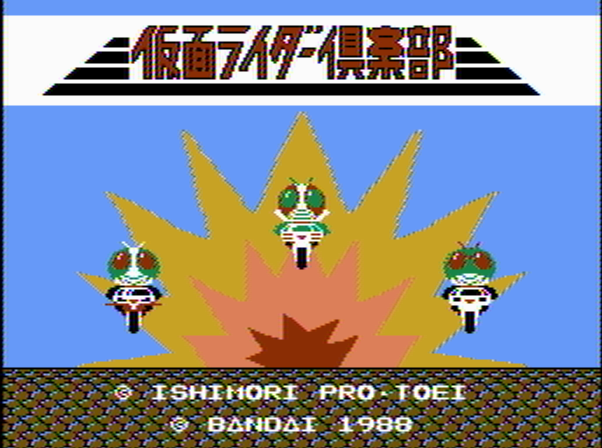
Kamen Rider Club (仮面ライダー倶楽部 激突ショッカーランド), released 2/3/1988, developed by Tose, published by Bandai

This is a game based on the long running, popular Kamen Rider series masked heroes on motorcycles. By the time this game came out, there had been seven different KR series from 1971-1980. Then after a break, an eighth series started in 1987 and was still running when this game came out — I haven’t seen any indication of this, but it would make sense if this was released as part of the “revival” of the series. The series remains popular; I think there have been 36 series now plus all kinds of associated things, and a new series will begin this year.

Unfortunately, this game is garbage. It’s barely playable to the point where it’s hard to see it being released at all if it didn’t have the Kamen Rider name to support it.

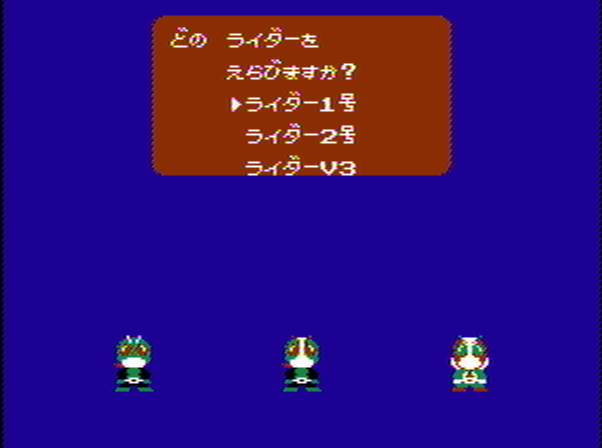
You get to play as the first three riders and can pick up three more throughout the game. I don’t believe that the newest rider was included. You play through each of the rider’s levels in any order, then several more levels with all of them.

The first big problem, perhaps the most important one, is that there is no way at all to suspend the game — no save or passwords. Because of the bad design of the game it will take 30 hours (give or take depending on how efficient you are), so if you are not on an emulator that’s going to be tough. Also you have limited lives and a game over sends you back to zero, although there is a secret way to continue. It’s hard for me to understand how this happened. The developer, Tose, was not new to video games. They had already made games like Kid Icarus and Saint Seiya that had password/continue systems. It seems impossible that this was a deliberate decision by the designers with full understanding of what was going on, so it probably points to a rushed development or a lack of playtesting.

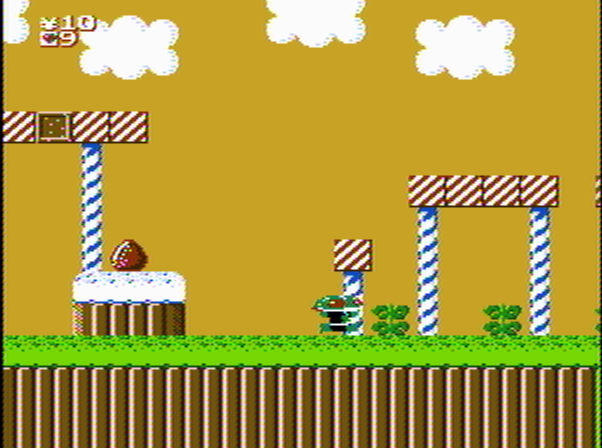
Even if you play it on emulator so that you can save your progress, the game is still garbage. The gameplay is mixed action/battle. The action stages are standard side scrolling:

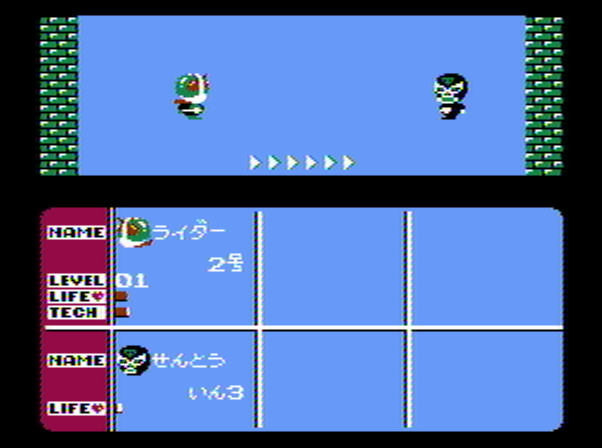
The Kamen Rider can only do this weak downward punch that doesn’t accomplish much, and jump. After you jump you can mash the button to slowly descend, which is necessary to reach higher platforms. You earn money and XP by defeating enemies, running into them to go into a separate fight screen (although sometimes you get damaged instead of going to the fight screen)

There are also shops you can buy stuff from but there’s a lot of randomness in what you will get.

In the fight you just mash buttons to make the arrows fill up and then you’ll knock the enemy back; eventually you will win gold and XP. (There is way to much button mashing in this game for my taste)

But not very much gold. And you need a ton of money — passing every stage requires you to spend money to open gates, so that the main thing you do for the whole game is just grind money out of the enemies (or from gambling games). This is why the game takes 30 hours or more.

If the game had some kind of suspend feature it might at least minimally playable if you like the battle system, but as it is, there’s no point. Later in 1988 there is an Ultraman Club game but it’s by a different developer and seems to be a much better game.

Dragon Quest III (ドラゴンクエストIII そして伝説へ…), released 2/10/1988, developed by Chunsoft, released by Enix

I have already played the Super Famicom version of this and discussed my experience as a kid with this game, so I’ll just briefly cover some details relevant to the Famicom version.

The major innovations in this game were the addition of battery-backed save instead of passwords, and the ability to create 3 characters in addition to your Hero, with several possible classes. Later in the game you can change your classes at the Tower of Dharma, which becomes a series mainstay. Aside from those big changes, this game is really just a refined, expanded version of Dragon Quest II.

It was hugely popular in Japan; DQ2 had already done great sales but DQ3 did even better, and I think this may be where other companies really started copying the DQ style in their own games. It’s interesting that even up to this point, 2.5 years after DQ1’s release, there still have been very few games that were actually trying to do the same thing as DQ. The majority of these RPG-“sphere” games still incorporated action into the game rather than purely command based. By the time we reach the Super Famicom I know from my play of those games that the action-RPG hybrids are in the minority compared to the tons of DQ-style command games, and I wonder if this will start being evident going from here.