Category Archives: Early RPGs

JRPG 46 – Fire Bam (FCD)

Fire Bam (ファイヤーバム), released 2/1/1988, developed by Live Planning, released by HAL Labs
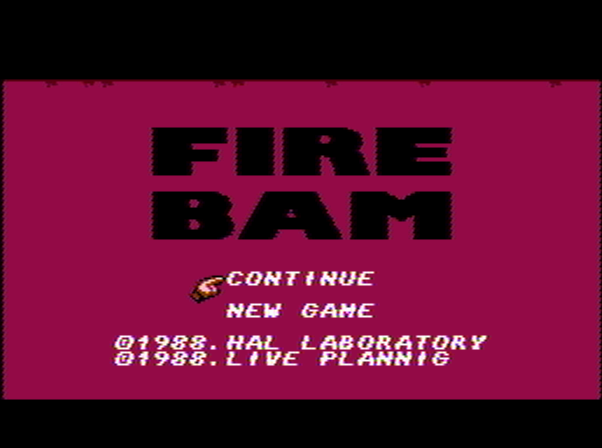
I guess it’s Live “Plannig”

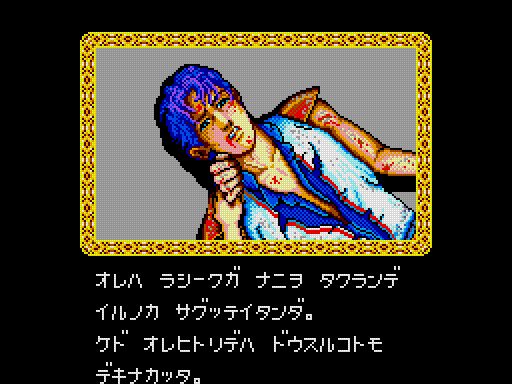
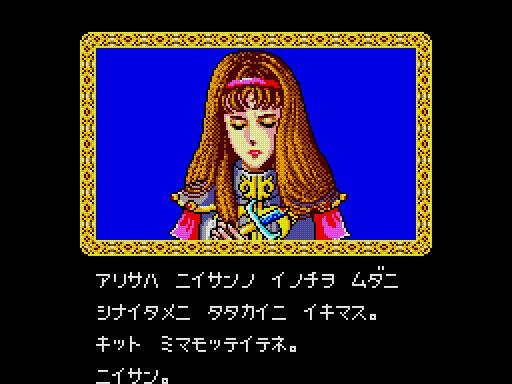
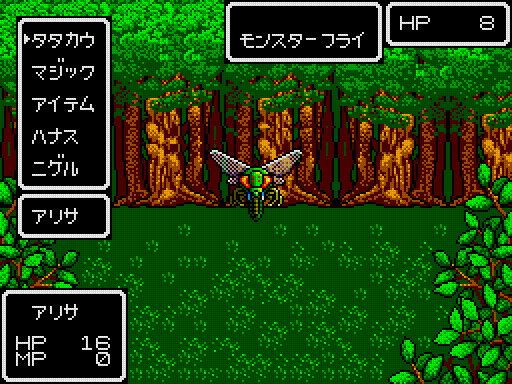
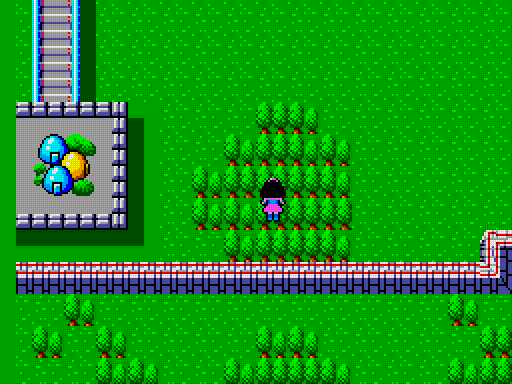
This is a “side scrolling action/adventure” type game. The main distinguishing feature is how fast the game is — you move quickly and can often run even faster in some of the areas. The backstory is that the main character (Bam) is about to come of age in the fire clan, but Domez, who fears the Fire Clan’s power, seals away most of the people in other dimensions and turns Bam’s parents into monsters.
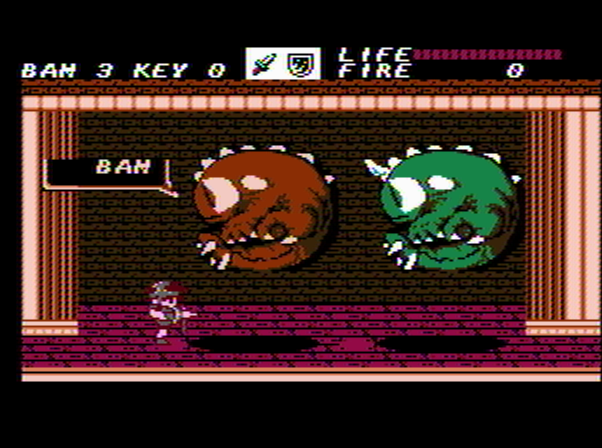
The basic idea of the game is that you defeat bosses, which frees townspeople from other dimensions and also increases the available areas you can go in. You can return to the town to buy items from the newly freed people, and to save your game and heal at your parent’s house.
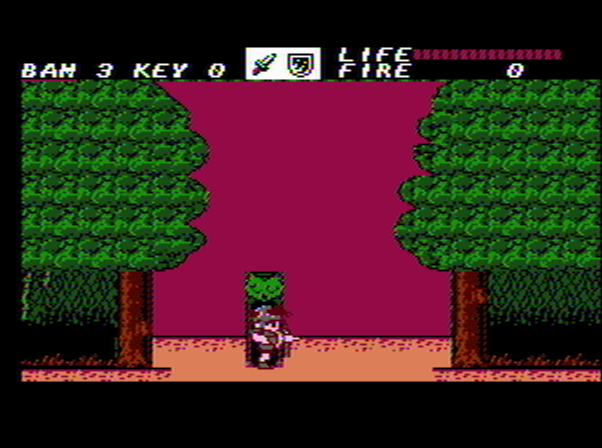
You start with a very basic sword and shield and nothing else, so it’s time to go into the overworld. As I said before, you run very fast. You can swing your sword and jump, but you can also hurt enemies just by running into them in some cases.

If you lose all your lives, you simply return to your parent’s house with no other penalty.
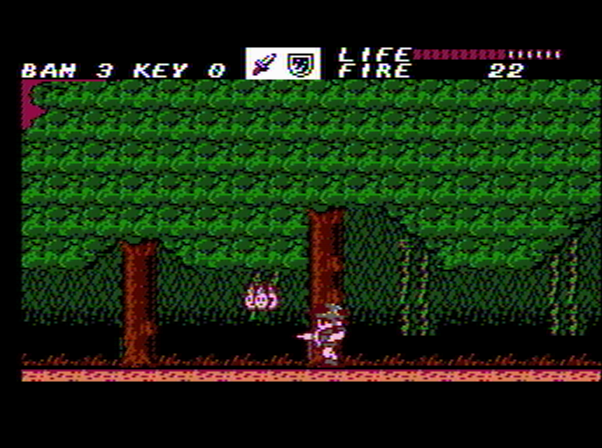
As you beat enemies you get various items, including the “fire” that works as currency to buy things. There are various doors you can enter — some are shops where the people tell you the inventory is sold out, but the instruction manual indicates that you need a special item to have these people sell you things. Other doors take you into separate areas of two types.
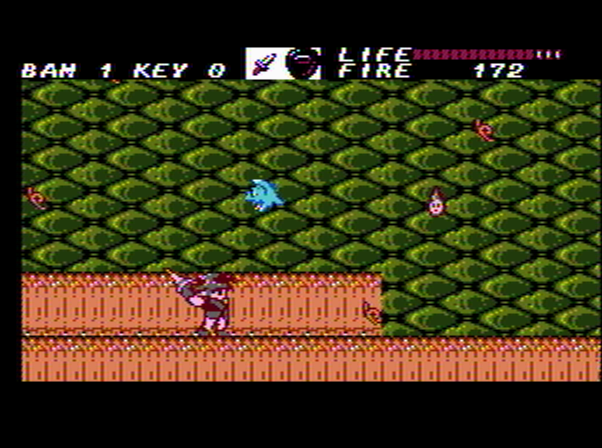
One type is a side scrolling area with blowing wind that makes you move even faster than on the overworld. You have to dodge and beat monsters for a while until you come to a boss. The bosses are weird looking; they remind me of that old Godzilla creepypasta.
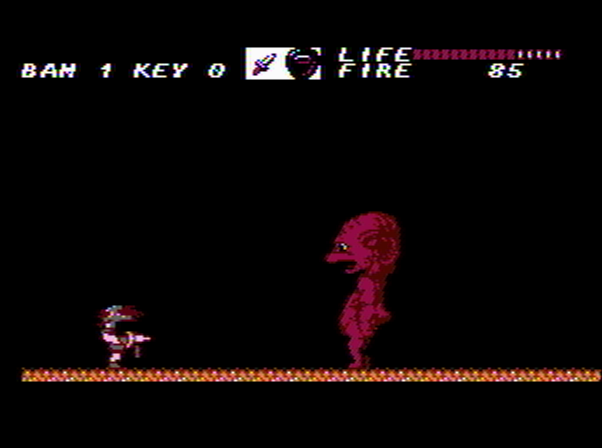
You can go back in the same door more than once to fight a stronger boss. At some point I assume the door is permanently locked or something like that.

The other thing you can encounter in these doors is one of eight dungeons, which have an obvious inspiration:
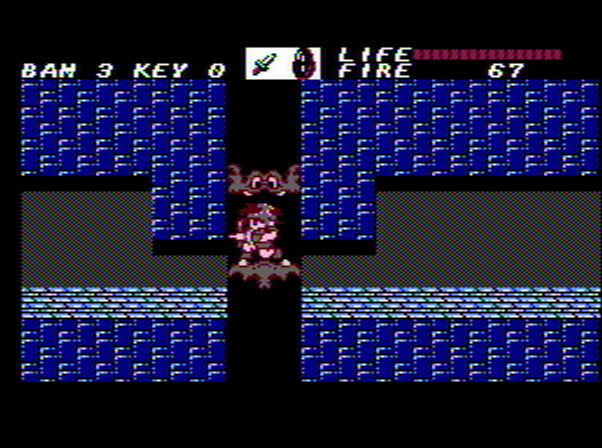
These work just like the Zelda II dungeons, and when you beat the boss additional places will open up just like for the windy doors.
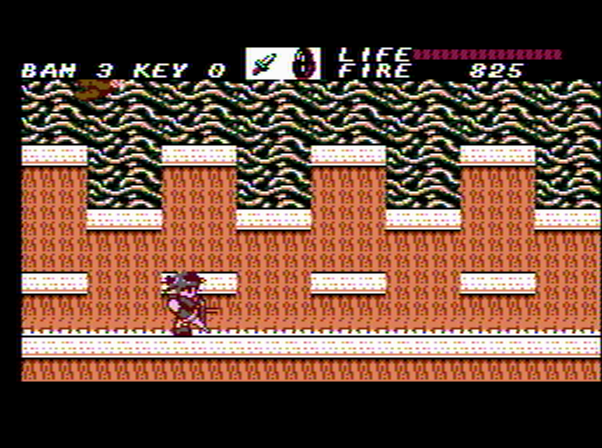
The items you can get include swords, shields, boots, and special items. These aren’t just simple stat upgrades, but actually have different effects. Some boots let you jump higher, others make you heavier so you don’t slip. The different weapons have different attack types. One very helpful shield you get early on lets you shoot out projectiles, which was a big help.

Overall this is not a bad game. I think my biggest issue with it is that it’s hard to keep track of where you’ve been and where you still need to go, because the overworld is kind of repetitive and when it increases in size it’s hard to tell which areas are the new ones that have appeared. I had a hard time fighting the bosses but I’ve gotten a lot worse at action games since I was a kid so that’s not surprising.

JRPG 45 – Jaseiken Necromancer (PCE)

Jaseiken Necromancer (邪聖剣ネクロマンサー), released 1/22/1988, developed and published by Hudson

The PC Engine came out in late 1987 and was quite successful in Japan. I played most of the PC Engine CD RPGs already, but I didn’t play any of the non-CD games that came out on the “hu cards”. This is the first one, made by Hudson itself. It’s a pretty standard top-down command battle game.

The graphics are noticeably better (at least in terms of the technology) than the Famicom. Unfortunately we’re back to passwords — there was some kind of add-on that allowed for save games on certain HuCard games and the CD attachment had save memory inside it, but for games this early you only have passwords. Fortunately save states can substitute for that now.

I’m trying something new starting with the 1988 RPGs, going back to the way I had originally played the Super Famicom games. I’m attempting to find an instruction booklet and at least starting the game with no information outside of the instructions. From the instructions I learned that I would be able to choose 2 members out of a possible 5 to accompany the main character, and there was also the backstory and a world map. The backstory was simple and standard — find the Jaseiken Necromancer sword to defeat the evil than is plaguing the world. Other than that everything in the manual suggested just a normal old DQ-style RPG.

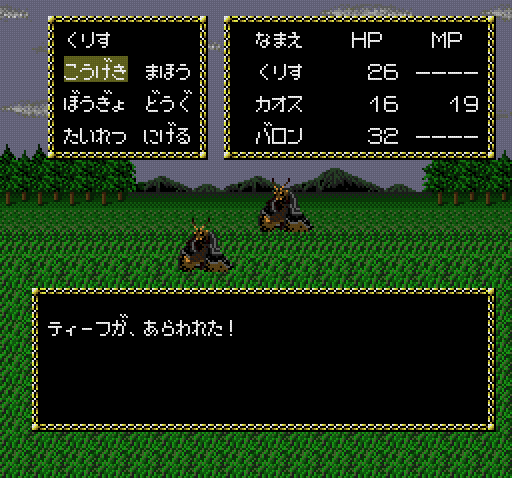
The first thing you do is head to the king and choose your party members. I chose Kaosu, who is a priest-like character, and Baron, who is a fighter-type character. The other choices are Raimu (a magician using mostly attack magic), Maisto (a fast character who also learns some magic), and Romina. The last character doesn’t say anything about her abilities except that she wants to go. (I later learned from a walkthrough site that she begins weak and is weak for most of the game but by the very end she is one of the most powerful characters.)

The first town doesn’t give a whole lot of information, just some vague information about a shrine nearby and a town where I should be able to get better equipment. So I started exploring.

I levelled up and bought all the best equipment in the first town, and I still wasn’t able to survive long enough to find anything; as soon as I passed the invisible line that brought on more difficult monsters I couldn’t survive enough fights to even see where a town or shrine was, much less reach it.

After enough frustration I decide to look at a walkthrough. The first thing I learned is that the companions are poorly balanced and some are much better than the others. I had managed to choose the worst possible party, primarily because the characters’ agility scores are too low so they miss too often. So I restarted the game and chose the magician and the “fast” character, which was supposedly the best party.

With this party I was finally able to make progress. I reached the other town and bought better stuff (including armor, which is not sold at the first town). They also had a wider variety of spells to buy, but since MP is so limited I didn’t buy most of them. The most important seemed to be heal, light, and anti-poison.

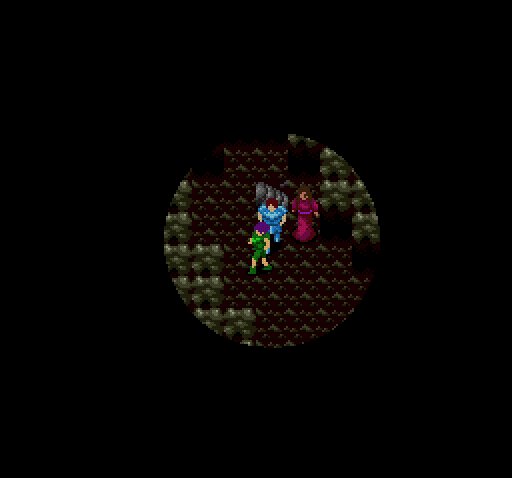
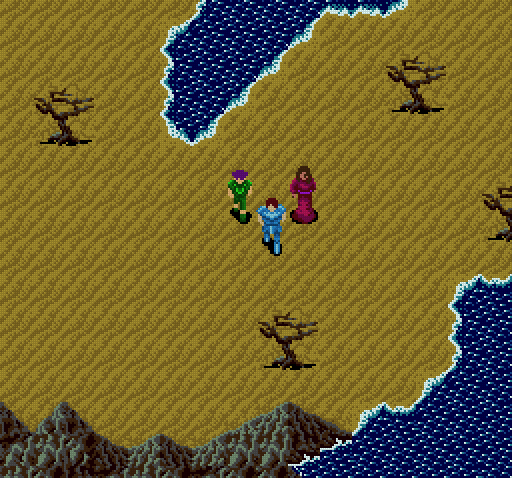
The main first goal is making it off the initial island, but the man in the shrine won’t let you pass without the “Burn Staff”. You get this from a man in the southern shrine, but first it has to be uncursed. Unfortunately the guy who tells you he will uncurse things can’t handle this, so sends you to his master. The master is in a cave, and needs you to find an item in the cave to do the uncursing. With all that done you can move on to the next place, which is a desert area.
That’s as far as I played. As long as you pick a good party, this is a decent RPG given when it came out. As usual it requires a ton of grinding to progress, but most games at this point are like that.

JRPG 44 – Wizardry (FC) + 1986-7 retrospective

Wizardry (ウィザードリィ 狂王の試練場), developed by Game Studio, released by ASCII

The Wizardry series has enjoyed great popularity in Japan, much greater popularity than it ever had in the US. The last original Wizardry game came out in 2001, and by then the series was really coasting on its name value (the last game before that had been 9 years earlier). In Japan, there were roughly 25 Wizardry games released after 2001. CRPGAddict had a good guest blog post covering the history of the series in Japan.

By the time the first Wizardry game was released for the Famicom, the first three games were available for Japanese computers. The Famicom version is largely a faithful adaptation of the computer version — I see a number of sites saying that the maps of the later floors were different but I haven’t been able to find any confirmation of this. I looked at a number of sites (both Japanese and English) and I didn’t see any difference between the maps.

One interesting feature is that you can have the text either in English or Japanese. You can even do it in parts — you can have the monster names in English and the shop names in Japanese (etc). I guess this made the game easy to localize!

The dungeons have improved graphics from the original Apple II version — the full screen maps had already been done in the DOS port but the brick walls are new, I think. There is actually an option to switch it back to the wireframe original.

The Famicom version preserves the brutal nature of the original game, in which party death is permanent — if you get a party wipe you can’t reload a save, you have to start a new party. You can find your old party’s bodies in the dungeon and bring them back for recovery, but this is a difficult process and resurrection can fail. There were a number of ways to get around this regardless of which computer system you were playing on. For the NES, you can just reset the game as long as the battle has not ended yet, and then you can select the “restart an out party” option and you’ll be back before the battle. There is also an option to save your game to the “turbo file” accessory (this can be used to transfer your party to the other Wizardry games, but also just to back up your save).

One big issue with the game is that there is a bug where AC doesn’t work at all (for you or the enemies). This has been fixed with a fan-made patch, I think.

I played the PC version of the game a long time ago, and I’m not going to play it again here. I will instead link to the very detailed playthroughs of the PC version by Data Driven Gamer, and the NES version by Zenic Reverie.

Instead, I will consider Wizardry in the context of the other games up to this point. This is the last game of 1987 and the 44th game in this “early RPGs” sequence. I think the games can be broadly divided into 4 categories and I’ll see if I can pick the best game from each one.

The first are the first person maze games like Wizardry. This also includes the two Deep Dungeon games, Megami Tensei, and I guess Phantasy Star although it’s not quite as traditional a maze-style game as the other ones.

The Deep Dungeon games are just flat out bad. Maybe if you were desperate when they first came out you could struggle through them, but you would have had to deal with the Famicom Disc loading crap on top of the low quality.

As I said when I reviewed it, I think Megami Tensei is quite impressive for the time it came out. Personally I would pick that as the best maze game for 1986-7 but I wouldn’t quibble with someone choosing Phantasy Star if it qualifies.

The second are the Dragon Quest style top down command-battle games. There aren’t too many of these either; even though DQ came out in 1986 it was a while before companies really started copying it. Other than DQ and DQ2, we have Glory of Heracles, Final Fantasy, and Momotaro Densetsu.

The third are top down action/adventure games. This includes Zelda, Hydlide, Adventure of Valkyrie, Magic Bell (Deadly Towers), Esper Dream, Marchen Veil, Seiken Psycho Caliber, Mirai Shinwa Jabas, Scherezade, Kalin no Tsurugi, Light of Indra, Minelvaton Saga, Dragon Scroll, and Outlanders. A lot of these games were shameless Zelda ripoffs or otherwise not very good. If Zelda counts as an early RPG-ish game that’s probably the top here but Esper Dream was a good candidate as well.

The last category are side scrolling action/adventure games. This includes Zelda II, Zombie Hunter, Getsu fuu maden, Chesterfield, Saint Seiya, Majo Densetsu II, Castlevania II, Romancia, Faxanadu and Debias. Some of these games didn’t have much in the way of actual RPG elements and to me none of these really stood out as worth playing (I did mostly skip Getsu fuu maden because it hardly qualified as an RPG but some commenters said it was a good game.

That leaves Cleopatra no Mahou, Zoids, Ultima Exodus, Haja no Fuin, Artelius, and Ginga no Sannin, which are hybrid games or ones that don’t neatly fit into the previous categories. None of those really grabbed me.

I was trying to think of an answer to this question: if I had to choose one of these games to play through to the end, which would I pick? Probably I would go with Momotaro Densetsu (just because it’s a traditional game series), Esper Dream, or Faxanadu (I was pretty far along anyway).

There are 20 games in 1988 so I’ll review them once I play them all. If you want to see the list it’s on the page for the early RPGs.

JRPG 43 – Phantasy Star (SMS)

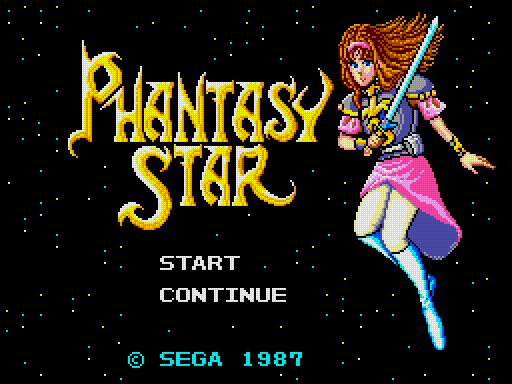
Phantasy Star (ファンタシースター), released 12/20/1987, developed and published by Sega

This is the only exclusive Sega Master System RPG. I never played it since I was always a Nintendo rather than Sega person, but I had friends who liked the later games in the series. The game was apparently made to compete with the Famicom’s lineup of RPGs, especially Dragon Quest. The English wikipedia article says there were a number of women on the design team, which might account for the woman protagonist.

CRPGAddict played this, surprisingly, as did Zenic Reverie.

The text is all in katakana, which is rather difficult to read. I stopped talking to the town NPCs because of this. On the whole, the graphics seem to be better than those of the Famicom. The game was advertised as having a 4 megabit cart, fairly large for the time, and it also had music that was enhanced by an expansion chip to the Japanese system (which wasn’t available in the US). The English wikipedia article indicates that a lot of work was put into every part of the game, although ultimately the result was quite expensive. It looks like it was well reviewed both here and in Japan. In the US it came out before Dragon Warrior and Final Fantasy.

(It does seem a bit weird that they put so much effort into the graphics and music but they couldn’t get hiragana in the game’s text)

The story involves 15 year old Alisa, who sees her brother Nero killed by the forces of the evil King Lassic. She takes his sword and vows to get revenge. The setting is a mix of fantasy and sci-fi; a fairly early example of this kind of thing. It’s interesting that the game feels no need to justify characters fighting with swords, but also having spaceships. This is a standard “just accept this” feature of almost all these sci-fi/fantasy mix games, but I wonder where it started. The examples I know of from SF literature have a justification for why the mix exists, but games usually don’t bother.
As is expected from a game of this age, there are few plot developments in the game. Several more characters join, but their backstories and characterization is pretty thin. I’m not faulting the game for this since I don’t expect a huge amount of story out of a 1987 game; I’m just taking note.

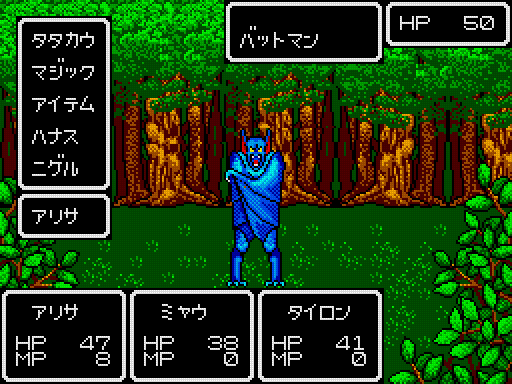
The battle system is your normal basic early RPG system. There is a “talk” command that you can use, although I never actually did this much because it didn’t seem to work often enough to bother. I think the only effect it can have is make the enemies leave you alone.

The game starts off pretty difficult. You just have Alisa by herself, and most encounters will result in a game over. You can save anywhere, but if you get a party wipe you have to reload your save. Basically the beginning of the game is dying a lot (if you can’t run from the harder fights) and using the free heal near the beginning until you’ve built a few levels and can buy some better equipment, then you can start venturing out further afield.

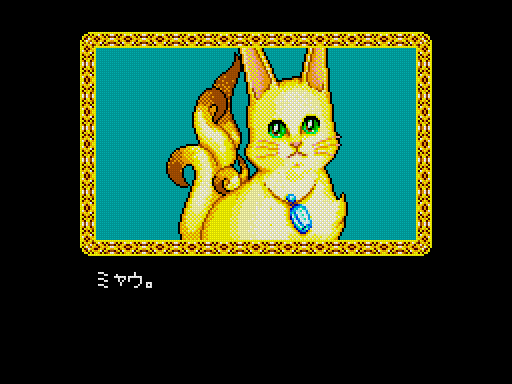
One issue that CRPGAddict ran into is that you sometimes have to talk to people multiple times to get them to do what you want. He didn’t like that, and I don’t much like it either. To progress early in the game you have to try to buy a “secret” item; the first two times the shopkeeper will yell at you that you can’t buy it, but then the third time he lets you buy it. There are several other instances of this in the game, but it’s annoying without some kind of clue. Once you get the passport you can go to another planet and get the cute little cat character Myau, your second unit. We also start learning some spells.

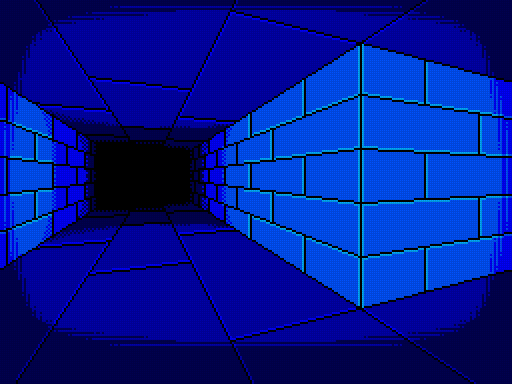
The caves and dungeons are all first person. There is no map and sometimes the way the screen moves is a bit confusing. Most of the chests in the dungeon are also a waste of time — the designer later said he didn’t know how to make an RPG, and you do wonder about some of these early RPGs when a dungeon has 10 chests, 8 of which are basically useless.
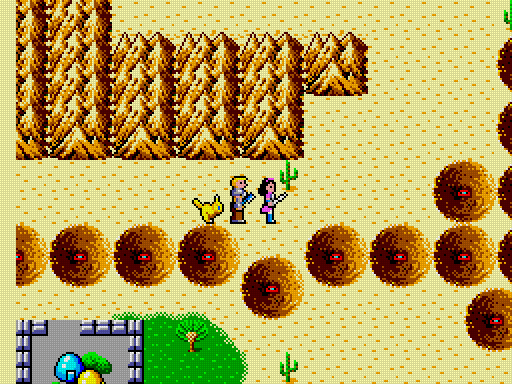
There are three total planets, a desert one, a winter one, and the one you start on.

I think I played about half of the game. Compared to the other 1987 RPGs of this type, I think it holds its own. The graphics and music are better, the first-person dungeons are a nice touch, and I don’t think it noticeably more grindy than Final Fantasy or the Dragon Quests. The English wikipedia article has a lot of detail on the background of the game, which is worth reading.
I don’t recall ever seeing or playing this game as a kid. I vaguely remember one friend had a Sega Master System but we didn’t play it much. The later games on the Genesis I do remember; I never had a Genesis so I didn’t play them, but I was aware of the series.

JRPG 42 – Final Fantasy (FC)

Final Fantasy (ファイナルファンタジー), released 12/18/1987, developed and published by Square/

This is a biggie; the first in a long running series that continues to this day. In the Super Famicom era, FF was always head and shoulders above other contemporary RPGs — is this true in the Famicom era as well? I would say so. At this point there were only four of these classic top-down command-based RPGs: Dragon Quest 1 and 2, Glory of Heracles, and Momotaro Densetsu. Final Fantasy does advance on them in several ways, I think.

First off, the name: for a long time, I had always heard that this was called “Final” Fantasy because it was Square’s last attempt at a game before they went bankrupt. However, Sakaguchi Hironobu, the developer, has said in interviews that they wanted something that would shorten to “FF” in order to be memorable, and that “Final” was a word that was familiar to Japanese people. The Japanese wikipedia article doesn’t even mention the bankruptcy story, so that might just be apocrypha that started outside of Japan.

As soon as you start you choose your 4 Light Warrior classes. This is the first JRPG-style game that lets you do this — the designers would have been familiar with it from Wizardry and Ultima, though. The selection forms a big part of FF1’s replayability and ensured a long running popularity. People tried out unusual parties and also proved that the game can be cleared with a single Light Warrior of any class (even un-upgraded).

The visuals are similar to Dragon Quest on the overworld although they found a way to code faster movement for the airship. The battles are different, though:

Unlike the Dragon Quest style where you can only see the enemies, here you can see the players as well and they have little animations for their attacks. The results are still communicated via text boxes, but it’s a bit more visually striking than DQ. The battle system is pretty basic at this stage; unfortunately you have the “ineffective” message if you target someone who gets killed that turn. Magic is done via Wizardry-like spell levels, and all the spells are bought in stores.

The game came out in 1990 in the US (after Dragon Quest III). I have fond memories of the game — I subscribed to Nintendo power so I got this hint guide issue. I’m not sure why I thought I would like the game; I believe that I had played a bit of Dragon Warrior and Ultima: Exodus but for some reason I was obsessed with the game even before I got it. I read the strategy guide over and over again.

The game didn’t disappoint me. I played it through several times although I didn’t always know what I was doing despite the guide. I remember never using Cabins or Tents, and I didn’t understand how useful the heal items (helmet/staff) were. I played through the entire game without realizing you could equip more than one piece of armor. I remember that I had made it to the sea palace before my save game got deleted and so I had to start over. But I did finish the game.

I think this game is clearly ahead of the other top-down command RPGs of the time, but it still shows its age in a lot of ways. The interface has a number of issues: any status effect puts the character at the end of the marching order. There is no way to buy more than 1 item at a time. There are pretty severe equipment inventory restrictions, particularly in a game where you might want to keep multiple weapons around because of their effects.

There are also a surprising number of bugs, including some pretty serious one. Intelligence has no effect. The monk armor ability is glitched, as is the chance to run from battles. Some spells have no effect (or the opposite effect). There is a patch that fixes all or most of these bugs and adds some QoL improvements, which is probably the best way to play this game if you don’t want to play one of the remakes (which bring much more drastic changes to the gameplay).

On the whole if you had to choose an RPG from 1987 to play, Final Fantasy would be a great choice despite all the issues. Here’s Zenic’s playthrough of the whole thing.

JRPG 41 – Ginga no Sannin (FC)

Ginga no Sannin (銀河の三人), 12/15/1987, developed by Pax Softnica, published by Nintendo

This is a Famicom port of a 1985 computer game called Earth Fighter Rayieza. From what I have read (and can see on video playthroughs), the Famicom version is more or less a complete remake rather than just a straight port.

The setting is the year 2300, where an invading race known as the Garm have destroyed all the space colonies and taken over all human habitations except for Earth — Earth is protected by a barrier but it’s only a matter of time before the Garm breach it. The main character and his companion Blue are entrusted with the Rayieza space mechs in order to defeat the Garm.

First you have to respond to a distress call on the moon.

This is the main space map. You choose a place to visit and then move towards it. You can move a number of “steps” equal to the number of boosters you’ve picked up, although moving more than 2 will cause HP damage. So if a place is 34 distance, and you have one booster, you’ll have to do 17 two-step jumps to get there, and each one can have a random encounter. This becomes rather tedious as the game goes on because it doesn’t have the exploration feeling of a normal overworld map, you’re just pressing A over and over again and doing fights.

On the moon we do the first dungeon:

Here you move around through a maze. There are no encounters in this one but there are in other dungeons. We find a girl in a capsule and bring her back to Earth to recover, then go out into space again. The main goal of this first section is to destroy the three Garm ships (the green things on the map above) and then the Garm base. But you have to prepare for that by building up money and levels and buying better equipment.

Levelling up only increases your max HP, and when Remi (the girl) joins you early in the game, she will also increase her EP and learn new support moves. The only other way to increase your power is to buy items. There are two types of weapons. The first is the basic beam attack which attacks all monsters and can be used infinitely. The second are your missiles, which are limited. You can shoot as many missiles as you have. (You also get promoted in rank after a certain number of battles but I don’t believe this has any effect).

There are hidden level limits based on how far you are in the game, and 40 is the highest possible.

Basically you want to get the best stuff you can from the first space map area (the Mega Ion and S-Missiles) for both the main character and Blue, and that should be enough to take out the three Garm ships.

Fights are like this — you can see the enemies and their HP. Your beam attacks hit all enemies but the more enemies there are, the less damage it does. The missiles work the same way but do more damage.

When you fight the ships, you first have to close into their range before you can shoot them with missiles and such, so you need a fair amount of HP and healing items.

You can visit the various planets as well but there’s really no point at the moment. Once the three Garm ships are destroyed, you find out that an escape capsule went to Uranus, and we still can’t damage the main Garm base.

I got a game over in the Uranus dungeon (which sends you back to your last password place with half your money taken but everything else intact), and this is where I stopped.

I think that the game has some interesting ideas, but the travel and battling feels like a slog because it’s so repetitive. I’ve also read the the game suffers from increasingly severe balance issues; you can only hold 9 heal items and level 40 is the maximum. It seems like later in the game you just have to run from nearly every fight in the dungeons to avoid getting a game over, and levelling up gives you only a slight advantage.

The story has some interesting twists at the end, but there are long periods of no story development at all, just going to different dungeons for fetch quest items.

In the end while this has some interesting aspects to the gameplay and might be worth a try, it’s probably not worth playing to the end.

JRPG 40 – Outlanders (FC)

Outlanders (アウトランダーズ), released 12/4/1987, developed by Micronics, released by Victor

I just passed the 9th anniversary of this blog. I wonder how much longer it will go?

Anyway, what better way to celebrate than with a crappy Famicom game based on a manga. As of a month ago the only walkthrough on GameFAQs was an incomplete one beginning with this: “I will be honest with you. If not for the sake of the NES Completion Project going on, I would not have touched this game let alone make an FAQ for it. This game is totally a piece of crap. The controls are all whack and the fighting system is garbage. In order to even, win a battle you must move around until your enemies are in a straight line and then hold down the B button to slash at the enemy continually.”

Since then, someone has made a full walkthrough, but the game is still as bad as the other writer said. The whole game is divided between single-room style exploration and wider areas, kind of like Deadly Towers.

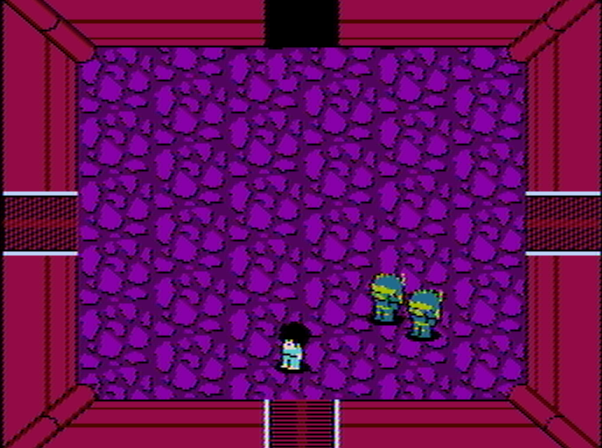
This is what the battles look like — they are symbol encounters. As the FAQ writer said, it’s very hard to effectively fight because your sword has low range, and the hit boxes are weird. The most certain way to win is to run around until they line up and then you can fight them head on. There might be other ways to do it, but you will get killed very quickly. You also can’t see your HP during battle or how much damage the enemies are doing.

The battles give you money and XP, but to level up you need not only XP but “smile pins” that you find in various places. You can buy weapon upgrades and items.

The game itself is not especially long or big, but it’s so annoying to play that there’s no reason to really bother.

As is predictable, the interface also sucks. The graphics glitch a lot, with boxes appearing over items, things in the wrong place, etc.

This is one of the worst games I’ve seen of these early RPG and RPG-like games. It’s still probably better than Hoshi wo Miru Hito and Mirai Senshi Jarvas, but not by much.

JRPG 39 – Dragon Scroll (FC)

Dragon Scroll: The Dark Dragon Reborn (ドラゴンスクロール 甦りし魔竜), released 12/4/1987, developed and published by Konami

This is a top-down action RPG/adventure game, essentially in the style of Valkyrie, Zelda, and other games that have been covered so far. Like those games you are just plopped down at the starting point with no clues or indication of what you should do. The basic story is that thieves stole these books that were keeping the Chrome Dragon imprisoned, and thus the Gold Dragon brought a hero into the world to collect the books and seal the Dragon.

You walk around using a staff to shoot little magic attacks. You gain XP, but no money. At level ups, you can gain additional max HP, MP, or the ability to use stronger staffs (if you have found them). Dying sends you back to the beginning of the current map area you are in and halves your magic points.

Here are the good and bad points from the Game wiki page, along with my own impressions. First the good points:

  • The graphics are good for a game of its era
  • Good BGM
  • The large areas make the world seem expansive
  • The controls are responsive and easy to use (I would agree with this)

And now the bad points:

  • The secrets in the game are too hard to find. (This is I think the worst aspect of the game — even just in the part that I played, you have to stand between statues for a while for things to appear but if you stand slightly in the wrong spot it doesn’t happen. You also have to use magic on random trees and rocks to progress. There are hints you get when beating certain monsters, but they only provide vague pointers, and sometimes have wrong information.)
  • The large areas are too large; there’s nothing to find in most of them (this is a common problem with these early games though)
  • In the late game, you have to grind levels to be able to survive the damage floors you have to walk through
  • It’s too hard to recover your HP (although you can just die to get it back)
  • The difficulty is low because when you hit enemies they freeze for a while so you can just keep pressing the button to win
  • The text is all in hiragana and hard to read.

This last point is confusing since many other games of the era use katakana in addition to the hiragana — while this isn’t impossible to read it’s not comfortable.

I feel like this is almost a good game but the inscrutability of the puzzles/secrets makes it hard to play. And as the wiki pointed out, if you have a walkthrough to solve all the puzzles the game is way too easy because the combat isn’t especially difficult. These early games often have unsolvable puzzles — is this all descended from the popularity of Tower of Druaga?

I have 5 more of these games from 1987, but hopefully my next post will be Growlanser. I’m playing Dragon Quest IX now and having fun with it.

JRPG 38 – Jikuu Yuuden Debias (FC)

Jikuu Yuuden Debias (時空勇伝デビアス), released 11/27/1987, developed and published by Namco

This is another side-scrolling action RPG. One notable thing right from the start is that the game came with this code wheel that is supposed to help you choose the correct doors throughout the game. If you don’t have the wheel you should not try to play the game without a walkthrough because you will be wandering randomly a lot, and that wasn’t the intention of the game.

The story is the usual basic one — a spirit or god called Aaron brings the ancient hero Debias back and sends him out to save the kingdom from the enemies.

The game has gold that you can buy equipment and items with, but no experience levels. The “spirit” and “tech” amounts are both used for the final choice on the right menu, “Aaron”. By using this command you talk to Aaron and can do various things — ask for hints, find out if you missed key items, warp back to town, exchange a life segment for a healing item, and such. Some of these choices involve that code wheel I mentioned above.

You start in a town. Make sure you use the “talk” command because you can attack the townspeople; killing them subtracts Spirit. There is a day/night system, so if night falls you will have to fight off monsters until it becomes day again. The first task is to talk to the king to get the specifics of your quest and some money. After buying some basic equipment it’s off to the first area.

Your character can do three different types of attacks, plus jump, which helps against the various enemies. However, this is the second area:

I died 15-20 times trying to get through this area. Missing a jump is a death and when you get hit by those bats, most of the time you get knocked back into the pit and die. Dying halves your gold and Tech. This is where I decided that I wasn’t going to play much of the game (that and the lack of the code wheel).

I think there is some interest in this game with the Aaron system (especially if you have the code wheel), but I just didn’t want to deal with the jumping.

JRPG 37 – Faxanadu (FC)

Faxanadu (ファザナドゥ), released 11/16/1987, developed and published by Hudson Soft

This is another game in Falcom’s “Dragon Slayer” series. At this point there were four games in the series. The first game had been released for a (now) obscure system (the Epoch Cassette Vision), and the third and fourth games had come out in Famicom ports. The fourth game also was released in English as “Legacy of the Wizard”. Xanadu and Xanadu II (which were considered both the second game in the numbering) had yet to come out for a console.

Originally Faxanadu was supposed to be a port of Xanadu, but by the time it was released it had deviated so far from the original game that it was given the name Fa (from Famicom) + Xanadu and had become its own game. Faxanadu was released in English — I never played it but I remember seeing it in Nintendo Power magazine.

Romancia and Legacy of the Wizard are not really RPGs to me; Romancia is more of just a side-scrolling action game and LotW is perhaps an “adventure” game instead (or whatever genre you want to label it). I think Faxanadu is closer to those games than “real” action RPGs, although the line between an action game and an action RPG is very fuzzy.

Faxanadu does have XP levels, but they have virtually no effect on the game — they don’t increase any stats. When you die, you are returned to the last church where you got a password. Your money is reset to a value that is determined by your XP level. This seems to be the only effect of your level other than the odd fact that winged boots last for shorter times as you level up.

(Incidentally, the original Japanese version has actual churches with a cross outside and a Catholic-style crucifix (with Jesus’ body on it) behind the priest. Both of those were removed and the churches are referred to as “guru houses” instead. This is an example of the type of censorship that Nintendo required in the 80s and 90s.)

This is the Japanese version

The game has a few weapon and armor upgrades, but only 4 of each. There are also a few magics that you can acquire. Some of these are bought at shops, others are found around the maps.

The game is roughly divided into 3 areas, and you access the next area once you finish some task (for instance, to get to the second area you have to restart three fountains). I think this is a game that could be reasonably finished without much help — there are a few tricky parts that have non-obvious solutions but nothing on the level of checking every stone or tree to see if there is a secret.

To fight, you basically just have attack, jump-attack, and using your magic. The number of enemies is fairly limited so once you learn each pattern it’s a bit easier, although the fighting system sometimes seems rather limited.

Probably the most annoying part of the game are the jumps; you often have to do running jumps that require fairly precise timing, and if you fall down you have to repeat the whole area again. This isn’t so unusual for 1980s action games but it can be frustrating.

The storyline is a typical “save the world from the demons” story. What is impressive about it is that the text actually uses a lot of kanji — this is something that you don’t see much of in Famicom games, and even late into the Super Famicom era you see some games that aren’t using as much kanji as this. I’m not sure what it was about this game that encouraged them to do this.

On the whole, this is definitely one of the more playable games of this early Famicom era. I played about half of it; the lack of RPG elements made me not want to play that much more but it’s not a bad game for the time period at all.